
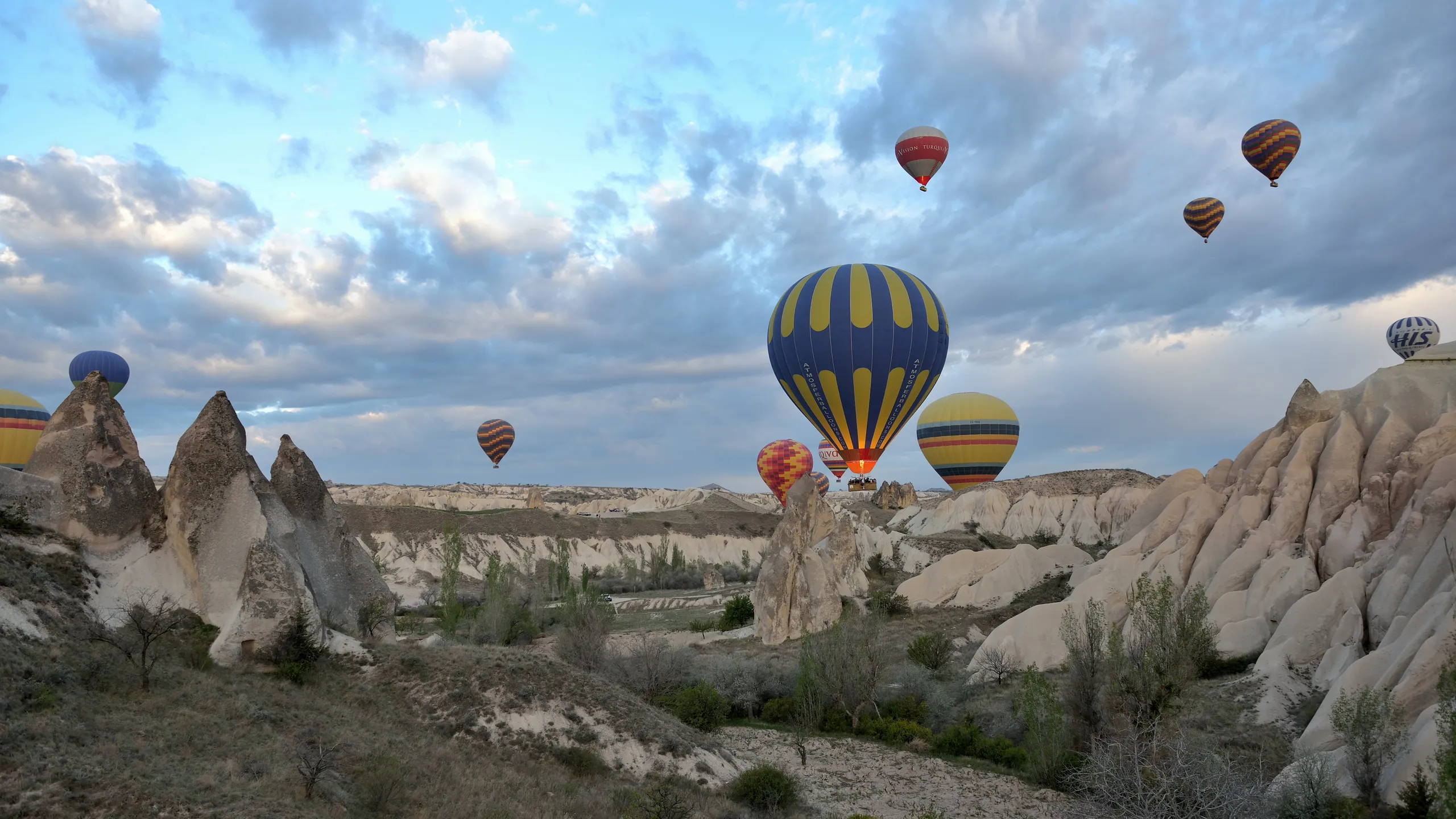
Every page on this site answers one of two questions: "I am flying soon, what do I need to know?" or "how does any of this actually work?" The guide is built in five sections, from the physics of a bag of hot air to the etiquette of the landing-field toast, and you can read them in any order. Nothing here assumes you have ever been near a balloon.
How you use the guide depends on your calendar. Flight already booked? Go straight to Plan Your Ride for seasons, prices, packing and the weight declaration, then read the rules and etiquette so the briefing, the landing position and the tipping question hold no surprises on the morning. Those two sections are the practical half of the site, and together they take well under an hour.
Here for the stories instead? Start with the history of ballooning, which opens with a sheep, a duck and a rooster rising over Versailles in 1783. Continue with how hot air balloons work if you want the machine explained without algebra, and finish in Culture & Curiosities, where the festivals, films and folklore live. Read in that order and each section sets up the next, though every page also stands alone.
Short on time? The card grid below is the whole site in five doors. Pick the question that itches most and start there; every section links sideways when a story crosses a boundary.
One promise before you dive in. Everything on this site is checked against sources: dates are real dates, quotes are documented, numbers come from record books rather than brochures. And when a beloved story turns out to be unverifiable, like the tale that champagne was first carried aloft to pacify terrified farmers, we label it a legend and tell it anyway. Ballooning is strange and rich enough without the recycled myths.
The five sections
The whole guide, one door per subject.

History of ballooning
From the paper experiments of 1783 to the jet-age rebirth of 1960: the Montgolfier brothers, the daredevils, the wars and the records.

How hot air balloons work
Envelope, burner and basket, the physics between them, and the honest answer to how you steer a thing with no steering.

Plan your flight
Seasons, costs, what to wear, who can fly and how to pick an operator. The practical half of the guide.

Rules and etiquette
The safety record, the landing, tipping, photography and the traditions you will meet on your first flight morning.

Culture and curiosities
Festivals worth a plane ticket, balloons in books and film, a plain-English glossary and ten facts that survive checking.
Why does one aircraft deserve a whole guide? Because nothing else in the sky behaves like it. A balloon travels with the wind rather than through it, so the air around the basket is still: a candle stays lit on the rim, hair stays put, conversation happens at speaking volume. Between burner blasts the silence is complete enough to hear dogs barking a mile below. And because balloons want the calm, cool air that follows first light, every flight begins in the dark, with coffee in a field while a nylon cathedral inflates overhead. No other form of flight asks you to attend a dawn ritual before it will show you anything.
The guide is written for passengers and the balloon-curious, not for pilots. Where a subject gets technical, we keep the arithmetic in the background and link out for anyone who wants more. And where the answer is genuinely "it depends on the wind", we say so, because in ballooning it usually does.
Alarm already set for tomorrow?
If your flight is booked for sunrise, skip ahead: here is when balloons actually fly, and why the hour matters as much as the season.