
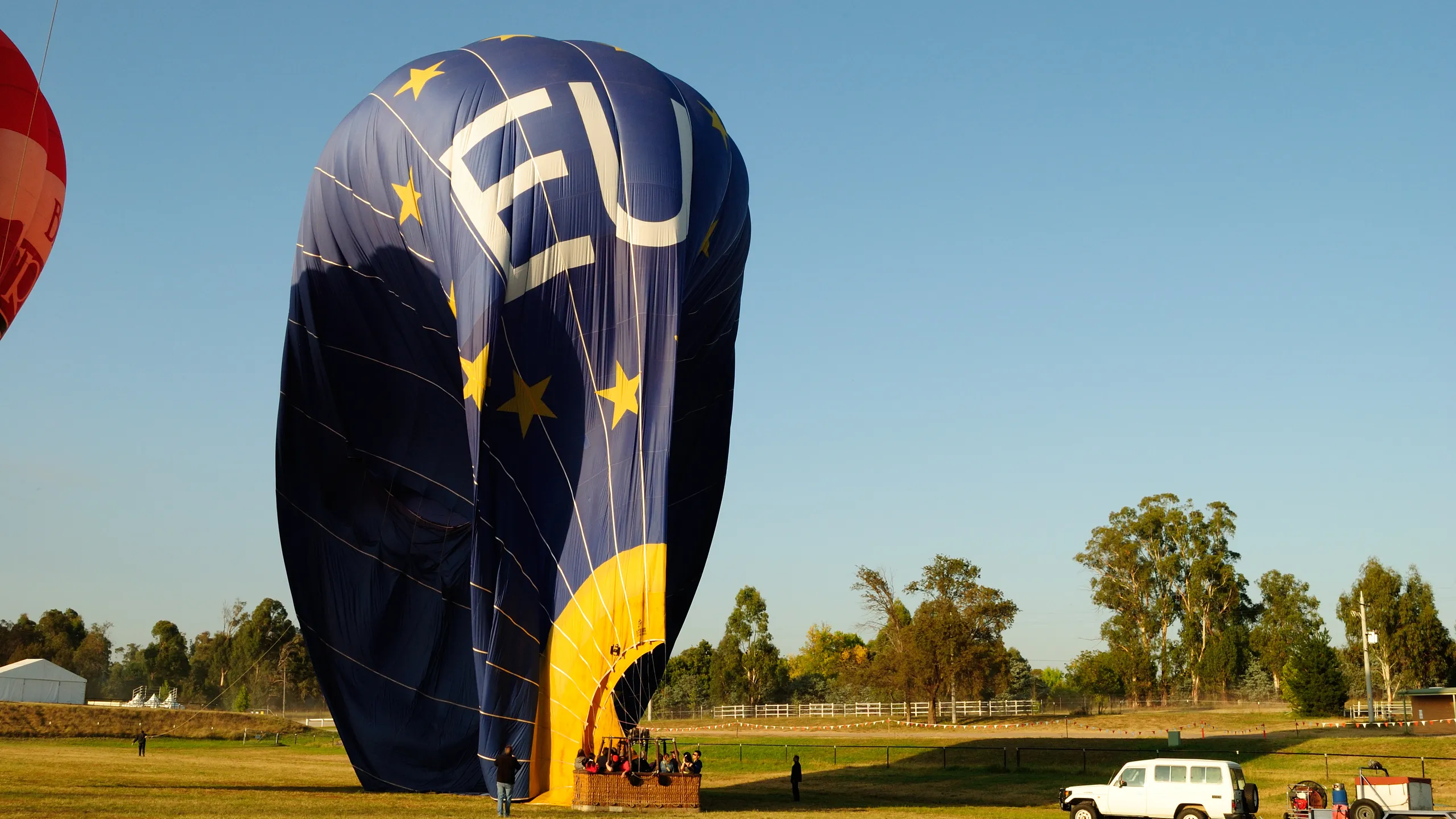
The envelope is the part of a hot air balloon that does the flying, and the part that wears out. It is born in a sewing loft, works for somewhere between 400 and 600 flight hours, and often ends its days as a training balloon or a batch of tote bags. Owners talk about envelopes the way pilots talk about engines: in hours flown, not years owned. Here is that life, start to finish.

A thousand square metres, sewn like a sail
A mid-size envelope begins as more than 1,000 square metres of coated ripstop nylon, roughly the area of four tennis courts, cut into 24 or more tall panels called gores. Joining them takes kilometres of thread and weeks at industrial sewing machines.
The finished bag looks as though everything hangs from fabric, but it does not. A web of load tapes sewn over the seams carries the weight of basket and passengers down from the crown; the nylon's only job is to hold hot air. The full load path is traced in our anatomy of a hot air balloon.
Life is measured in hours, not years
Two things retire an envelope: heat and porosity. Every burn ages the nylon near the crown, and every flight works air through the weave a little more, until the fabric lets too much hot air seep away and the balloon needs ever more fuel to do the same work. Most envelopes bow out somewhere between 400 and 600 flight hours.
How long that takes depends entirely on the owner. A private pilot logging 30 hours a year can fly the same envelope for well over a decade. A commercial operator in a busy destination, flying an hour or two every flyable dawn, can put 300 hours on an envelope in a single season and wear it out in two or three. Temperature is the other lever: the cooler you fly, the longer the fabric lives, one more reason pilots respect the limits described in why hot air lifts.

The annual physical
Envelopes are inspected on a schedule, typically every year or every 100 flight hours. The inspector pulls test loads on the most heat-worked fabric near the crown, walks every seam and load tape, and reads the temperature-indicating labels sewn high inside the envelope: heat-sensitive patches that change permanently if the fabric has ever been overheated.
Failing in one area is not the end; lofts patch and replace individual panels routinely. Failing broadly grounds the balloon for good. A tidy, current inspection log is one of the quiet marks of a serious company, and worth asking about when you are choosing an operator.
Retirement plans
A retired envelope rarely goes to a landfill. Many leave commercial service while still airworthy, simply because a porous balloon burns noticeably more propane per flight, and they carry on as training and tether balloons where performance matters less. The rest are cut apart and reborn: upcycling workshops turn the panels into tote bags, jackets and hammocks, and a single envelope can supply fabric for hundreds of them. The last colorful scraps become repair stock, bunting and festival decoration, so the balloon you rode this year may be shading someone's market stall the next.
Where your ticket money goes
The envelope is the biggest consumable in ballooning, retired on a schedule measured in flight hours. That, along with fuel, crew and insurance, is what a balloon ticket pays for.
Envelope life FAQ
How long does a hot air balloon envelope last?
Typically 400 to 600 flight hours, depending on how hot and how heavily it is flown. In calendar terms that can mean over a decade for a private pilot or just a few seasons for a busy commercial ride balloon.
How is a balloon envelope made?
From 24 or more vertical fabric panels called gores, cut from more than 1,000 square metres of coated ripstop nylon and sewn together with kilometres of thread. Webbing load tapes over the seams carry the structural loads, so the fabric itself only has to hold air.
How do inspectors test an envelope?
On a fixed schedule, usually annually or every 100 flight hours. They pull test loads on the fabric in the hottest-running areas near the crown, check seams and load tapes, and read sewn-in temperature labels that permanently change color if the envelope has been overheated.
What happens to old balloon envelopes?
Many become training or tether balloons once they are too thirsty for commercial work. Fully retired fabric is upcycled into tote bags, jackets, hammocks and banners, or kept by repair lofts as patch material for other balloons.