
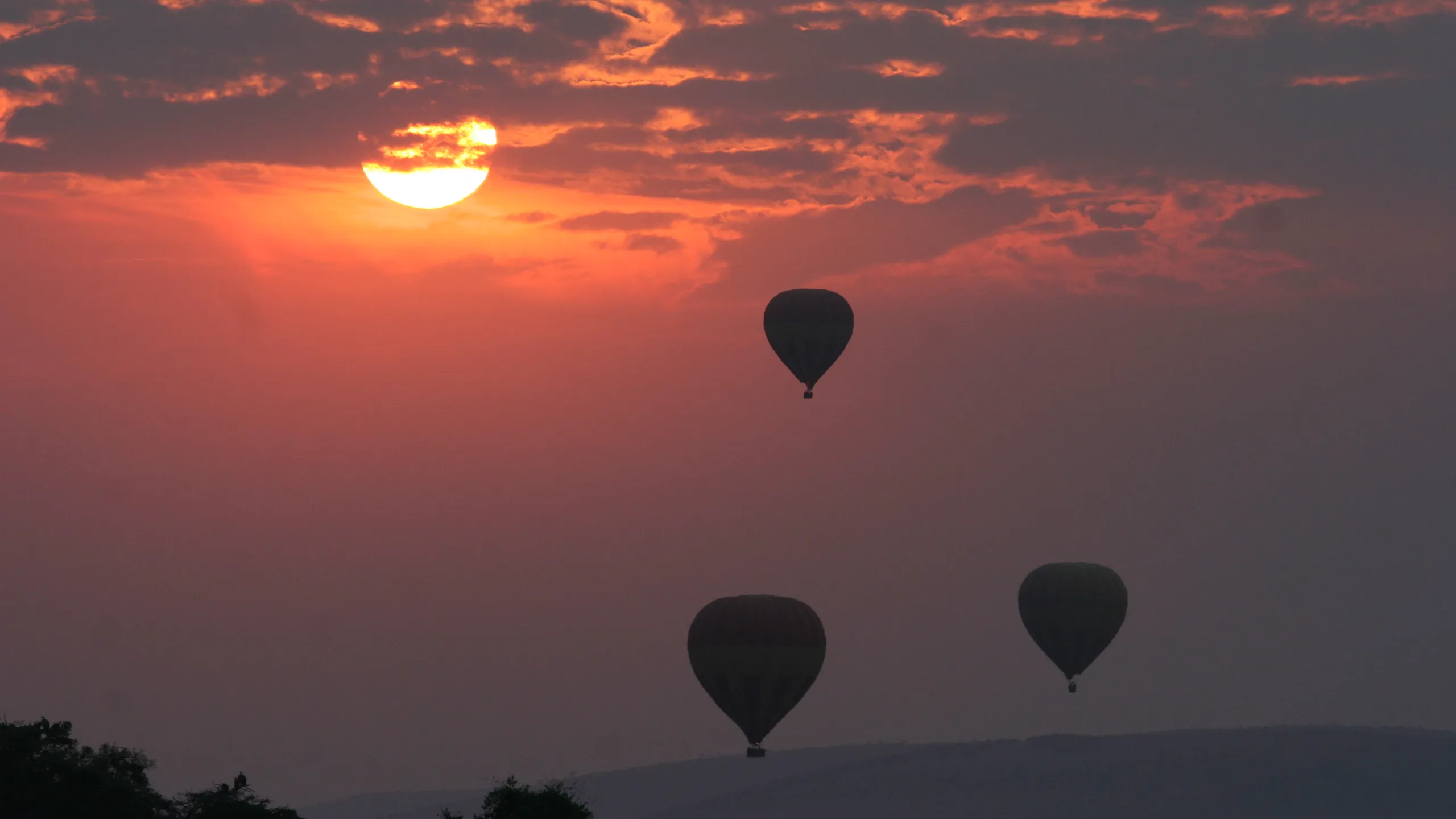
A balloon flight is a three to four hour morning wrapped around roughly one hour in the air. You meet in the dark, watch a crew turn a sack of nylon into a seven-storey aircraft, drift over the countryside while the world wakes up, and finish standing in a farm field with a glass in your hand. Here is the whole morning in order, so nothing takes you by surprise.
One hour before sunrise: the weather call
The day starts at a meeting point, usually a cafe or the operator's office, while it is still completely dark. In summer that can mean 4:30 a.m. Your pilot has been up longer, comparing forecasts, and the first thing that happens at the field is a small ritual: the release of a pibal, a party-sized helium balloon whose drift shows wind speed and direction at each altitude. Watch it climb and you are watching the pilot pick the launch site and sketch a route. If the winds are wrong, the flight is scrapped on the spot. Good operators cancel without hesitation, so treat a scrubbed morning as the system working. While you wait, you will be glad you dressed for a cold, dewy field; the full checklist is in what to wear and bring.

Fans first, fire second
The crew hauls the envelope, a bag of fabric that weighs well over 100 kilograms, out of a trailer and drags it into a long strip on the grass. The basket is rigged lying on its side, and the burners are test-fired with a roar that makes everyone jump.
Then two petrol fans blow cold air into the mouth of the envelope for several minutes, until it becomes a huge, wobbling cave of colour. Only then does the pilot aim a burner inside and heat the air. The balloon rears upright in under a minute, and the field suddenly has an aircraft standing on it. Arrival to upright typically takes 30 to 45 minutes.
Climbing in
Baskets have no doors. You climb in through footholds woven into the wicker, swing a leg over the rim and drop into a compartment shared with two or three others, placed by the pilot so the load balances. Then comes the safety briefing: hands inside, no sitting on the rim, and a rehearsal of the landing position you will use an hour later. Lift-off itself is the great anticlimax of the morning. There is no run-up and no lurch. The pilot feeds in heat, the basket stays perfectly level, and at some point you notice the ground is two metres below and sinking. Most first-timers are told they are flying before they feel it.

The hour aloft
Expect 45 to 75 minutes in the air, drifting anywhere between 500 and 2,000 feet, with the odd treetop pass. Two things surprise everyone. First, the silence: between burner blasts there is no engine noise at all, and sound rises, so you hear dogs barking and doors closing far below. Second, the stillness. The balloon moves exactly with the wind, so you feel no breeze whatsoever, even in a 20 km/h airstream.
The pilot cannot point the balloon, but by climbing and descending into layers that blow in different directions, a good one lands close to plan. That trick is explained in how pilots steer.
The landing, the pack-up and the toast
A few minutes before touchdown the pilot briefs you again: knees soft, both hands on the rope handles, cameras stowed. The basket may bump, slide a short way, even tip gently onto its side in a breeze. That is a normal landing, not a mishap. The pack-up that follows is sociable; passengers who feel like it help squeeze the hot air out of the envelope and roll it into its bag while the chase vehicle bounces across the field to meet everyone. Then the table comes out. A toast, traditionally with champagne, closes the flight, a custom balloonists trace back to the first flights of the 1780s, and most operators hand first-timers a signed certificate with it. The story behind the glass and the certificate is told in balloon traditions. You are usually back at the meeting point by mid-morning.
The winds have welcomed you with softness. The sun has blessed you with his warm hands. You have flown so high and so well that God has joined you in your laughter and set you gently back into the loving arms of Mother Earth.
Wondering whether you can fly?
Age limits, weight limits, pregnancy, fear of heights: what operators check before they take you up, and why.
First flight: quick answers
How long does a hot air balloon ride actually last?
Plan for a three to four hour morning in total: transfers, inflation, the flight, pack-up and the toast. The airborne part usually runs 45 to 75 minutes, depending on wind, fuel and where the landing options are.
What does lift-off feel like?
Like almost nothing, and that is the charm of it. There is no acceleration and no lurch. The basket stays level while the ground quietly drops away, and many passengers only notice once the trees are below them.
Can I help the crew with the balloon?
Usually yes, if you ask. Holding the crown line during inflation and squeezing air out of the envelope afterwards are jobs pilots happily hand over. It is optional everywhere, so watching with a coffee is equally acceptable.
Do I really get a certificate for my first flight?
Most operators present a first-flight certificate at the post-flight toast, often with your date, route and maximum altitude filled in. It costs nothing, so ask if one is not offered.