
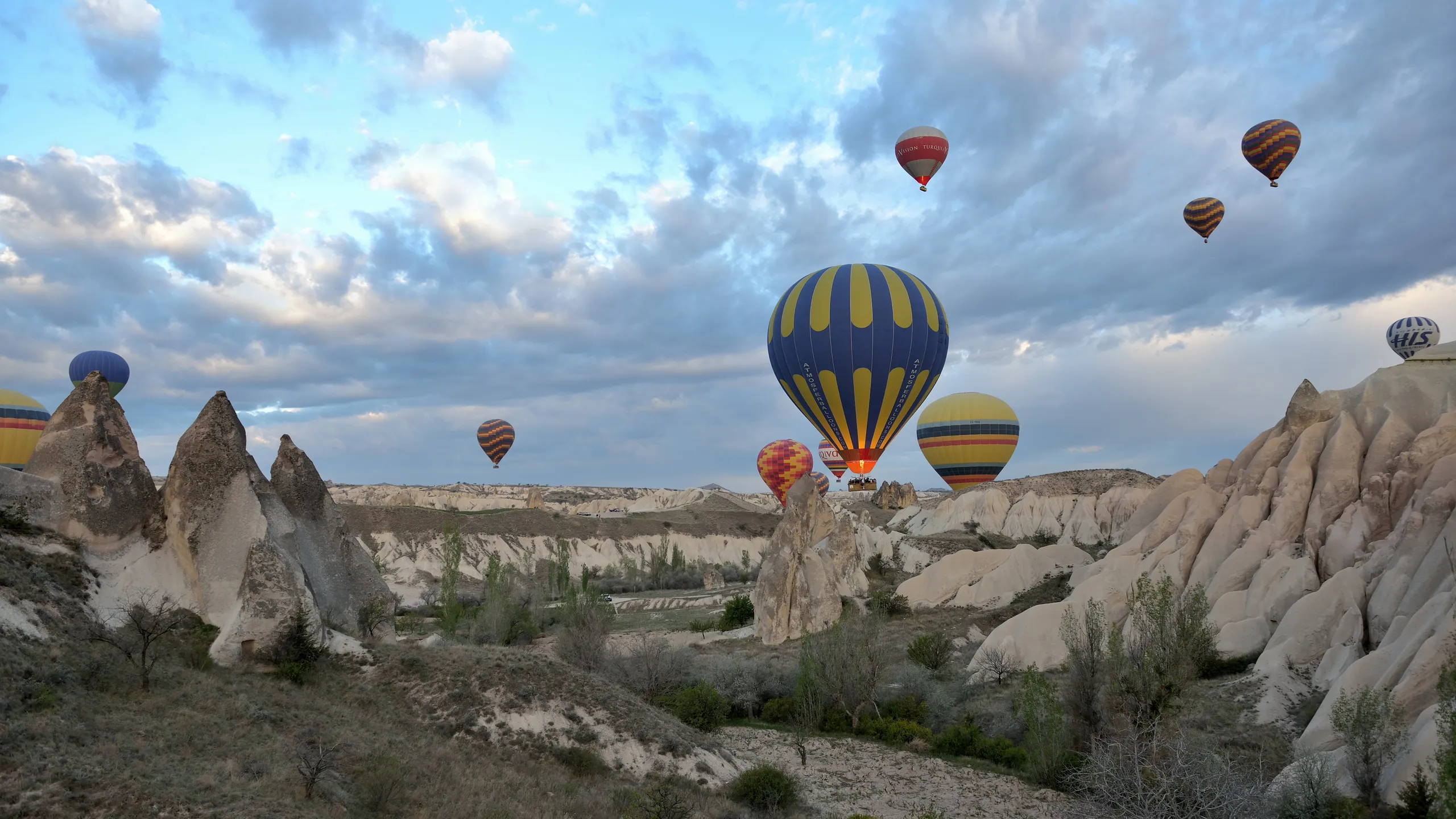
A hot air balloon carries no rudder, no propeller and no steering wheel. The pilot controls exactly one thing: altitude. Burn to climb, vent or simply wait to descend. Steering happens anyway, because the atmosphere rarely moves as one block. The wind at 200 feet often blows in a different direction than the wind at 2,000, and a pilot who knows the layers can slide between them, borrowing a little of each direction until the flight path bends where they want it to.

The sky is a stack of rivers
Think of the lowest few thousand feet of air as rivers stacked one above another, each flowing its own way at its own speed. Descend and you join the lazy current near the ground; climb 500 feet and you may find a faster stream angling off to one side. On a dawn flight in Cappadocia you can watch a dozen balloons at different heights drift in visibly different directions at the same time.
Cappadocia's secret is drainage. Overnight, cool air slides down into the valleys like water finding a drain, and at first light those valley flows run their own way beneath the upper wind. Pilots descend into a gorge to ride its private current, then climb out into the main flow to move on.
Reading the wind before sunrise
The steering starts the night before, with winds-aloft forecasts. At the launch field, while the crew unrolls fabric in the half dark, the pilot releases a pibal, a small helium balloon, and simply watches it climb. Every kink in its path marks the boundary between one wind layer and the next, so a minute of watching sketches a map of the morning's options. Modern pilots back this up with GPS tracks and live wind apps, but the ritual of craning at a shrinking dot has not changed in a century.
Aloft, the reading continues: flags, chimney smoke, ripples crossing a pond, even a dab of shaving foam dropped overboard to show what the wind underneath is doing. Dawn flights exist precisely because the layers are calmest and most predictable then, the same logic explained in the best time to fly.

The Albuquerque Box
The most famous wind pattern in ballooning sits over Albuquerque, New Mexico. On calm October mornings, cold air drains down the Rio Grande valley and creeps south near the surface, while a few hundred feet higher the flow returns north. Launch, drift south while staying low, then burn and climb into the northbound layer, ride back over the field, descend and land near where you rolled out the envelope.
Pilots fly the Box like an elevator between two moving walkways, and it is a big part of why the world's largest balloon festival calls the city home every October.
Landing is planned backwards
A balloon pilot never aims at a single landing spot; they manage a corridor of possibilities. From the first minutes of flight, the pilot tracks which fields downwind are large enough, clear of power lines and livestock, and reachable from the current line of drift. Choosing an altitude is really choosing which of those fields stay on the menu. Meanwhile the chase crew follows by road, guided by radio calls and a GPS pin, timing the drive to arrive as the basket touches down. What happens in those last few feet, and why pilots brief you to bend your knees, is covered in our page on the landing.
Watch a pilot read the sky
On your first flight morning you will see the pibal go up, hear the weather briefing and feel the balloon change direction as it climbs. Here is how the whole morning unfolds.
Steering FAQ
Can you actually steer a hot air balloon?
Not directly. The only control is vertical: burners to climb, venting to descend. Direction comes from choosing wind layers, since wind often blows different ways at different heights. Skilled pilots steer surprisingly precisely this way.
How do pilots know where the balloon will land?
They do not pick an exact spot in advance. Pilots launch with a forecast corridor in mind, keep a running list of landable fields downwind, and pick the best option as the flight unfolds. The chase crew follows by road and meets the basket at touchdown.
What is a pibal?
Short for pilot balloon: a small helium balloon released before flight. Watching its path as it climbs reveals the direction and rough speed of each wind layer, which is the pilot's steering map for the morning.
What is the Albuquerque Box?
A dawn wind pattern in Albuquerque's Rio Grande valley: cool drainage air flows south near the ground while the flow a few hundred feet up returns north. Pilots ride the low layer out and the high layer back, landing close to where they launched.