
Hot Air Balloon Rides in Byron Bay
One ride is listed here, at about 213 EUR down from 243: a sunrise flight over Cape Byron, the easternmost point of the Australian mainland.
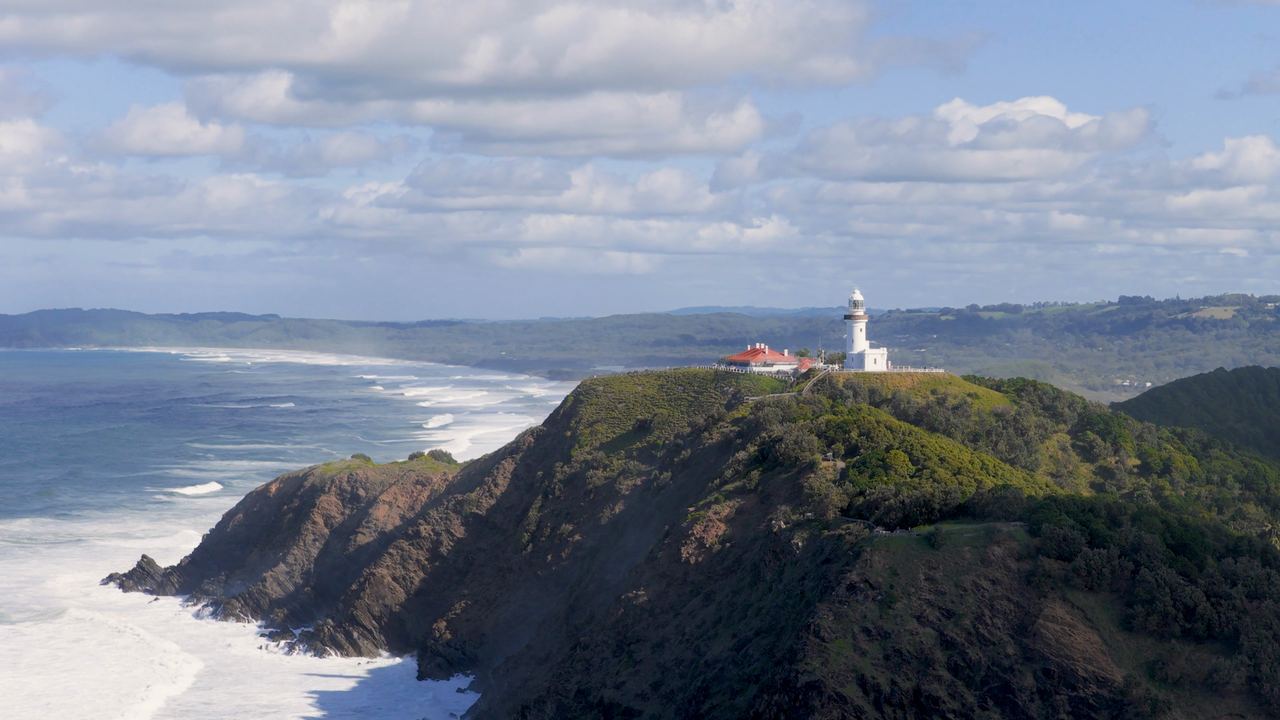
Byron Bay has one balloon flight on this site, at about 213 EUR, down from 243. It goes up at sunrise, which in this town carries more weight than usual. Cape Byron, the headland under the lighthouse, is the easternmost point of the Australian mainland, so the light reaches this stretch of coast before it reaches the rest of the continent. The town sits in northern New South Wales, about an hour's drive south of the Gold Coast. From the basket you get a coastline on one side and farm country on the other.

When to fly over Byron Bay
The most easterly point of Australia gets the sunrise before anywhere else on the continent, which is the whole proposition here: the flights are timed so that the light arrives while the balloon is up, with the hinterland below and the ocean on the horizon.
The season follows the subtropical pattern — best in the dry shoulders, hardest in a wet summer — but the constraint that catches people out is scale. This is a small operation on a small number of mornings, and in March, April, October and November it books out well ahead.
| 1 | 2 | 3 | 4 | 5 | 6 | 7 | 8 | 9 | 10 | 11 | 12 |
The same reading for all 31 destinations, grouped by climate, is on the season guide.
Where the light lands first
The eastern tip of a continent amounts to a few hundred metres of headland, but it does change the geometry of the morning. The sun comes up out of open water with nothing in the way, and the cliffs and the lighthouse tower catch it before the ground behind them does. Inland the country climbs into the Northern Rivers hinterland: cane and cattle paddocks on the flats, with ridges of subtropical rainforest above them. The eroded rim of an old volcanic caldera holds the horizon to the north-west, and small towns like Bangalow sit in the folds below it. Ballina and the mouth of the Richmond River lie south along the coast, and on a clear morning the Gold Coast towers stand up in the distance to the north. Where the balloon actually goes is nobody's decision. A pilot picks a height and takes whatever wind is running at it, so the track changes every morning and no operator promises you the lighthouse.
Year round flying, and a very early alarm
Australia flies all year, so the month matters less than the morning. What cancels a launch is wind at ground level or a low cloud base rather than the season, and the best time to fly page explains how operators read it. Sunrise shifts by hours between June and January and the meeting time moves with it, so check the pickup against your own dates instead of assuming. Passengers are usually put to work before take-off, holding a rope or hauling the mouth of the envelope open while the fans force air into it, and that is the part of the morning most people describe afterwards. Landings happen in paddocks and cut grass, so wear shoes you do not mind ruining and bring a layer for the cold at altitude; the packing notes cover the rest. Crews finish with a toast, a habit with a specific origin worth knowing before somebody hands you a glass. If the Byron calendar is full, the Gold Coast launches an hour up the road, and the Australia page has the rest of the country.