
The biggest balloon festivals in the world
Measured by attendance rather than by reputation. The order surprises most people: the largest balloon gathering on earth is not the one that appears first in every English-language list.
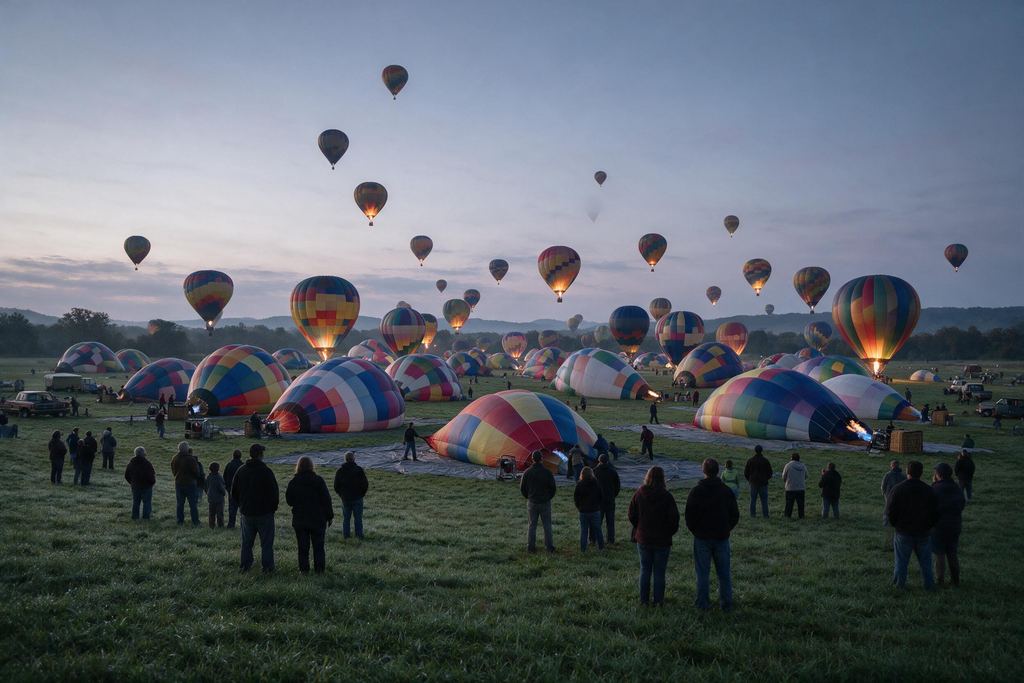
Attendance is a harder number than it looks: most festivals do not publish one, and the few that do count differently. Where an official figure exists we use it and say which year it refers to; where it does not, the row stays empty rather than carrying an estimate. The full calendar has the rest.
The ones written up so far
Balloons over Waikato
New Zealand's largest balloon festival fills a week in Hamilton, and its Nightglow is free but ticketed. What that means if you are planning to go.
Bristol International Balloon Fiesta
Bristol has stayed free for nearly fifty years and sells no flights of its own. What the fiesta is, what gets cancelled, and who flies you instead.
Festival Internacional del Globo
León's Festival Internacional del Globo gathers hundreds of balloons from more than 25 countries. Ticket prices, attendance, and who sells the flights.
Festival International de Ballons
The Swiss valley where the first round-the-world balloon flight began still fills with balloons every January. Why winter, and what the week involves.
International de montgolfières de Saint-Jean-sur-Richelieu
Canada's largest balloon festival is the only one on this list that publishes both its ticket price and its flight price. What that buys, and why it is rare.
Montgolfiades de Marmande
Marmande hosts two national championships in one week, which is why the festival is hard to find under its own name. What competition flying looks like.
Penang Hot Air Balloon Fiesta
A hundred thousand people, a handful of balloons and no free flights. Why Penang's fiesta is a display rather than a flying event.
Philippine International Hot Air Balloon Fiesta
The Philippine fiesta changed province in 2024 and old listings still send people to the wrong one. What flies there now besides balloons.
Saga International Balloon Fiesta
Saga draws more visitors than any other balloon festival on earth, and offers no flights to the public at all. What that means if you want to fly.
Taiwan International Balloon Festival
Taitung runs its balloon festival for weeks rather than days, and publishes what a flight costs. How a county turned a summer into an economic programme.
The Great Reno Balloon Race
Reno invented the Dawn Patrol and gives the whole event away for free. What you can actually fly in, and what the free part covers.
Vredefeesten Ballonfestival
The balloon meeting inside the Vredefeesten has run since 1948, from a market square rather than an airfield. The oldest of its kind, and still free.
Size is measured by people, not by balloons. A festival with sixty crews and a hundred thousand spectators is a bigger event, by any definition that matters to a visitor, than one with two hundred balloons and a field of enthusiasts — and the two rankings put different names on top.
The figures themselves are harder than they look. Four festivals out of the ninety-odd we track publish an official attendance number; the rest circulate estimates whose origin nobody can trace. Where an official figure exists we use it and say which year it belongs to. Where it does not, the field stays empty, because a number without a source is worse than no number on a page whose whole claim is accuracy.
One pattern shows up as soon as the list is sorted this way: the biggest events by attendance are frequently the ones that sell the fewest flights. The crowd comes to watch, the organisers have no room for passenger rides, and anyone who wants to fly has to look elsewhere — often to an operator twenty minutes down the road.
One consequence of ranking by people rather than by balloons is that the list moves slowly. Attendance figures come out months after the event, some years not at all, and a festival can grow considerably before the number that says so is published anywhere. Where a figure is a few years old, the year is written next to it: an attendance number without its year is the kind of fact that ages without anyone noticing.