Hot air balloon rides in Spain: how to choose where to fly
Five Spanish destinations sell balloon rides, and the name on the listing does not always match the ground under the basket. What Toledo, Segovia, Salamanca, Ibiza and the flights sold as Barcelona actually show you, what they cost, and where the geography is oversold.

Five places in Spain sell balloon flights with any regularity, and the name on the listing does not always match the ground under the basket. Toledo, Segovia and Salamanca are literal: the balloon goes up beside the city and the city is what you look at. Ibiza is half literal. Barcelona is not literal at all. Eighteen rides are listed across the five on the Spain pages, and the question worth asking of each one is what it puts under the basket that you cannot get from the ground.
| Destination | What you see | Rides listed | Price from |
|---|---|---|---|
| Toledo | Walled old town inside a meander of the Tagus, the Alcazar, the cathedral spire | 3 | 205 EUR |
| Segovia | Roman aqueduct, cathedral, the Alcazar on its rock above the Eresma | 2 | 205 EUR |
| Salamanca | Sandstone old town, two cathedrals side by side, the Plaza Mayor, the Tormes | 1 | 215 EUR |
| Barcelona | Catalan interior: Anoia farmland, Montserrat, Pre-Pyrenees. Not the city | 11 | 171 EUR |
| Ibiza | Pine interior and terraced farmland, Dalt Vila and Ses Salines on the skyline | 1 | 250 EUR |
Toledo, Segovia and Salamanca: the Castilian three
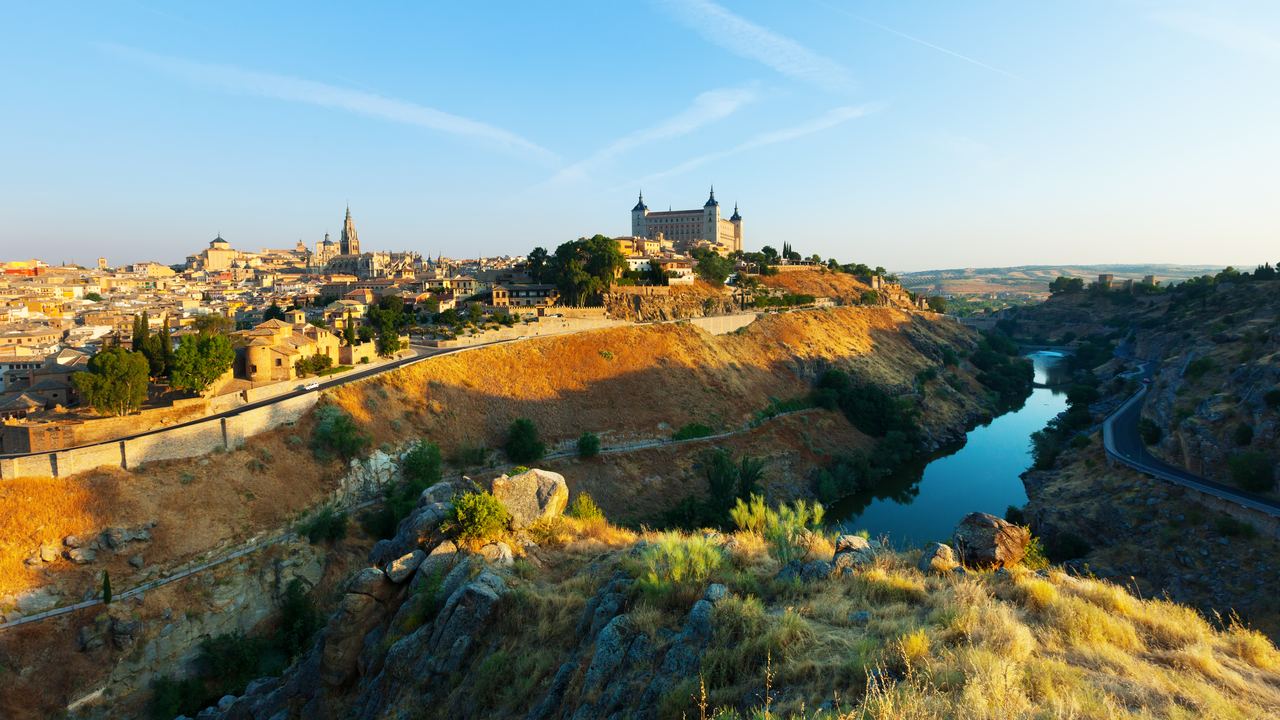
Toledo is the one to take if there is only one morning. The old town sits on a granite spur inside a meander of the Tagus, which wraps three sides of it, and that shape is exactly what no street and no viewpoint will hand you. From the air it arrives in one piece: a walled city on what is very nearly an island, the river in a real gorge below it, the plain running north towards Madrid. The four corner towers of the Alcazar and the cathedral spire fix everything else in place. Launches are from the La Peraleda fairground on the north bank. Of the three rides listed, the plain one is 205 EUR, the version that includes breakfast is 215 EUR, and the one that collects you in Madrid is 255 EUR.
Segovia is shaped like a ship. The Alcazar stands at the prow, on the rock where the Eresma and the Clamores meet; the Roman aqueduct is ruled straight across the low ground at the other end; the cathedral lifts out of the brown tile roofs between them. Two rides are listed, and they are the same flight sold from two doors. One meets on Calle 3 de Abril in Segovia, at 205 EUR. The other meets at Plaza de Espana in Madrid and includes the road transfer, at 245 EUR. Some listings present that second one as a flight over Madrid. It is not. Nobody flies a balloon over the capital. The minibus carries you out before dawn and the balloon goes up over Segovia, on the same route as everyone who drove themselves.
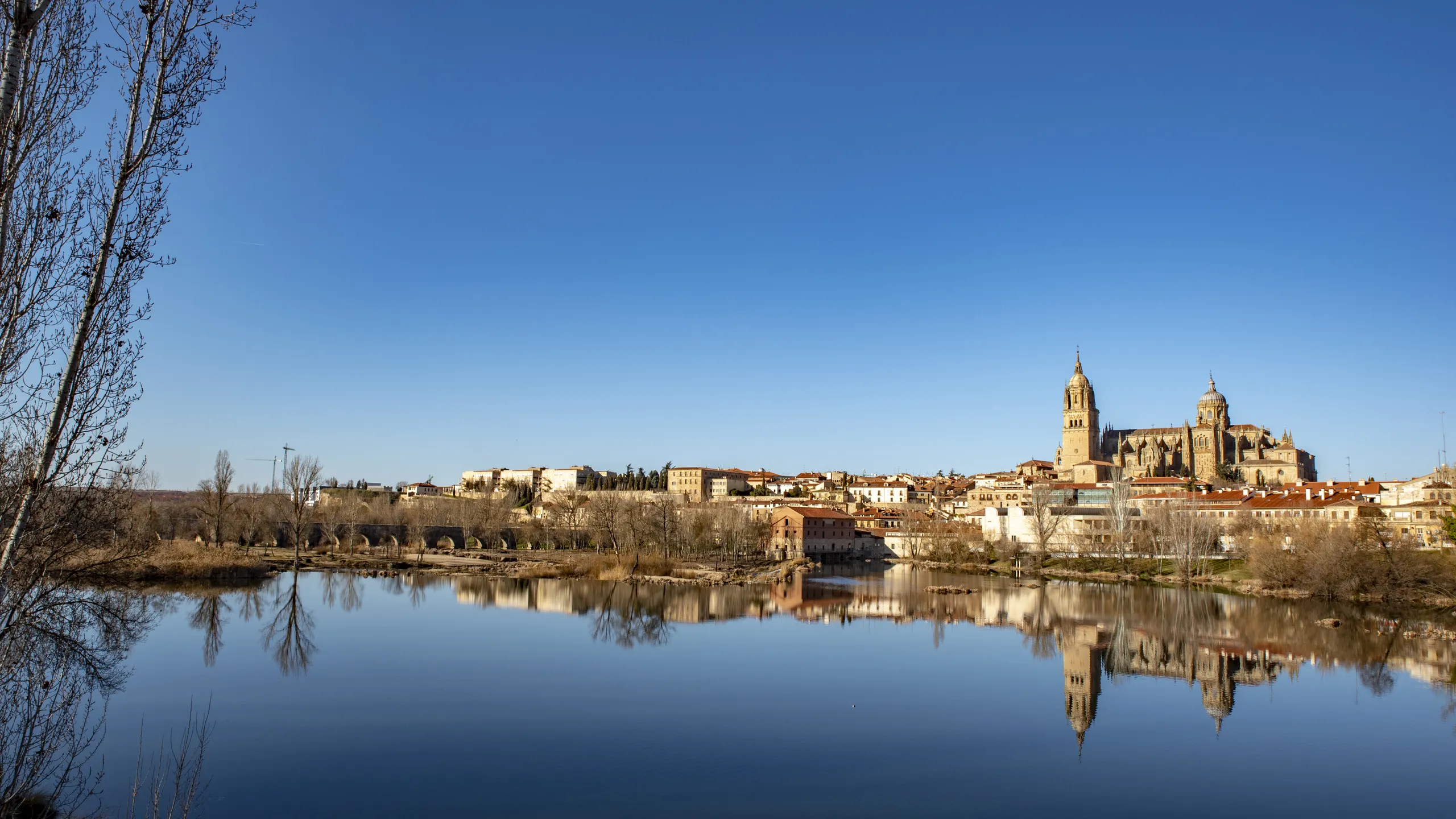
Salamanca has a single ride, at 215 EUR, and one strong argument for it. The whole old town was cut from the same quarry at Villamayor, so it changes colour all at once when the sun clears the horizon, grey to honey in a few minutes. Under the basket the two cathedrals make one silhouette, the squat Romanesque one pressed against the flank of the late Gothic one. The Plaza Mayor is a clean rectangle of shadow until the light reaches the arcades. The Tormes runs wide and shallow beneath the Roman bridge, and past the last roundabouts the dehesa takes over, thinned holm oak pasture flat to the horizon.

The Barcelona flights do not fly over Barcelona
Say it plainly, because the listings will not. Eleven rides sit on the Barcelona page. None of them flies over Barcelona. Most lift off from the Igualada-Odena aerodrome in the Anoia, about 60 km inland, an hour up the A-2. A city of a million and a half people with an international airport on its doorstep does not get balloons drifting across it, and the small print on every one of these listings concedes as much. What the Barcelona pickup buys is a drive out of town in the dark.
The consolation is that the Catalan interior is good country. The Conca d'Odena is a shallow basin of cereal fields, vines, farm tracks and the occasional stone masia, with the tanning town of Igualada in the middle and Montserrat filling the eastern horizon: a wall of pink conglomerate broken into hundreds of rounded fingers, a Benedictine abbey folded into a ledge halfway up. This is also the cheapest ballooning in Spain. The shared Catalonia flight with Barcelona pickup is 171 EUR, cut from 190. The Igualada flight over Rubio and Montserrat is 195 EUR, and the Pre-Pyrenees flight, which puts ridges and river gorges under the basket, is 190 EUR. Private charters reach 595 EUR. The same airfield has hosted the European Balloon Festival since 1997, four days every July with more than fifty balloons on the grass; the 2027 edition, 8 to 11 July, is listed at 260 EUR.
The city named in a Spanish balloon listing is usually where you sleep, not what you fly over.
Ibiza, and what every Spanish flight has in common
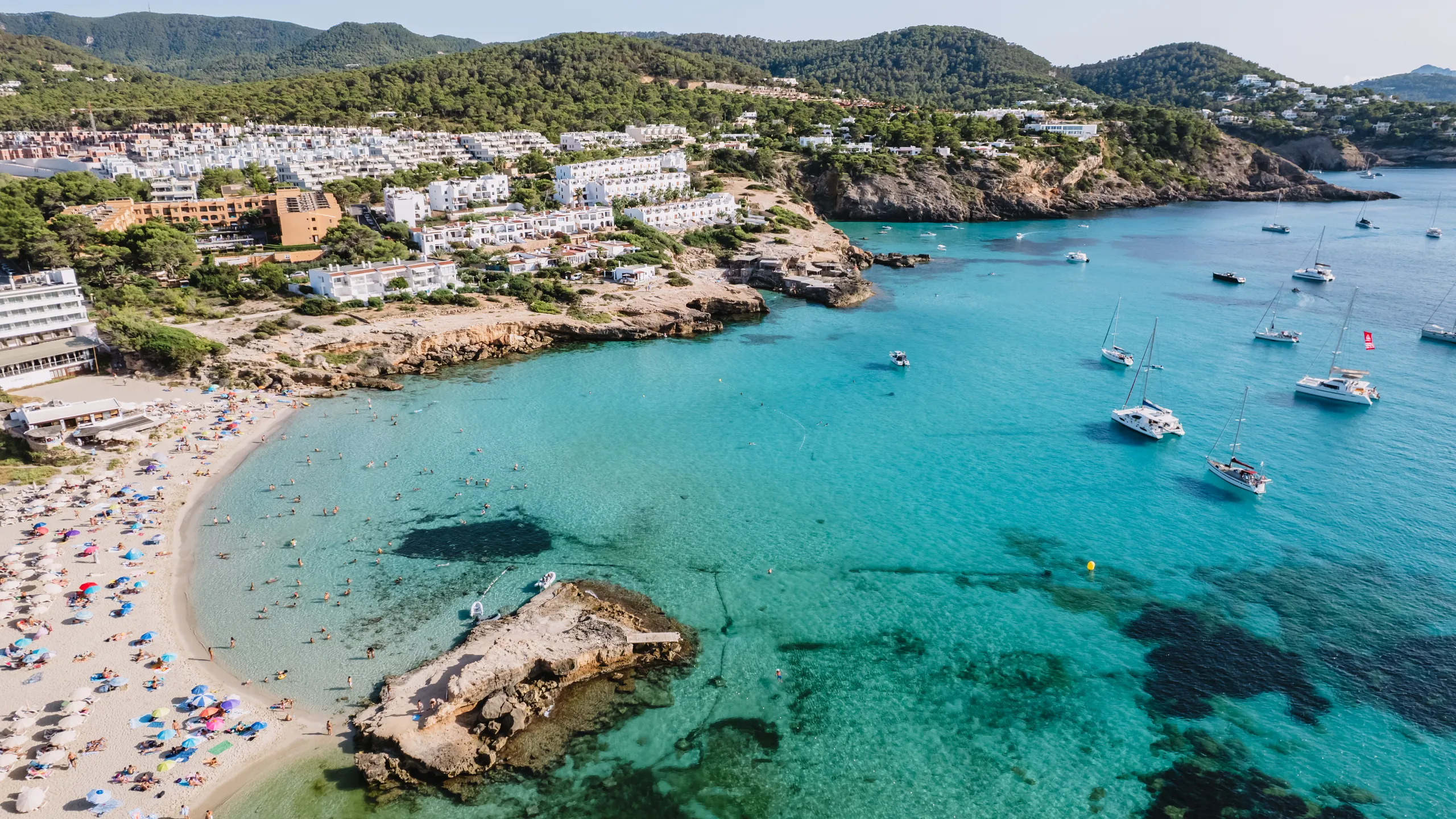
Ibiza has one ride, at 250 EUR, the dearest of the five, which is roughly what island logistics cost. It does not go over the old town either. The airport sits seven kilometres from Dalt Vila and its airspace covers the bay, so the balloon works the middle of the island instead, which happens to be the better half. Red terraced soil, dry-stone walls, almond and fig orchards, low whitewashed farmhouses with flat roofs, pine ridges running down to the water on every side. Dalt Vila stands on the south-east skyline, the cathedral tower above the bastions Philip II built against Ottoman raiders. The salt pans of Ses Salines take the first light, and Formentera lies beyond them as a flat grey line.
The rest is common to all five. You stand for the whole flight and you are up for about an hour, with the listings quoting 60 to 90 minutes. Take-off is at first light, the only slot anyone sells, because it is the only hour of the day when the air is stable enough to fly. The landing happens in whatever field the wind provides, and the retrieve van arrives by road a few minutes later. Then a bottle of cava is opened in the stubble and a certificate with your name on it is handed over with some ceremony, an old ballooning custom rather than a marketing flourish. The mainland season runs roughly March to November, and spring and autumn hold the calmest dawns.

The five Spanish destinations
Each page lists the rides, the prices and where the balloon actually takes off.
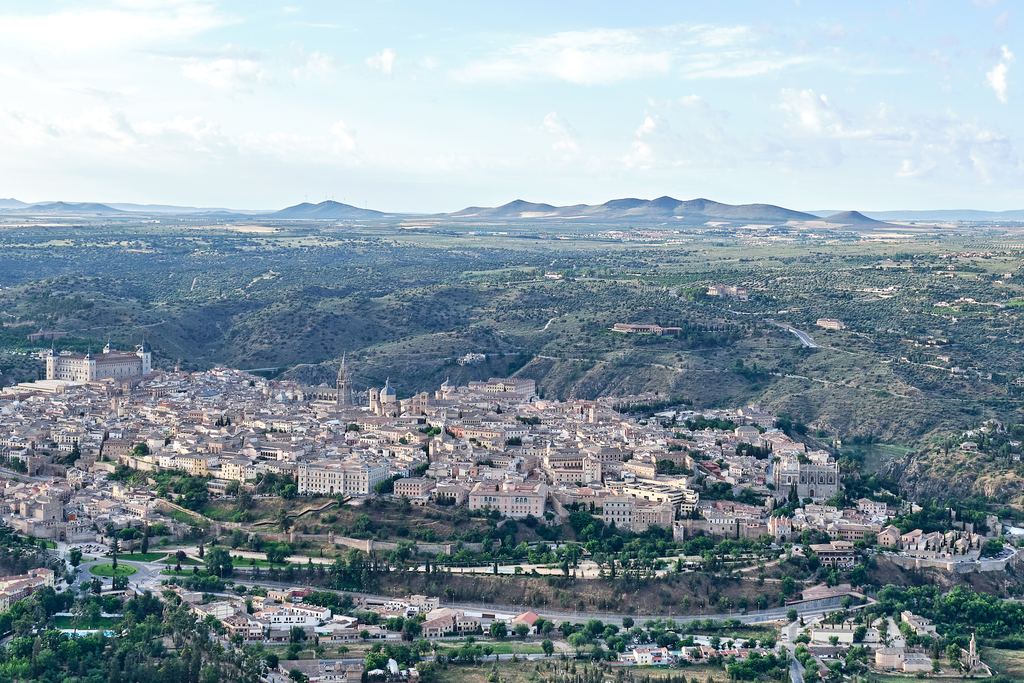
Toledo
Three rides over the walled city inside its bend of the Tagus.

Segovia
Two rides over the aqueduct and the Alcazar. One meets in Madrid.

Salamanca
One ride above the golden sandstone city on the Tormes.
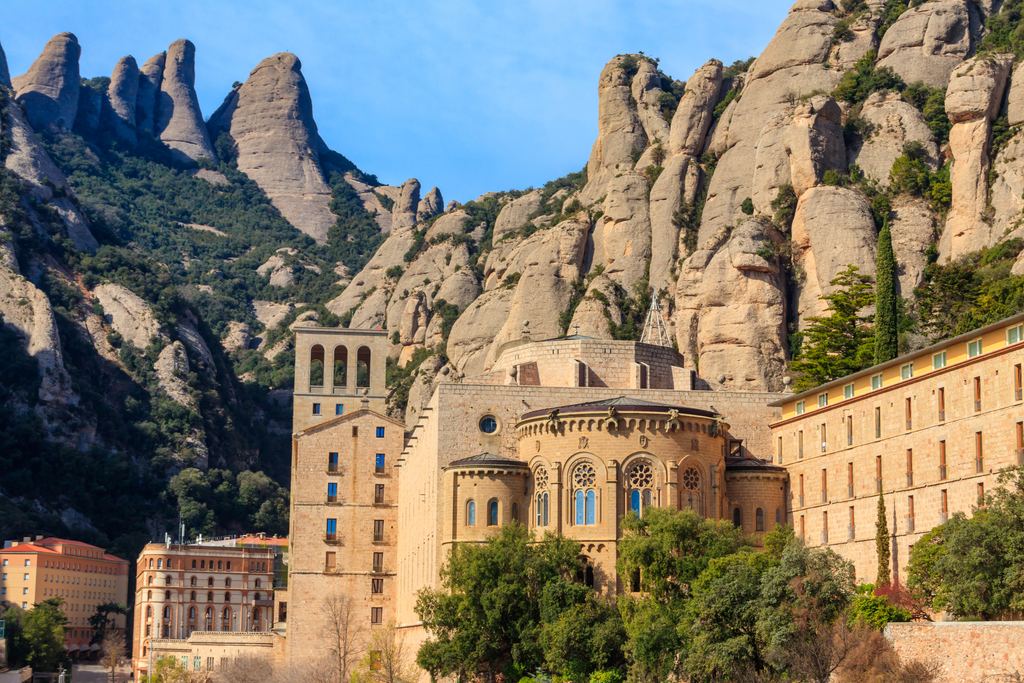
Barcelona
Eleven rides, all launching from the Catalan interior, not the city.

Ibiza
One ride over the pine interior and the coastline.
Practical questions
Which one should a first-time visitor book?
Toledo, on the geography. The meander is the most legible thing in the Spanish list from the air, and at 205 EUR it sits in the middle of the market. If the trip is based in Madrid without a car, take Segovia with the transfer at 245 EUR instead: no train or bus reaches a launch field at first light, so the minibus is doing real work for the extra 40 EUR. Choose Catalonia if landscape appeals more than a skyline, and Ibiza only if you are already on the island.
When does the Spanish season run?
Roughly March to November on the mainland, with May, June, September and early October the most reliable. Summer launches move earlier because the meseta heats fast and the air roughens by mid-morning. Winter gives sharp visibility on its good days and fog on the plain on its bad ones. Ibiza flies April to October and almost never in winter. The seasonal guide covers the trade-offs month by month.
How often do flights get cancelled?
Often enough to plan around. Wind and cloud base decide it, and the call is made a few hours before take-off, sometimes at four in the morning. An operator that scrubs mornings readily is usually the one worth booking. A cancelled flight normally means a new date rather than money back, so take the first morning of a stay rather than the last, and read the cancellation terms before paying.