
Where to fly a hot air balloon in winter: four skies at their peak, four that are shut
Of 271 flights listed here, 85 are in places where November to February is the annual peak and 17 are in places that publish a closed season. The largest block of all, Cappadocia's 51, takes bookings all winter and grounds more mornings then than at any other time.
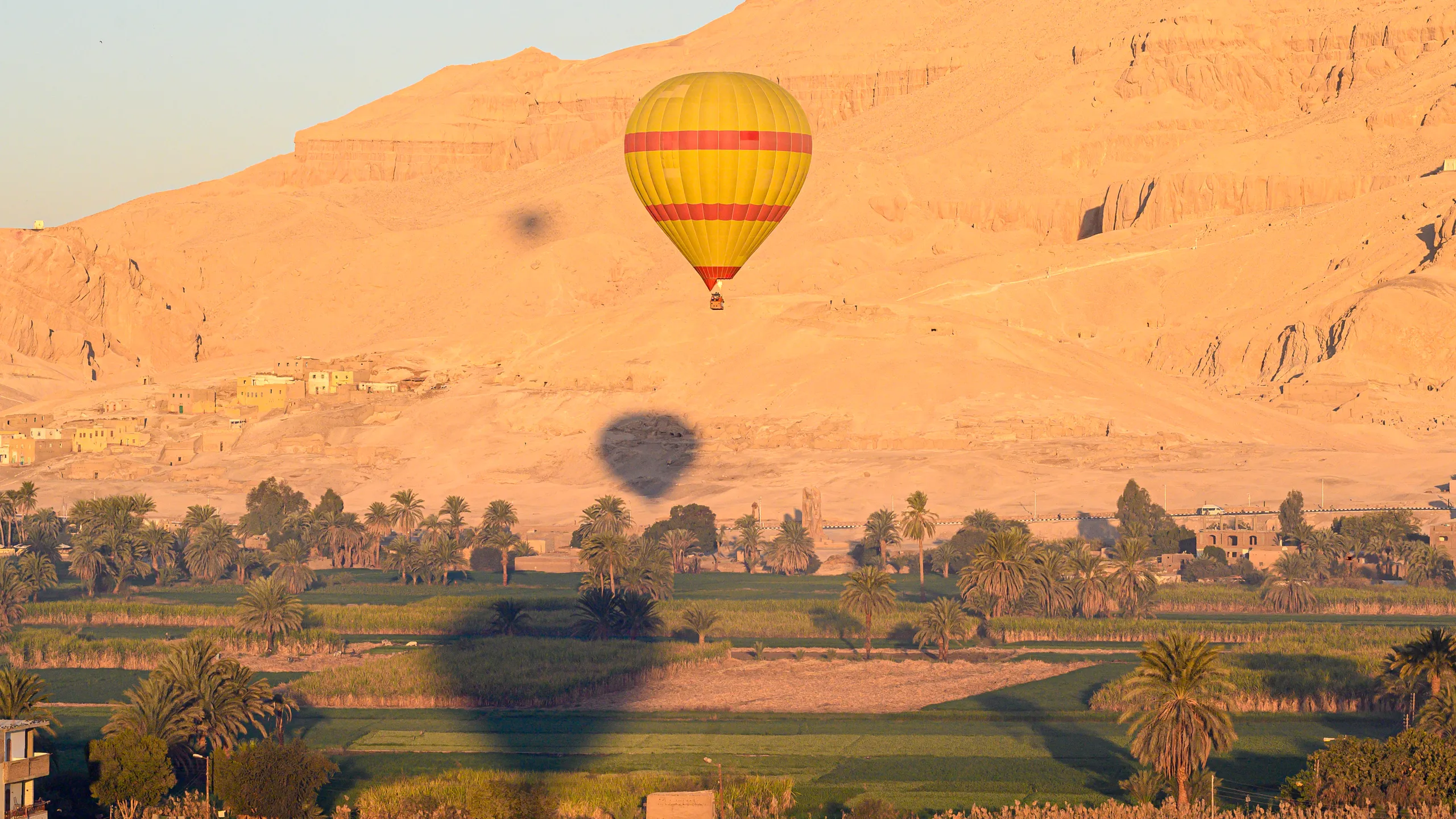
Ask where to take a hot air balloon ride in winter and the answers come back as a list of warm places. The catalogue on this site says warmth is close to beside the point. Of the 271 flights listed here in English, read on 28 October 2026, exactly 17 sit in places whose operators publish a season that is shut from November to February. Everything else can be booked. Booked and flown are different words.
Three groups fall out of the catalogue, and only one of them is a closure. Four destinations are at their annual best in these exact months, and they hold 85 of the 271 listings between them. Four more publish a season that ends before November, which is where the 17 come from. Then there is Cappadocia: the largest single block on the site at 51 listings, open every week of the winter, and the one place where a January booking is least likely to leave the ground. For the next four months the useful question is not where it is warm. It is where the flight actually happens.
The four places that genuinely close
Vilnius and Trakai account for seven of the seventeen, and the Lithuanian operators state a season running 15 April to 31 October. The three Loire Valley flights run April to October. Four listings at Cairns and three at Perth and the Avon Valley make up the rest. That is the entire closed column.
Read the list again, because it does not say what you would expect. Two of the four are in Australia, where November to February is high summer. Cairns shuts in its hottest months, not its coldest. The reason is water: the wet season there runs November to May, February averages 475.5 mm of rain against 26.6 mm in August, and tropical cyclones form between November and May. A balloon is a fabric bag that cannot steer. Cyclone season is a closure whatever the thermometer says.
Which is the thing worth carrying into the rest of this. Winter closures are not about cold at all. They are about wind, rain and fog, and that is equally why the two European ones fall where they do. Vilnius and the Loire stop for the same reasons Cairns does, at the opposite end of the calendar.
| Destination | Listings | November to February |
|---|---|---|
| Cappadocia, with the multi-day, outer valley and premium flights | 51 | Flies, and grounds most often |
| Egypt: Luxor, West Bank days, Nile cruises | 42 | Peak season |
| Spain: Barcelona, Segovia, Toledo, Mallorca and others | 40 | No closed season declared |
| United States: Phoenix, Temecula, Albuquerque | 21 | In season |
| Teotihuacan | 17 | Peak season |
| Morocco: Marrakech and Agadir | 17 | Marrakech at its peak |
| Australia: Melbourne, Sydney, Gold Coast, Byron Bay | 15 | Peak season, austral summer |
| Italy: Florence, Siena, Umbria | 15 | No closed season declared |
| Dubai | 12 | Peak season |
| Pamukkale | 8 | Spring and autumn are the stated best |
| Vilnius and Trakai | 7 | Closed, 15 April to 31 October season |
| Australia: Cairns, Perth and the Avon Valley | 7 | Closed, wet season and cyclones |
| Johannesburg and the Magaliesberg | 6 | Flies all year |
| Portugal: Algarve, Coruche, Alentejo | 5 | No closed season declared |
| Serengeti and Tarangire | 4 | Second window opens with the calving |
| Loire Valley | 3 | Closed, April to October season |
| Atacama | 1 | No closed season declared |

Four skies at their peak, and 85 flights inside them
Luxor is the plainest case on the site. Its mean daily maximum is 22.8 degrees in January and 41.4 in July, and the mean minimum climbs from 7.1 to 25.7 across the same gap. Nothing about the flight changes between those two months. What changes is the five hours after it, spent walking on uncovered stone. Egypt holds 42 listings here: 20 balloon flights over the Luxor west bank with nothing attached, nine that add the Valley of the Kings on the ground, and 13 Nile cruises with a balloon morning inside them. The 20 standalone flights run from 54.52 to 109.05 euros, median 78.62, the lowest median of any destination compared here. We went through the Egyptian winter in more detail in Luxor balloon rides in winter.
Teotihuacan earns its place on rainfall rather than heat. Mexico City sits at 2,240 metres and its climate is classified Cwb, subtropical highland with a dry winter, and the word carrying the weight is dry. December averages 5.0 mm of rain, February 5.7, January 11.9. July takes 174.0 mm and August 175.6. That is roughly thirty-five times as much rain in July as in December, in a place where the flight is an hour after dawn and the thing that cancels it comes out of the sky. Seventeen flights are listed over the archaeological zone, from 98.13 to 525.09 euros, median 132.52.
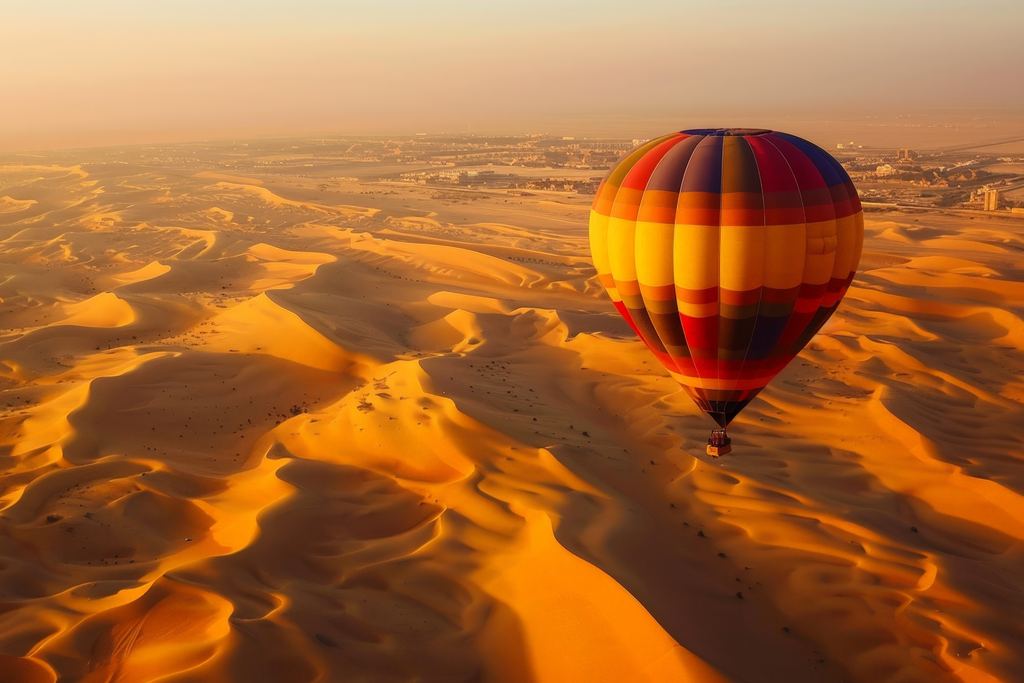
Dubai's season ends when dawn itself reaches 30 degrees
Dubai has a hot desert climate and its operators publish a season of November to March. January averages a daily high near 24 degrees and a low near 14. August averages a high near 40 and a low near 30, and it is that second number that closes the season rather than the first.
A mean daily minimum of 30 degrees means the coolest moment of the day is already 30 degrees. The coolest moment of the day is when a balloon flies. There is no earlier to go, which is why a Gulf summer is a closed door rather than an uncomfortable morning.
Twelve flights are listed over the desert inland from the city, 209.01 to 2,492.65 euros. The top of that range is one listing with a seated basket, which its operator calls the only one in the Middle East. Take it out and the rest stop at 472.90. Median 293.53.
Marrakech reads cool and bright in these months rather than cold: 19.1 degrees by day in January against 37.7 in July. The mean January minimum is 5.9, so the wait on the launch field before sunrise is genuinely cold even when the afternoon is not, which catches people out. The High Atlas stands along the southern horizon from the stony plain north of the city, and Toubkal, at 4,167 metres, is the highest summit in North Africa.
Fourteen flights are listed, median 125.00 euros. Three of them display 25, 25 and 30 euros. Those figures sit so far below every other price in Morocco that they read as a deposit or a part payment rather than the cost of a flight, and the listings do not say which. Confirm the total with the operator before treating one as a bargain.
| Destination | Flights listed | Lowest | Median | Highest |
|---|---|---|---|---|
| Luxor, flight only | 20 | 54.52 | 78.62 | 109.05 |
| Marrakech | 14 | 25.00 | 125.00 | 580.00 |
| Teotihuacan | 17 | 98.13 | 132.52 | 525.09 |
| Johannesburg and the Magaliesberg | 6 | 181.74 | 265.78 | 318.32 |
| Dubai | 12 | 209.01 | 293.53 | 2,492.65 |
| Melbourne and the Yarra Valley | 10 | 290.46 | 325.58 | 414.95 |
| Mallorca | 5 | 188.00 | 400.00 | 1,080.00 |
| Serengeti and Tarangire | 4 | 499.81 | 544.34 | 584.32 |
The spread across that table is just under seven to one at the median, and it has almost nothing to do with the hour in the basket, which is roughly the same hour everywhere. It tracks what is attached to it: a bush breakfast inside a national park with park fees behind it, or a minibus from a Luxor hotel.
Cairns closes in February, the hottest part of its year. The thing that grounds a balloon is almost never the temperature.
Cappadocia is open all winter, and that is the catch
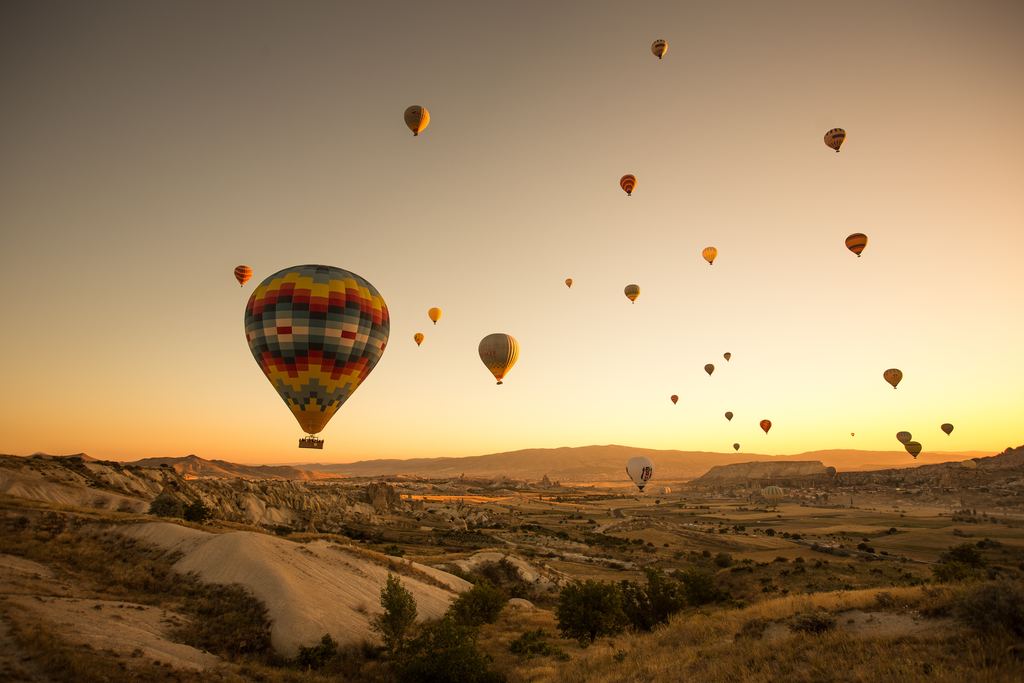
The largest block in the catalogue, and the longest odds
Fifty-one of the 271 listings here are Cappadocian, which makes it the biggest destination on the site by some distance and the one most people are shown when they search for a winter flight. It is open. It flies in every month of the year.
Our month by month reading of the region found balloons went up on 223 days of 2025, leaving 142 mornings on the ground, and those mornings are not spread evenly through the year. January brings the worst valley fog of the record, snow on about nine days, and 96 hours of sunshine against 365 in July.
Lying snow does not stop a balloon. Falling snow does, and so does the fog that pools in the valleys under an inversion and stays until nine in the morning, hours after the flying window has shut. A clear January dawn over the fairy chimneys, with low sideways light and snow on the north faces, is the best flying of the year. Nobody can sell you one in advance.
This is also why the winter prices look so attractive, and it is worth being blunt about the mechanism. A January flight in Cappadocia is cheap because it is priced against a real chance of not flying at all. The average stay in the region is under two nights. Give the trip three mornings and the odds come good; give it one and the discount you are enjoying is the odds, written down.
South of the equator the question inverts
Fifteen Australian listings are in their best months right now. Melbourne and the Yarra Valley hold ten of them, and Sydney, the Gold Coast and Byron Bay the other five. Melbourne averages 27.0 degrees by day in January against 14.5 in July, which is the austral summer behaving exactly as advertised. The ten Melbourne flights run 290.46 to 414.95 euros, median 325.58.
And the only two closed destinations in the southern hemisphere are also Australian. Cairns and Perth, seven listings between them, are shut while Melbourne is at its peak. We took six Australian skies apart on this point once already; the winter version is shorter. The country is big enough to hold both answers at the same time, so whether Australia is a good idea in February depends entirely on which city follows the question.
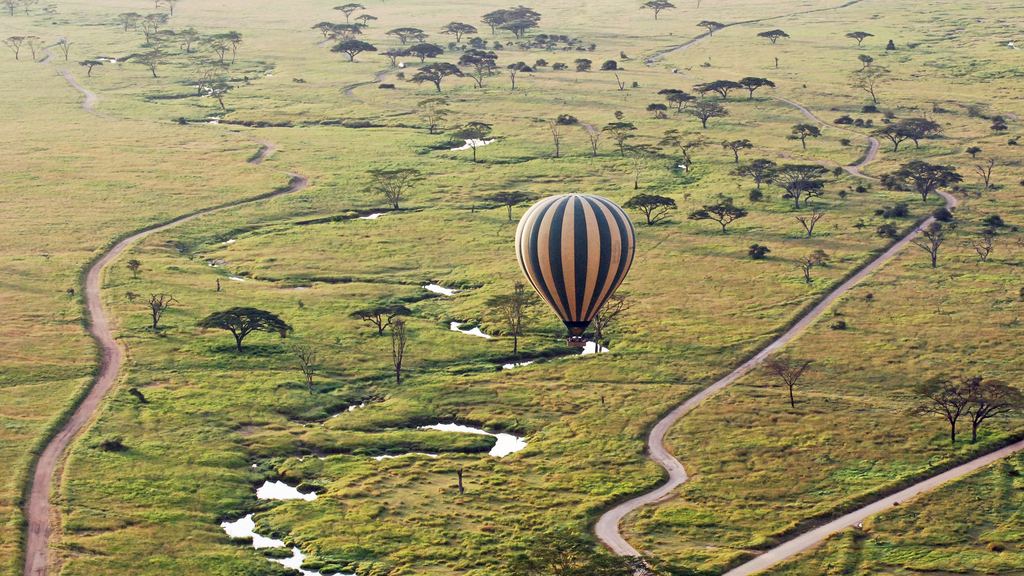
Tanzania is the other southern case, and it gets dropped from winter guides because the dry season takes all the attention. The Serengeti's famous months are June to November, when the herds cross the Grumeti and then the Mara. But they come south again with the short rains and usually arrive in December, and the calving follows: roughly 500,000 calves born over two to three weeks on the south-eastern short grass plains, in February. Four balloon safaris are listed here, 499.81 to 584.32 euros, median 544.34, which makes them the most expensive flights in the catalogue by a wide margin. November to February is not a gap in the Serengeti. It is a different animal.
Johannesburg, meanwhile, declares no season at all. Six flights over the Magalies valley and the Cradle of Humankind, median 265.78 euros, weather permitting, in any month you like.
When each of these skies is worth booking
Twelve months for the destinations this piece covers. The highlighted months are the good ones, not the busy ones.
| Month | 1 | 2 | 3 | 4 | 5 | 6 | 7 | 8 | 9 | 10 | 11 | 12 |
|---|---|---|---|---|---|---|---|---|---|---|---|---|
| Luxor and the Nile The flight is the same all year; the day after it is not. January averages 22.8 degrees by day, July 41.4. | 1 | 2 | 3 | 4 | 5 | 6 | 7 | 8 | 9 | 10 | 11 | 12 |
| Teotihuacan A dry-winter highland climate. December averages 5.0 mm of rain, July 174.0 mm, and rain is what cancels a dawn flight here. | 1 | 2 | 3 | 4 | 5 | 6 | 7 | 8 | 9 | 10 | 11 | 12 |
| Marrakech 19.1 degrees by day in January against 37.7 in July, with the High Atlas on the southern horizon. Summer is the closed window, not winter. | 1 | 2 | 3 | 4 | 5 | 6 | 7 | 8 | 9 | 10 | 11 | 12 |
| Dubai Operators publish November to March. In August the mean daily minimum is about 30 degrees, so dawn itself is 30 degrees and there is no earlier slot to move to. | 1 | 2 | 3 | 4 | 5 | 6 | 7 | 8 | 9 | 10 | 11 | 12 |
| Cappadocia Flies every month and grounds about two mornings in five across the year. December to March carries the valley fog, the snowfall and the wind, in that order. | 1 | 2 | 3 | 4 | 5 | 6 | 7 | 8 | 9 | 10 | 11 | 12 |
| Melbourne and the Yarra Valley Austral summer: 27.0 degrees by day in January against 14.5 in July. Melbourne weather still changes its mind inside a morning. | 1 | 2 | 3 | 4 | 5 | 6 | 7 | 8 | 9 | 10 | 11 | 12 |
| Serengeti and Tarangire Two windows, not one. The dry season for the river crossings, then the calving on the southern plains around February. | 1 | 2 | 3 | 4 | 5 | 6 | 7 | 8 | 9 | 10 | 11 | 12 |
| Vilnius and Trakai The Lithuanian operators state a season of 15 April to 31 October. Outside it there is nothing to book. | 1 | 2 | 3 | 4 | 5 | 6 | 7 | 8 | 9 | 10 | 11 | 12 |
| Loire Valley April to October. July and August need booking months ahead; the autumn colour over Chambord is the quieter argument. | 1 | 2 | 3 | 4 | 5 | 6 | 7 | 8 | 9 | 10 | 11 | 12 |
| Cairns and the Atherton Tablelands Closed for the wet season, not the cold. February averages 475.5 mm of rain, and cyclones form between November and May. | 1 | 2 | 3 | 4 | 5 | 6 | 7 | 8 | 9 | 10 | 11 | 12 |
| Perth and the Avon Valley April to October, the austral winter, which is the opposite of the Melbourne answer in the same country. | 1 | 2 | 3 | 4 | 5 | 6 | 7 | 8 | 9 | 10 | 11 | 12 |
Seasons from this site's seasonality table, checked 6 August 2026, and operators' stated seasons. Climate from published normals. Cappadocia flying days from our month by month piece, 2025 figures.
What to ask before booking a winter morning
Four questions, and the first one is not about the destination at all.
How many mornings have you got? In winter this is the whole game. One morning in Cappadocia in January is a bad bet and three is a fair one, and the same arithmetic applies in a milder form everywhere else. Put the balloon on the first morning of the trip, not the last, so that a cancellation still has somewhere to go.
Whose cancellation terms govern the flight? If you have booked a package rather than a flight, the balloon is very often sub-contracted, and the reseller's policy and the balloon company's are two separate documents. Ask which one applies to the balloon leg, in writing, before paying.
What time is the pickup, in the month you are going? Winter has one real convenience that nobody puts in a listing: the sun comes up late. In Cappadocia sunrise moves from 05:14 near the June solstice to 07:59 on 1 January, and pickup runs about ninety minutes ahead of it. That is the difference between leaving your hotel at a quarter to four and leaving it at half past six. Any operator quoting a flat 04:30 pickup is quoting you its summer timetable.
And what will you be standing in? The cold part of a winter balloon morning is not the flight. It is the twenty minutes on the ground while the crew runs fans into the envelope and the burners tip it upright. In Cappadocia that ground sits around minus three in January. Our packing guide makes the same argument at more length: dress for the field, not for the photograph.
The best-evidenced flight in each of the four peak destinations
One from each winter-peak market, picked by how many people have reviewed it rather than by price. Prices as listed on 28 October 2026, and the grid shows only what is still published.
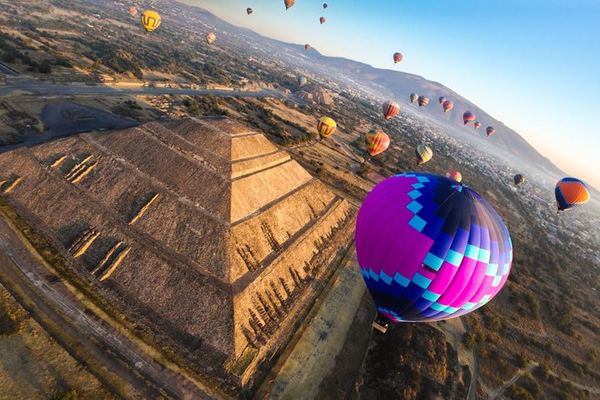
Teotihuacan Balloon Flight with Cave Breakfast, Pyramids and CDMX Pickup
Sunrise over the Teotihuacan Valley, then breakfast inside a cave painted with pre-Hispanic art, a Mexican show with tequila and a walk through the pyramids.

Hot Air Balloon Luxor with Hotel Transfers Included
Air-conditioned round-trip transfers from a central Luxor hotel, English live commentary and a sunrise flight over the west bank, all in one booking.
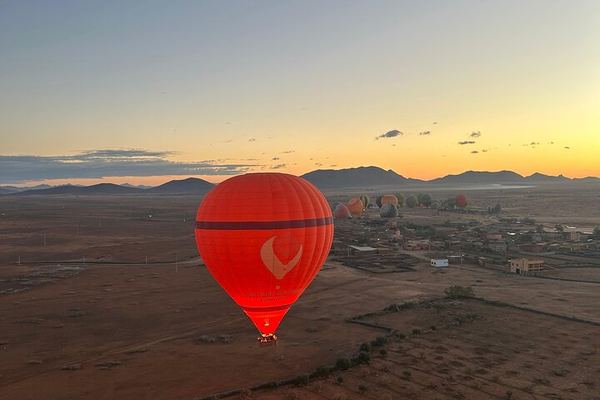
Marrakech Hot Air Balloon Flight with Traditional Moroccan Breakfast
Two departures over Marrakech: 6am to be aloft during the sunrise itself, 7am just after. Licensed Moroccan operator, traditional breakfast on landing.
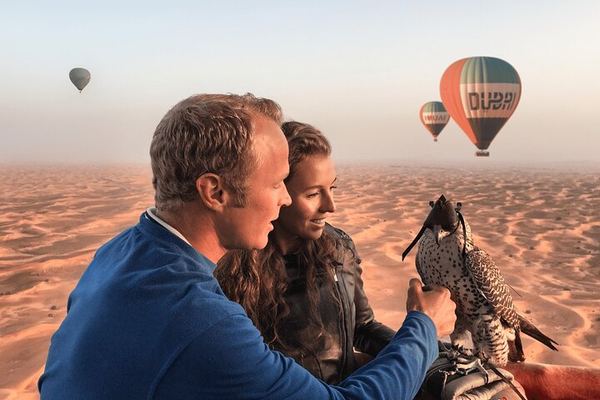
Dubai Luxury Balloon Flight with Michelin-Curated Desert Breakfast
A storytelling balloon flight at sunrise, then a Royal Desert Reserve retreat and a Michelin-starred breakfast at a private table, with a camel ride.
Ratings collected by Viator and Tripadvisor
Questions people ask about flying in winter
Can you fly in a hot air balloon in winter?
Nearly everywhere, yes. Of 271 flights listed on this site on 28 October 2026, 17 are in destinations whose operators publish a season that is closed from November to February: Vilnius and Trakai, the Loire Valley, Cairns, and Perth and the Avon Valley. Everything else takes bookings through the winter. Cold itself does not ground a balloon. Wind, falling snow, fog and rain do, and so does the heat in the places that close for summer instead.
Where is the best place to fly a balloon between November and February?
Four destinations are at their annual peak in exactly these months and account for 85 of the listings here: Luxor and the Nile valley, Teotihuacan, Marrakech and Dubai. All four are hot places whose summers are the unflyable half of the year, so the winter is their good season rather than a compromise. If you want the southern hemisphere instead, Melbourne and the Yarra Valley are in the austral summer, and the Serengeti has its calving season on the southern plains.
Is Cappadocia worth it in winter?
It is the finest flying of the year when it happens and the least likely to happen. Balloons flew on 223 days of 2025, and the grounded mornings cluster in winter: January has the worst valley fog of the record, snow on about nine days and 96 hours of sunshine against 365 in July. Lying snow is not the problem, falling snow and fog are. Book it only if the trip has two or three spare mornings, because the average stay in the region is under two nights and one morning is close to a coin toss.
How much does a winter balloon flight cost?
It depends far more on the destination than on the season. Read on 28 October 2026, a Luxor flight has a median of 78.62 euros across 20 listings, Marrakech 125.00 across 14, Teotihuacan 132.52 across 17, Dubai 293.53 across 12, Melbourne 325.58 across 10, and a Serengeti balloon safari 544.34 across four. That is nearly seven to one between the cheapest and dearest medians for roughly the same hour in the air. What differs is everything bolted to it.
Why are Cappadocia flights cheaper in January?
Because the price carries the risk. A January morning there has a materially higher chance of being cancelled than a September one, demand drops accordingly, and the listings follow. Several operators also state that they price dynamically, so the date you book and the date you fly both move the number. A cheap winter flight is not a better deal than an autumn one; it is the same flight sold with worse odds attached.
Which destinations close for the winter?
On this site, four. Vilnius and Trakai state a season of 15 April to 31 October, which covers seven listings. The three Loire Valley flights run April to October. Cairns, with four listings, and Perth and the Avon Valley, with three, are shut as well, and both of those are Australian, where these months are summer. Cairns closes for its wet season: February averages 475.5 mm of rain, and tropical cyclones form between November and May.
Is the Serengeti worth a balloon safari in January or February?
Those are the calving months, so it depends which spectacle you are after. The herds move south with the short rains and usually arrive in December, and about 500,000 calves are born over two to three weeks on the south-eastern short grass plains in February. The river crossings people picture happen in the dry season instead, from July. Four balloon safaris are listed here, 499.81 to 584.32 euros, and they are the dearest flights in the catalogue.
Is a winter balloon flight colder in the basket?
Less than people expect, and the cold part is not the flight. A balloon moves with the air, so there is no wind chill in the basket, and the burners are directly overhead. What is genuinely cold is the twenty minutes beforehand, standing on frozen ground while the crew inflates the envelope: in Cappadocia that ground is around minus three in January. Dress for the field rather than for the hour in the air.
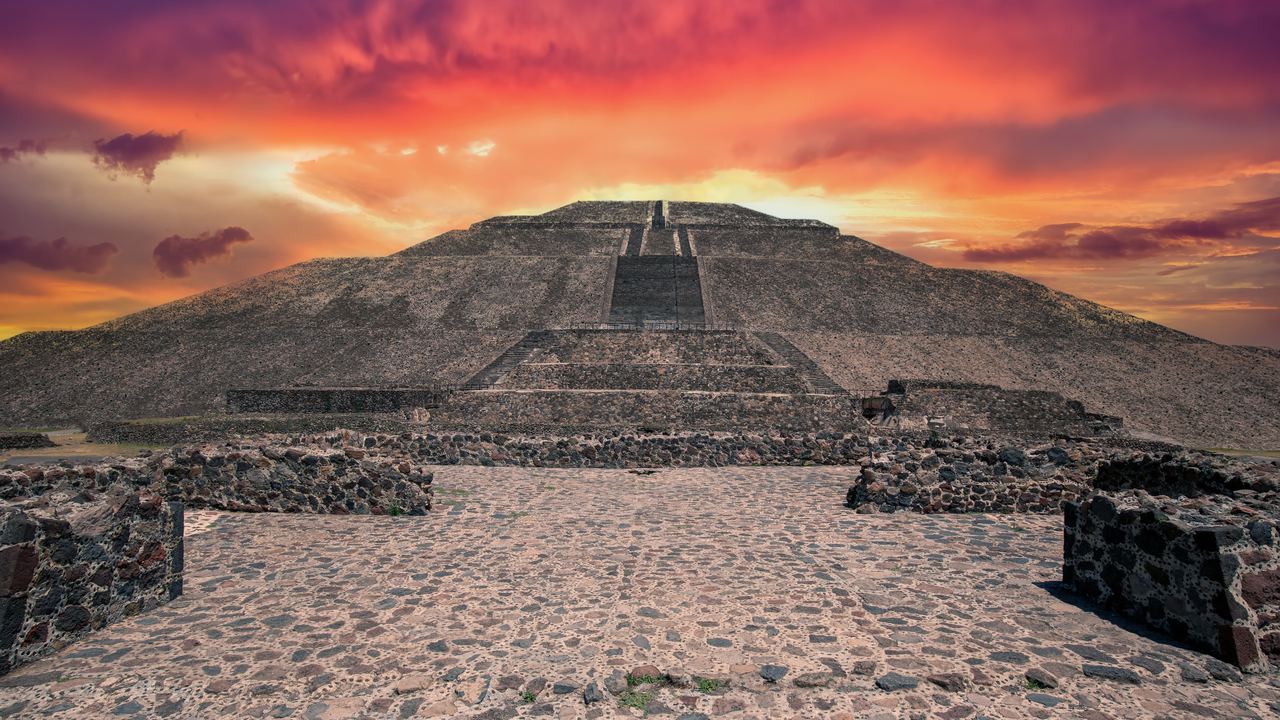


Where these figures come from. Every count, price and median was read from this site's own catalogue on 28 October 2026, in euros as the listings display them, counting the English listings only; the per-destination counts in the first table add to 271, which is the entire English catalogue, so nothing is left out of the comparison. Prices move whenever a provider reprices. The season shape for each destination comes from this site's seasonality table, checked 6 August 2026, and from the seasons operators state in their own listings. Temperature and rainfall normals are from the published climate tables for Luxor, Mexico City, Marrakech, Dubai, Melbourne and Cairns, and Mexico City's figures are the Tacubaya 1991 to 2020 normals. The Serengeti migration and calving dates, including the figure of about 500,000 calves over two to three weeks, come from the encyclopaedia entry for the Serengeti; it places the rains in March to May and October to November, and the arrival of the herds in the south in December. Toubkal's height and its standing as the highest summit in North Africa come from the entry on the Atlas Mountains, which does not give months for snow cover on the High Atlas, so none is claimed here. Cappadocia's flying days, dawn temperatures, fog and sunshine hours are the figures used in our own month by month piece, drawn from Turkish State Meteorological Service normals and reported fleet data. Nobody from this desk flew any of these routes: the work was done on the catalogue and on the sources named above.
Data verified on . Counts, prices and medians read from this site on 28 October 2026. Seasons from our seasonality table and operator listings; climate from published normals. Editorial Policy


