Terni's night glow, 5 and 6 September: the last one on the Umbrian calendar, and why the balloons stay tied down
The Umbria Balloon Festival closes its run of night glows at Terni on 5 and 6 September, on an airfield named after a First World War pilot. What a glow is, why the balloons never leave the ground, and why the evening is not the flight you think you booked.
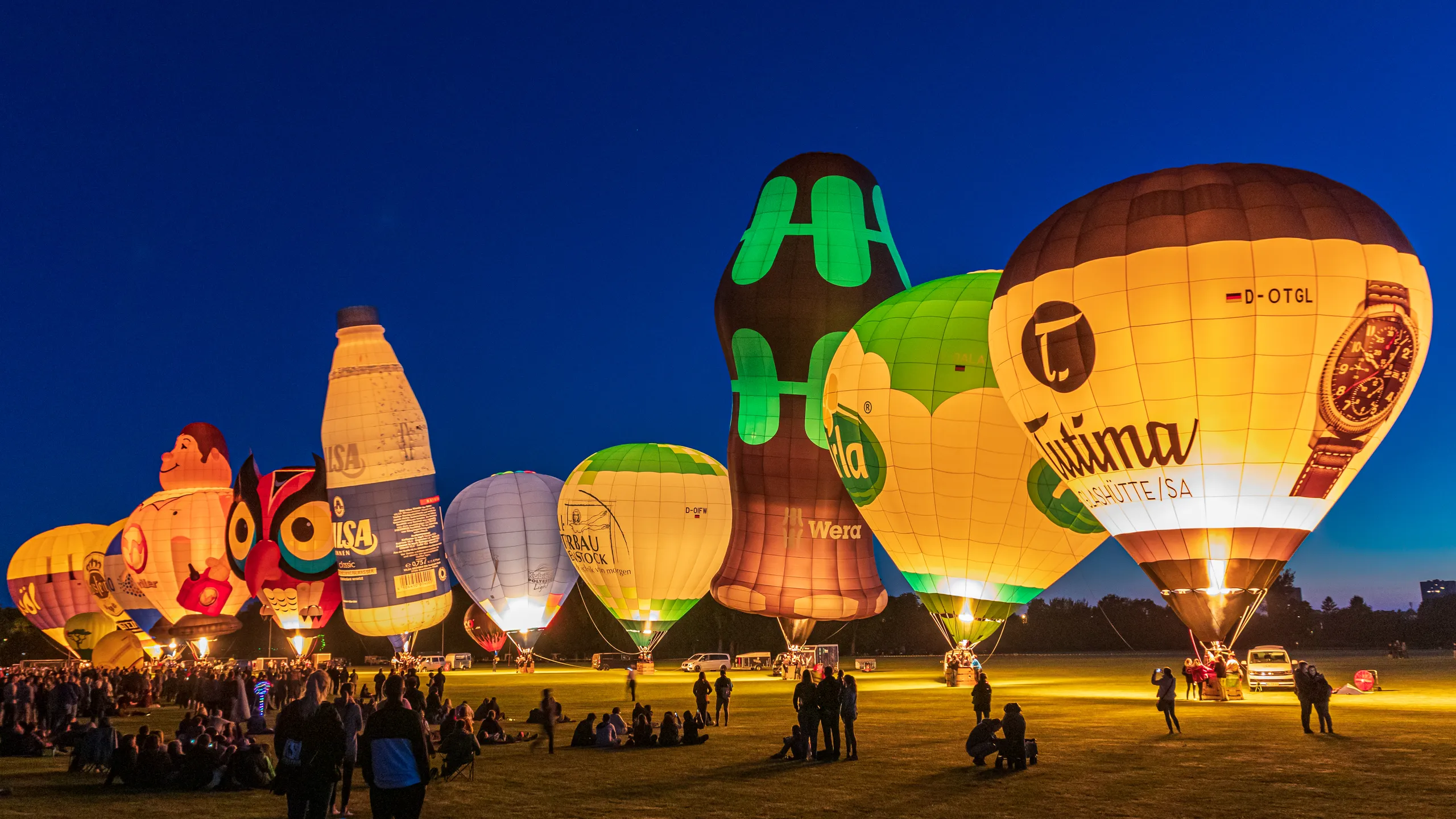
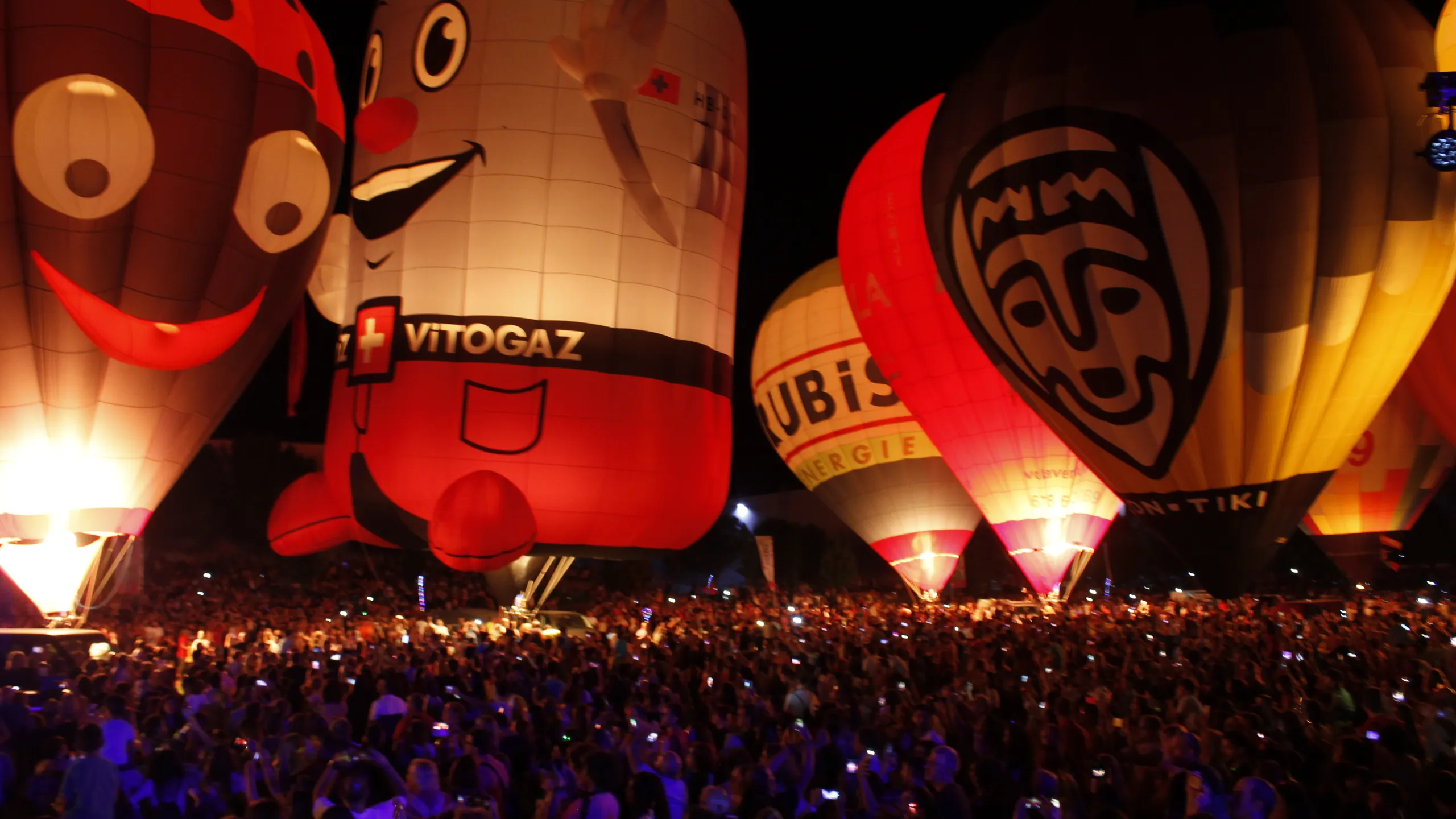
A night glow is the one balloon event designed for people who are not going anywhere. Nothing takes off. Crews inflate the envelopes at dusk, rope them to the ground, and fire the burners in sequence to music, so that a fabric shell the size of a house becomes a lamp for two seconds at a time. Umbria has staged three of these evenings in 2026, and the last one on the published calendar is at Terni on 5 and 6 September, at an airfield seven kilometres out of town. It is worth being precise about what that evening is, because plenty of people book a hotel for a night glow and turn up expecting to fly.
The format is younger than it looks, and it was not designed by a festival committee. It started in Albuquerque in 1979, when local pilots inflated their balloons on Christmas Eve as a thank you to the neighbours who put up with them the rest of the year. Albuquerque's own fiesta only added a glow to its programme in 1987, after a pilot who had tried a night tether at a small event in Durango the previous winter proposed it to the board. Word went round the balloon community fast: 375 pilots applied for that first glow, and 225 were selected. Nearly every festival on the world festival calendar now has one.
What is announced for Terni, and what is not
The Terni stage of the Umbria Balloon Festival is on 5 and 6 September at the Aviosuperficie Alvaro Leonardi, and it has a night glow of its own. That much holds across the regional tourism listing and the Umbrian papers that covered the summer programme when it was presented in July. Past that point the listings drift. Some put the Terni night glow on the evening of the 5th alone; others describe it across both evenings. We have followed the ones that name the field and treat the stage as two days, because they are the more circumstantial of the two readings, and we would rather flag the disagreement than pick a version and sound certain about it.
We are also not publishing a start time. None of the sources reachable from here carried one that could be checked against a second source, and a glow that starts twenty minutes late is a minor annoyance, while a glow that started forty minutes before you parked is the whole evening gone. Glows begin at dusk, and dusk in Umbria in the first week of September is late enough to make this a post-dinner outing rather than an afternoon one. Take the actual time off the organiser's own programme, not off an aggregator.
Terni is the last glow, not the last date
The Terni evenings close the run of night glows on the announced calendar. They do not close the festival. This first edition runs from 25 April to 20 September across fourteen Umbrian towns, and the final day is at Castel Ritaldi. When the summer stages were presented, further stages were still being finalised with other municipalities, so last here describes the state of a calendar in late August rather than a promise about September. If another town is added with an evening of its own, this article will be wrong in the good direction. The shape of the whole thing, and how a distributed festival differs from one parked on a single field, is in our piece on the 2026 edition.
| Dates | Where | The evening |
|---|---|---|
| 25 and 26 July | Castiglione del Lago, Lake Trasimeno | Trasimeno Night Glow, both evenings, with the lake behind |
| 2 August | Todi, Piazza del Popolo | Glow closing the summer rally, inside a walled medieval square |
| 5 and 6 September | Terni, Aviosuperficie Alvaro Leonardi | Night glow on an 870 metre airfield. Listings differ on one evening or two |
| 20 September | Castel Ritaldi | Closing day of the edition. No glow announced |

Why the balloons never leave the ground
A glow is not a smaller version of a flight. The envelope goes out flat on the grass, a petrol fan pushes cold air into it until it holds a shape, and only then does the pilot fire the burner to stand the thing upright. At a glow the sequence stops there. Lines run from the basket to ground anchors, to stakes, or to the tow hitch of the crew's own van, and somebody spends the evening leaning back on the crown line. What the crowd is watching from ten metres away is a working aircraft being deliberately stopped from doing the one thing it exists to do.
The light comes out of the burner, which is also why a glow is loud. A burner at full flow sounds closer to a jet than to a gas ring, and the noise reaches you before the light does. Pilots pulse it in short bursts against whatever music the organisers have chosen. Sometimes the entire field burns at once and the ground turns orange; sometimes they take it in turn, so the light travels down the line like a wave. The wave is the version worth waiting for.

The burner is the light bulb
The optical trick of a glow is that the envelope is not lit from outside by floodlights. It is a paper lantern with the candle inside, so the pattern the manufacturer printed on the fabric reads at a distance instead of disappearing into shadow.
It also means the show is discontinuous. There is no steady state, only bursts, and a pilot who holds the burner too long is overheating an envelope that is not going anywhere. If you want the picture, watch a pilot's hand rather than the sky: the flame follows the hand by about a second.
A glow has its own weather
Here is the part that catches people out, including people who have flown before. A glow and a flight are cancelled by different things.
A passenger flight dies on the air above the field as often as on the air across it. Pilots read the wind at height as well as at the surface, and eighteen or twenty knots a few hundred metres up will scrub a morning that feels perfectly still on the grass. That is why a cancellation says something good about your operator rather than something bad about your luck.
A glow does not care what the wind is doing at altitude, because nothing is going up there. It cares, sharply, about the wind on the ground. An inflated envelope is a sail attached to a basket that has been roped down, and a balloon that cannot move with the wind has to absorb it instead. Somewhere around ten miles an hour the fabric starts caving in on one side and the whole assembly rolls, sometimes violently. Commercial operators launch in surface winds of up to eight knots and occasionally a little more; a tethered evening wants less than that, not more.
The practical consequence is that the two events fail independently. Bristol has run its night glow on an evening when the morning mass ascent had already been scrubbed for wind, and the reverse happens too. If the balloons did not fly on the morning of the 5th, do not assume the evening is off. If the evening is called off, do not assume the morning was.
A tethered balloon cannot run away from the wind. It has to stand there and take it, which is why a glow wants stiller air than a flight does.
How the glow became a fixture
Forty-seven years from a private thank you to the neighbours to a format every large festival runs.
The origins
-
1979
Christmas Eve in Albuquerque
Local pilots inflate their balloons on Christmas Eve for the people who live around the launch field. No competition, no flying, just lit envelopes on the ground.
-
Winter 1986
A night tether in Durango
Three pilots run a tethered night display at a small Colorado event. One of them takes the idea back to the Albuquerque fiesta board.
The growth
-
1987
The fiesta adds a glow
375 pilots apply for the first Balloon Fiesta glow and 225 fly it. The format spreads from there to festivals that had only ever run from dawn to dusk.
Today
-
2026
Umbria's first edition
A regional festival spread over fourteen towns instead of one field, with three glows: Castiglione del Lago in July, Todi in August, Terni in September.
An airfield is a different room from a medieval square
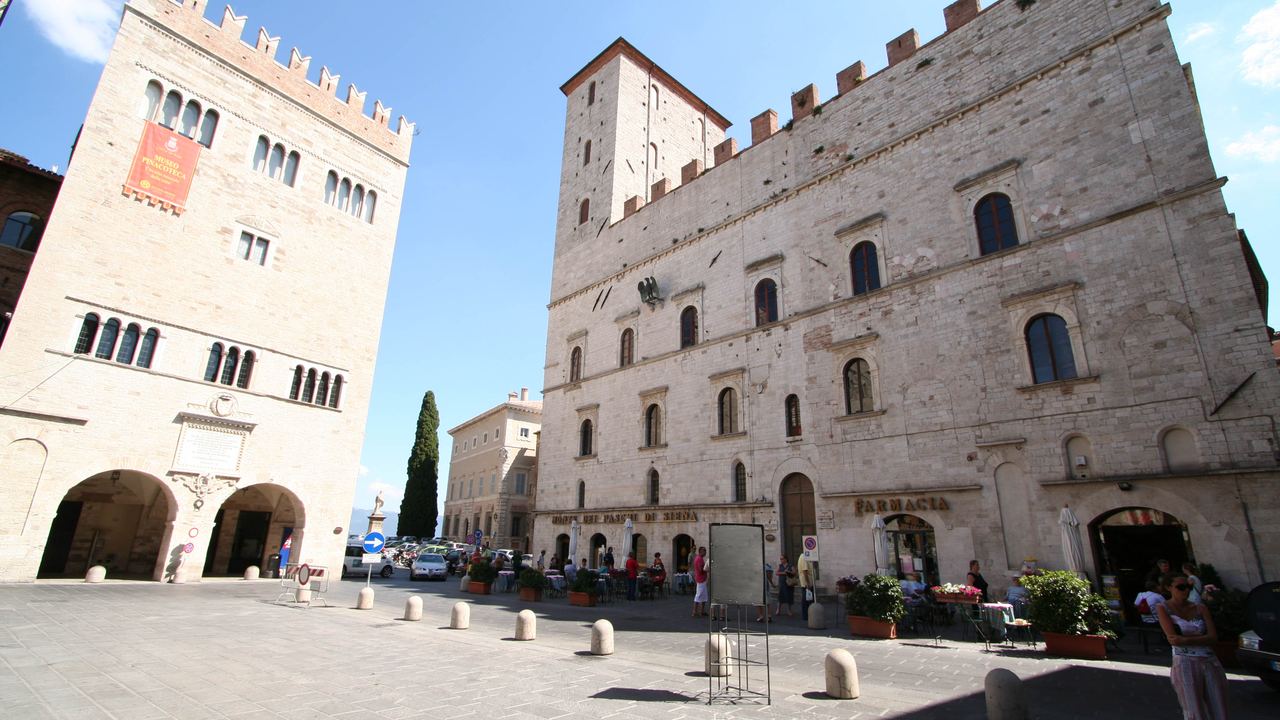
The three Umbrian glows this year were staged in three different kinds of space, and the space shapes the evening more than the number of balloons does. Castiglione del Lago had Trasimeno behind it. Todi put the balloons inside Piazza del Popolo, walled on all four sides, where the burner light bounces off the palazzo fronts and the whole square goes warm at once. Terni has an airfield.
The Aviosuperficie Alvaro Leonardi sits in the Maratta district, about seven kilometres from the centre of Terni, with an 870 metre asphalt runway aligned roughly east to west. It is the largest airfield in the province. It is named after a Terni man: Alvaro Leonardi, born in the city in 1895, a fighter pilot in the First World War credited with eight aerial victories, who died in 1955. A field named for a fighter pilot is an odd place to tie balloons down, and it is also the only ground near Terni flat and empty enough to do it on.
What an airfield gives you is room and a horizon. Cars fit. Crowds fit. The balloons stand as separate objects against a dark sky instead of filling a stone box, and you can walk far enough back to see the whole line at once, which you cannot do in a square. What it takes away is the reflection. Pictures from a piazza look like a lit interior; pictures from a field look like lanterns on a plain. If you have already been to one of the town glows this summer, Terni is not a repeat of it.

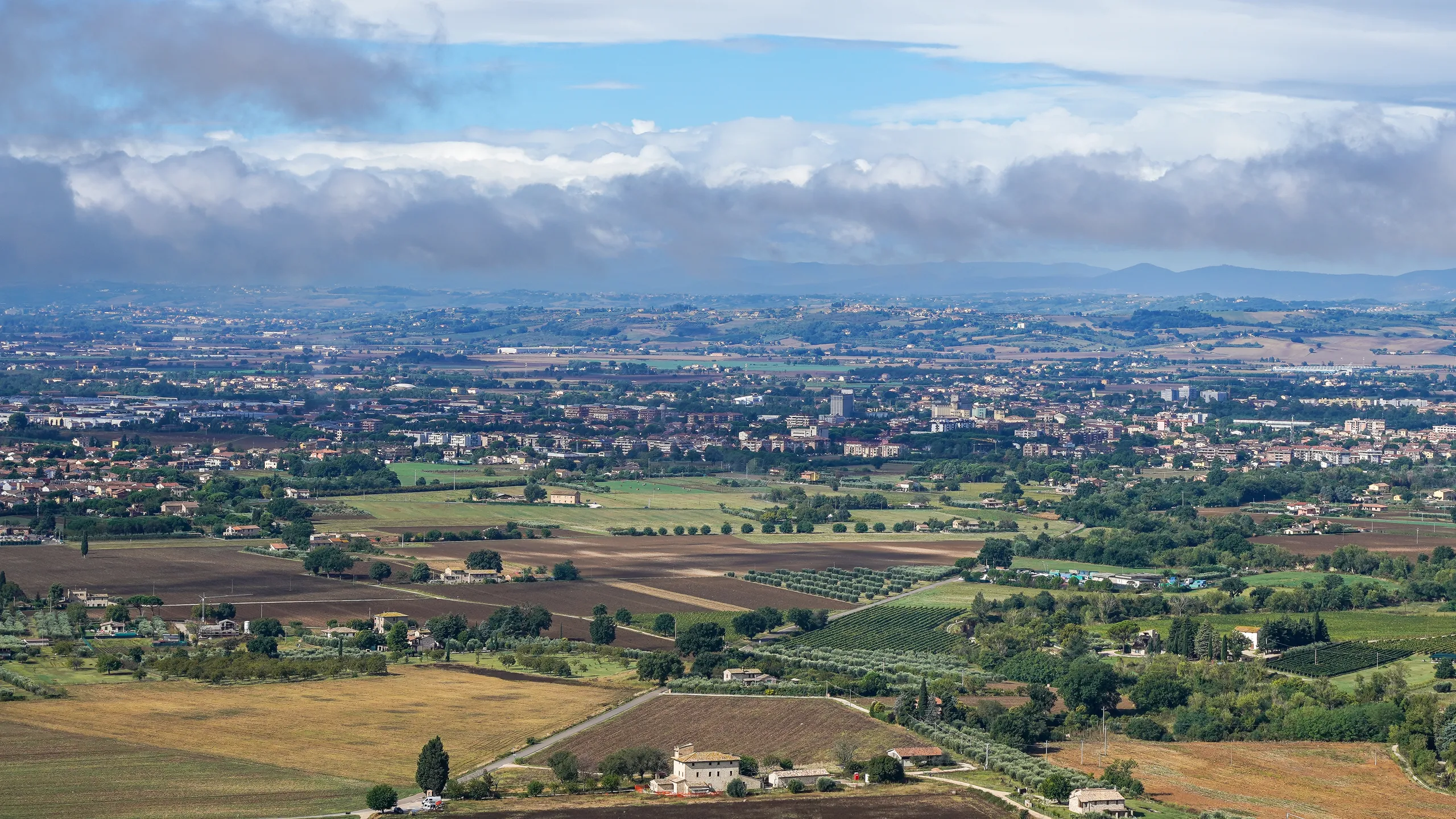
Terni sits in a basin, with the Nera coming down out of the Valnerina and the Marmore falls dropping 165 metres at the edge of it. The geography that produced the waterfall also produces the evening: the floor of a basin cools after sunset and the cold air settles, which is the same behaviour that makes the Umbrian valleys fly well at dawn. Anyone deciding which month to come for should read the season by season guide before booking flights and hotels around a festival date.
The flight is a separate morning, and a separate bill
Nothing about the festival puts a visitor in a basket. Rally mornings belong to the competing crews, who are briefed at first light and chased across the valley by their own teams. Passenger flying in Umbria is its own booking, and the region is thin on it: two rides are listed in the Umbria section of this site, both leaving from the Perugia area, neither of them from Terni.
The cheaper one is 253 EUR and takes off from a winery at Bevagna, with Assisi on the hillside to the north; it carries a 4.9 rating from 213 reviews. The other is 510 EUR, and it is a half day rather than a flight with a drink afterwards: about four and a half hours in total, roughly an hour of it in the air, with brunch and a guided walk in Spello attached to the end. The gap between the two prices is mostly ground, not sky, which is the single most useful thing to know before comparing them.
For scale, Florence has twelve rides listed and Siena one. Tuscany has the volume; Umbria has the festival, and the two flights it does have go up over the same drained lake bed that the rally uses. Put the flight at the start of your trip rather than the end, because if the weather takes the morning you want another morning left to spend.
Before you book anything
Three guides that answer the questions this article keeps running into.
When to fly, month by month
Which mornings actually fly in each destination, and which months only look good on a calendar.
How to check an operator
The questions worth asking before you pay, and the answers that should make you walk away.
Festivals worth the trip
Which balloon festivals still run, which ones quietly stopped, and where you can fly instead of watch.
Balloon rides in Umbria
Both leave from the Perugia area at dawn, and both are separate from anything the festival sells.
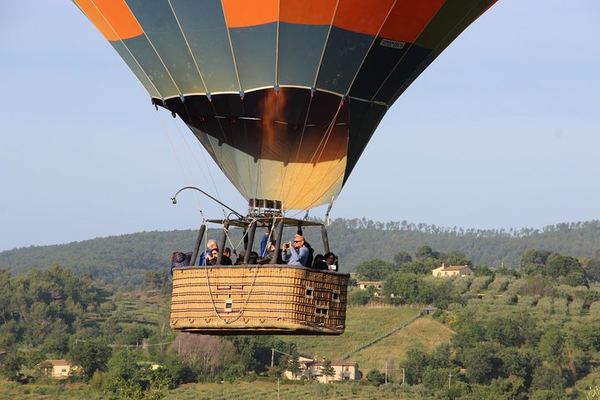
Hot air balloon flight, brunch and a guided walk in Spello
A half day near Assisi: an hour in a shared balloon, an Umbrian breakfast at a winery, then a private guided walk in Spello. 510 EUR.
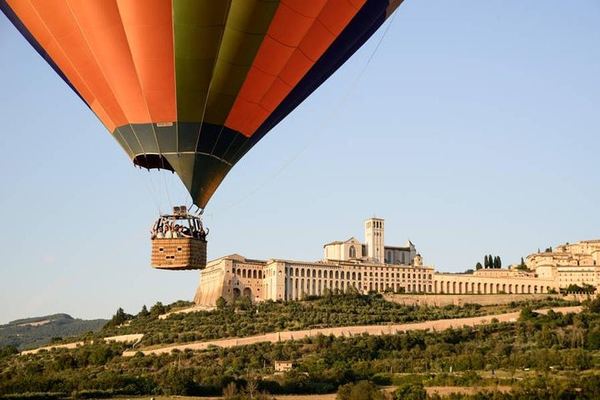
Hot air balloon ride over Assisi with winery breakfast
An hour above the Valley of Assisi from a winery at Bevagna, with breakfast and Sagrantino tasting after landing. 253 EUR, rated 4.9 by 210.
Ratings collected by Viator and Tripadvisor

Questions people actually ask about a night glow
Does a night glow ticket put you in a balloon?
No. Every balloon at a glow is tethered and stays tethered, and the evening is built for spectators rather than passengers. Flying in the region is a separate booking on a separate morning, from a field in the Perugia area rather than from Terni.
Can you fly from Terni itself?
Not on the rides we list. The Alvaro Leonardi field hosts the glow; the two passenger flights listed for Umbria take off from the Perugia area, an hour or so north by road. If an operator is selling passenger flights around the festival dates, treat it like any other operator you have not used before and work through the checks that matter: who holds the licence, what happens to your money if the weather cancels, and how many people go in the basket.
What time does the glow start?
At dusk, and we are not going to invent a clock time for it. No source we could open and check against a second one carried a schedule for the Terni evenings. In early September, dusk in central Italy comes late enough that a glow is an after dinner event rather than an afternoon one. The organiser's own programme is the only thing worth trusting on this.
What happens if the wind gets up?
The glow is called off, or cut to fewer balloons, on the evening itself. That decision is separate from the morning flight decision and uses different numbers, so a scrubbed ascent tells you nothing about the evening, and a cancelled glow tells you nothing about the next dawn.
Is Terni the last Umbrian balloon evening of the year?
It is the last night glow on the calendar as announced. The edition itself closes on 20 September at Castel Ritaldi, and when the summer programme was presented in July more stages were still being finalised with other towns, so the calendar can still grow.
Data verified on . Stage dates and venue cross-checked on the regional tourism listing and Umbrian press; glow history from Albuquerque Balloon Fiesta records. No start time was published, so none is given here. Editorial Policy