Albuquerque, Phoenix and Temecula balloon rides: one price at the floor, three markets that work nothing alike
Temecula sells the cheapest American desert balloon ride at 162.53 EUR, Albuquerque the next at 171.60, Phoenix at 180.68. Above that floor the three share almost nothing: no private basket in Phoenix, no evening flight in Temecula, and Fiesta week in Albuquerque at 2.51 times.
The cheapest hot air balloon ride in Temecula costs 162.53 euros. In Albuquerque it is 171.60. In Phoenix it is 180.68. Three deserts, three states, eighteen euros between the lot of them, and anyone comparing the three would reasonably conclude that the American desert sells one product at one price.
It does not. Behind those three almost identical figures sit three markets that work nothing like each other. Phoenix does not sell a private basket at all. Temecula does not sell an evening flight. Albuquerque charges 431.28 euros for one week of the year, which is this one.
Twenty-one flights are listed across the three cities on this site. Sorted by anything except the opening price, they stop resembling each other almost immediately.
Where the three skies stop resembling each other
Everything below was read from this site's own catalogue on 7 October 2026, in euros as the listings display them. The spread is the dearest flight in a city divided by the cheapest.
| Albuquerque | Phoenix | Temecula | |
|---|---|---|---|
| Flights listed | 6 | 8 | 7 |
| Cheapest | 171.60 | 180.68 | 162.53 |
| Dearest | 431.28 | 244.24 | 1,107.71 |
| Spread, dearest over cheapest | 2.51x | 1.35x | 6.82x |
| Median shared flight | 204.29 | 203.38 | 172.06 |
| Private baskets listed | 1 | none | 3 |
| Evening flights listed | 1 | 3 | none |
| Field elevation | 5,312 ft | 1,086 ft | 1,020 ft |
| Customer reviews, all listings | 1,873 | 4,250 | 867 |
Three rows there are worth more than the prices. Phoenix has the narrowest band of the three and no private option whatever, which makes it the closest thing to a commodity market in American ballooning. Temecula has the widest band of any destination on this site outside Dubai, with a canyon in the middle of it where a mid-priced flight ought to be. And Albuquerque sits more than four thousand feet above the other two, which is why the baskets there are smaller.

Albuquerque flies a mile up, and gives away lift to do it
Albuquerque's civic centre sits at 5,312 feet above sea level, and the city runs from about 4,900 feet beside the Rio Grande up past 6,700 in the foothills. Phoenix is at 1,086 feet, Temecula at 1,020. The Sandia Mountains on Albuquerque's eastern edge reach 10,678.
Height costs a balloon lift. In the lower atmosphere the lift a hot air balloon generates falls by roughly one per cent for every thousand feet, and warm air costs it more again: the same envelope carries less on a hot morning than a cool one. An Albuquerque balloon therefore gives up something like four per cent of its lift against a Phoenix or Temecula balloon of the same size, before anybody climbs into the basket.
Four per cent sounds academic until you read what the Albuquerque listings choose to advertise. One sells basket size as the whole pitch: eight to twelve passengers, where it says other operators in the city run fourteen to sixteen. Another defines private as two to eight, and notes that four to twelve is what most Albuquerque operators mean by semi private. The city's sales copy is preoccupied with how many people are in the basket.
Phoenix is not. A Phoenix listing sells the opposite argument: the largest passenger balloon flying in the United States, up to twenty-four aboard, with the claim that even at that load there is more room per person than a standard basket gives. That is the operator's claim rather than a verified figure, but the direction of it is the point. At a thousand feet, in a market limited by heat rather than altitude, an operator can afford to sell scale.
Albuquerque sells you a smaller basket and Phoenix sells you a bigger one. Four thousand feet of elevation is doing some of that arguing.
What Albuquerque gets back for the altitude
It gets a wind pattern no other balloon city on this site has, and that one is not marketing. The National Weather Service office in Albuquerque documents it as a local climate feature.
On clear, dry, light-wind nights, cool air drains off the mountains and pools on the valley floor under a temperature inversion, in a layer the Weather Service describes as generally no more than a few hundred feet deep. Inside it the surface wind runs from the north at under ten miles an hour. Above the inversion, around five thousand feet, the wind runs from the south. A pilot with no steering of any kind can drift south low, climb through the inversion, and ride back north to the field they launched from.
That is the Albuquerque Box, and the honest version of it carries two caveats most travel writing leaves out. It dies by mid-morning once the sun puts enough thermal turbulence into the air to mix the inversion away, which the Weather Service puts at roughly nine to eleven o'clock. And it is not a daily event: their own figure is that the box occurs on average about twice between 5 and 15 October, the heart of the ballooning calendar there. Flying in Albuquerque does not guarantee flying the box.
The one week of the year Albuquerque is the worst value of the three
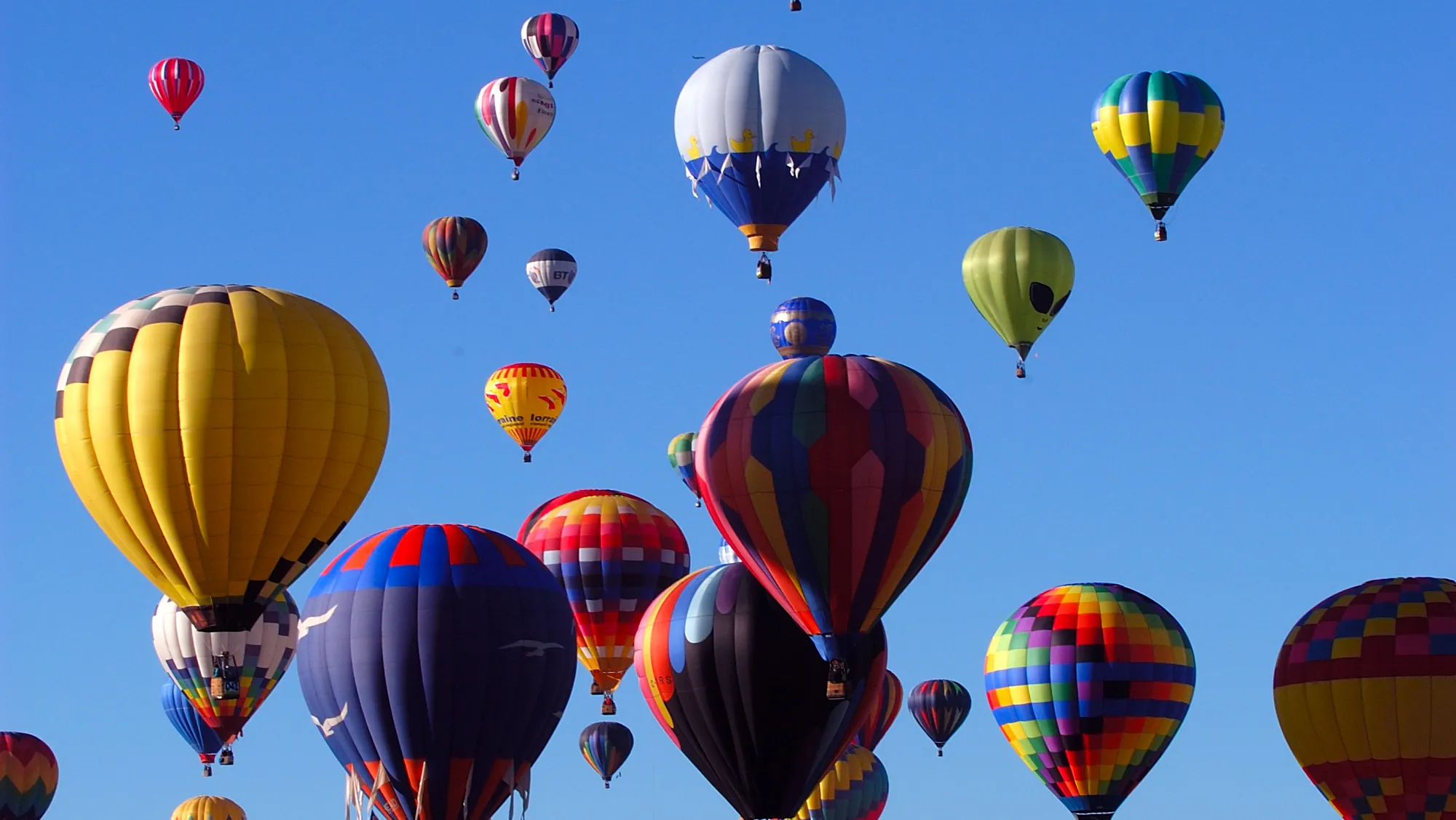
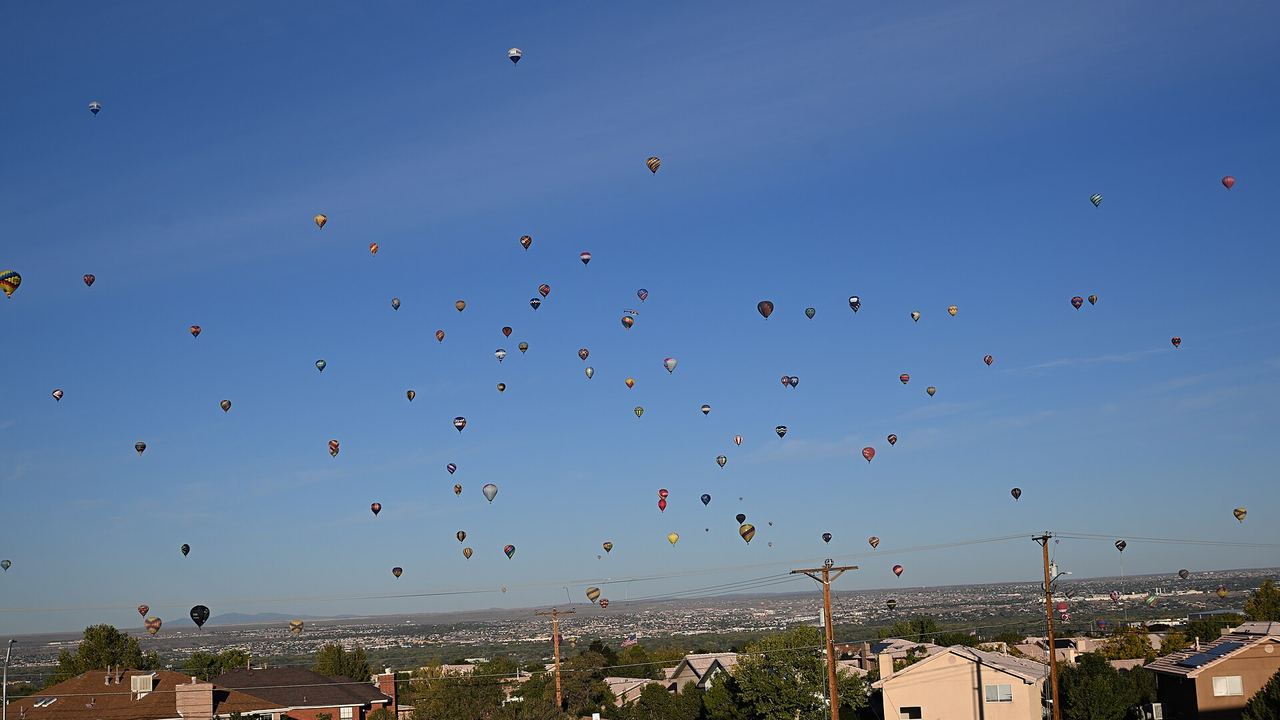
The 54th Albuquerque International Balloon Fiesta runs from 3 to 11 October 2026 with more than 500 balloons registered, and it is why most people have heard of Albuquerque at all. For anyone buying a flight rather than a ticket, it is also the week to be most careful.
One of the six Albuquerque listings here is priced at 431.28 euros. It is a sunrise flight during Fiesta week, flown from the city's west side, and it is clear about what it is not: the operator states it has no affiliation with the Albuquerque International Balloon Fiesta, and that no Fiesta ticket is needed to book it. The 431.28 euros therefore buys an hour in a balloon in the same city, in the same air, as the 171.60 euro flight. It is 2.51 times the price because of the dates, and it carries no customer reviews at all.
That does not make it a bad flight. Demand that week is real and so is the cost of operating into it. But it is the only listing in these three cities whose price is set by an event it is not part of, and watching the Fiesta from the field and flying during it are two separate purchases. What to expect on the Fiesta field covers the first.
Phoenix: eight balloon flights, one price band, no private basket
Phoenix is the flattest market of the three in every sense. Eight listings running from 180.68 to 244.24 euros, a spread of 1.35 times, and a median of 203.38 sitting almost exactly in the middle. Nothing here is cheap and nothing is extravagant.
It is also the only one of the three cities where a private basket is simply not sold. Every Phoenix flight listed is shared. A party wanting the balloon to itself has no listing to buy, at any price.
What Phoenix does have is the best evidence base of the three. Its eight listings carry 4,250 customer reviews between them, against 1,873 across Albuquerque's six and 867 across Temecula's seven, and one Phoenix morning flight alone carries 2,169. For a first-time buyer that is worth more than most of the differences in this article.
Only one of the three sells an evening balloon flight
Almost all balloon flying happens at dawn, because that is when the air is reliably calm. An evening slot exists only where the air settles again before sunset, and across these three cities it falls very unevenly.
Phoenix lists three evening flights out of eight: two sunset crossings of the Sonoran Desert and a golden hour flight with charcuterie and sparkling wine afterwards. Albuquerque lists one, a sunset flight over the Rio Grande Valley at 204.29 euros, whose own description notes that sunset flights are rare in ballooning because dawn is when the air can be counted on. Temecula lists none. All seven of its flights go up in the morning.
The Temecula Valley tourism board puts local launches between half past five and half past six and says the early hours are when winds there are calmer and more predictable. Whether the valley's air would permit an evening flight is a question the available sources do not settle, and this article will not guess at it. The narrower claim is the useful one: to fly in the evening in the American desert, Phoenix is where the listings are.
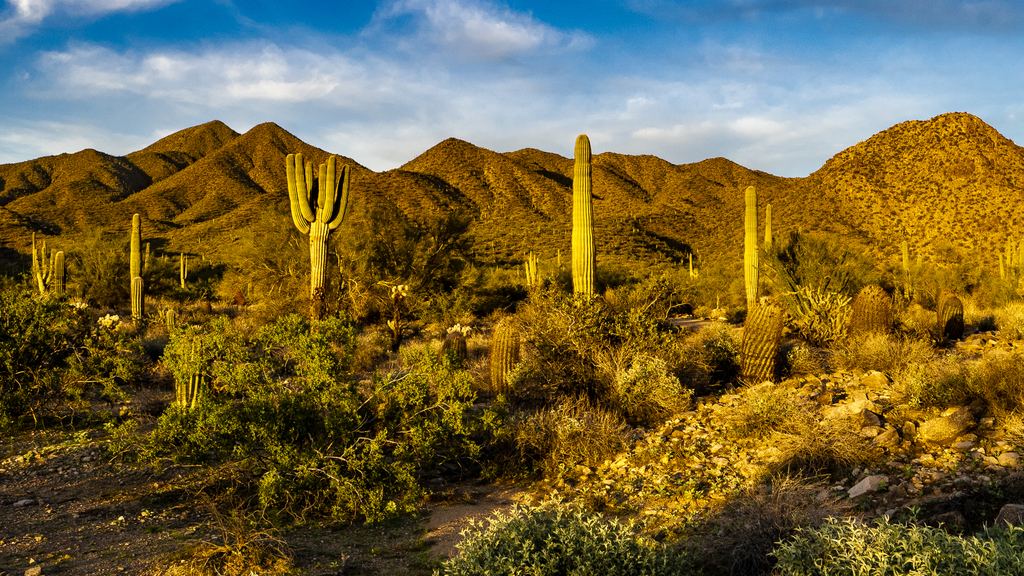
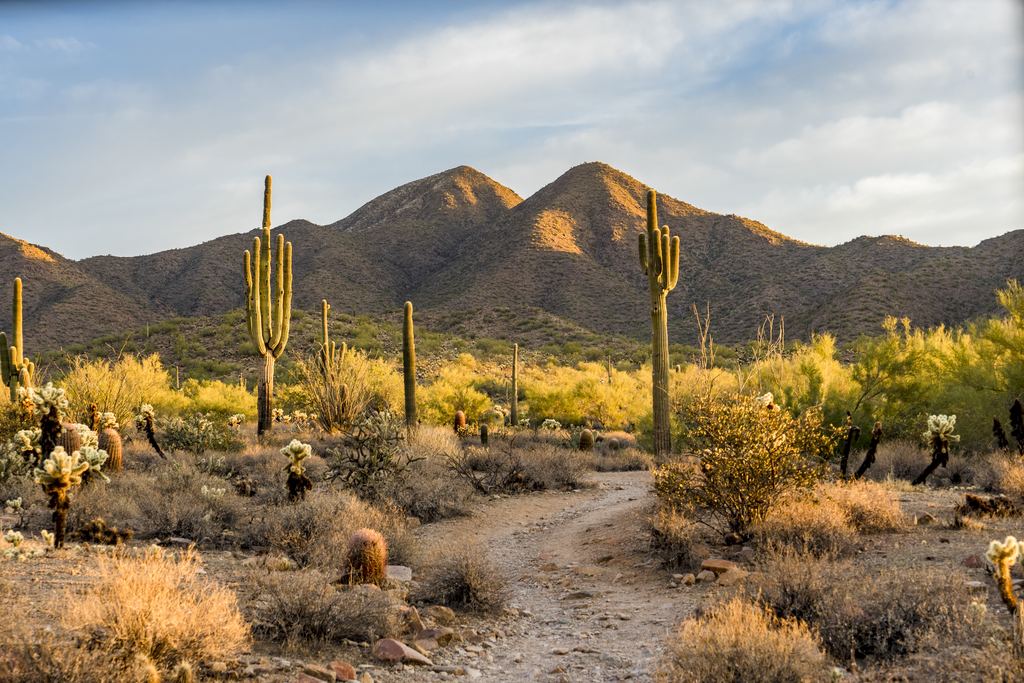
The ground under a Phoenix balloon deserves a line of its own, because it is unrepeatable. The saguaro grows wild in the Sonoran Desert and nowhere else in the world, and within that desert only from sea level to about 4,500 feet, occasionally 5,000 on south-facing slopes where frost does not reach. An adult saguaro is around 125 years old, can stand fifty feet tall, and grows no arm at all until somewhere between sixty and seventy-five. The Phoenix listings talk about flying low enough to pick out individual ones. At 1,086 feet the city is well inside the saguaro's range; Albuquerque at 5,312 is above it.
Temecula has the cheapest flight and the three dearest, and nothing in between
Temecula's seven listings do not form a price range. They form two clusters with a canyon between them.
Four shared flights sit at 162.53, 171.60, 172.51 and 180.68 euros. Then nothing. The next listing is 903.42, and above it 1,088.65 and 1,107.71. No flight in Temecula is priced between 181 and 903 euros, so the valley sells a cheap seat or a very expensive balloon and has no opinion about anything in the middle.
The reason is visible in who flies there. Two of the four shared flights come from an operator running a fleet of fourteen balloons, matching envelope to load each morning by guest numbers and passenger weights, which is a volume business. The expensive end is a different business: one Temecula operator flies private only and takes four passengers maximum, where shared baskets in the same valley can carry seven in a single compartment. The 1,107.71 euro listing is that operator's. It is not an upgraded version of the 172.51 euro flight but a different company with a different model, and the gap between them is the gap between the models.
Worth knowing before paying for it: the three Temecula private baskets carry 5, 5 and 21 customer reviews between them, against 327 on the cheapest shared sunrise flight in the same valley. As is true of private baskets generally, the more the flight costs here, the less can be found out about it beforehand.
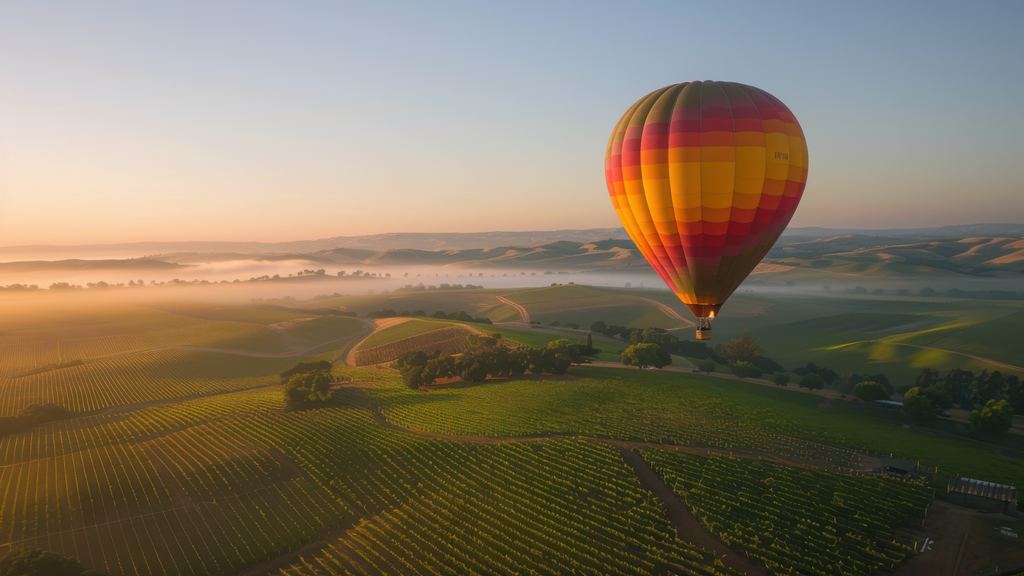
When the three deserts fly
Two of these cities stop flying in summer and one does not. The reason is the same in Arizona and in southern California, and it is not wind.
| Month | 1 | 2 | 3 | 4 | 5 | 6 | 7 | 8 | 9 | 10 | 11 | 12 |
|---|---|---|---|---|---|---|---|---|---|---|---|---|
| Albuquerque Flies all year at 5,312 feet, and October is when the sky is fullest and the prices hardest. The Albuquerque Box, the wind pattern that lets a pilot return to the launch field, occurs on average about twice between 5 and 15 October by Weather Service figures. | 1 | 2 | 3 | 4 | 5 | 6 | 7 | 8 | 9 | 10 | 11 | 12 |
| Phoenix Phoenix averages around 111 days a year at or above 100 degrees Fahrenheit and has recorded 122. Summer dawns start too warm for a loaded balloon, and warm air costs an envelope lift before altitude does. | 1 | 2 | 3 | 4 | 5 | 6 | 7 | 8 | 9 | 10 | 11 | 12 |
| Temecula The same summer problem, milder, plus a morning marine layer common in May and June that can put cloud on the deck at launch time. All seven listings here launch between half past five and half past six. | 1 | 2 | 3 | 4 | 5 | 6 | 7 | 8 | 9 | 10 | 11 | 12 |
Flight seasons from this site's destination seasonality review; temperature and marine layer figures from the sources in the closing note. Months are shown as numbers.
The Temecula festival has stopped. The Temecula flying has not
For most of forty years Temecula's name in ballooning came from one weekend. The Temecula Valley Balloon and Wine Festival was founded in 1983 as the Rancho California Balloon and Wine Festival, held its first edition in the spring of 1984 in a town of nine thousand people, drew over four thousand of them, and settled at the Lake Skinner Recreation Area in 1989, where it ran on the first weekend of June.
On 24 March 2026 the Riverside County Board of Supervisors voted five to nothing, without comment, to terminate the festival association's agreement to use Lake Skinner. The trigger was an unpaid invoice of 73,883 dollars for the 2025 use of the site, grown to 76,100 with interest and penalties, alongside outstanding balances with the county sheriff's and fire departments. Termination took effect on 30 April 2026 and returned the recreation area to public use on the dates the festival had held. County officials said organisers would need both a new agreement and settled debts to stage another. The festival's representatives said final payouts were scheduled for that April and that they were looking at a late summer or early autumn window, which would move it off its June weekend.
So the honest position in October 2026 is that the festival has no venue, no date and no confirmed future, and nothing here should be read as a promise of a 2027 edition. The flying carries on untouched: seven listings, three operators named by the local tourism board, and the cheapest balloon ride of these three cities. A destination and its festival are separable, which is easy to forget when reading festival lists nobody updated.
How three American skies became bookable
Two of these cities were made by a festival, and one has just lost its. The dates below are the ones that still shape what you can buy.
The origins
-
April 1972
Thirteen balloons at a shopping centre
A radio station manager, a flying service owner and a third organiser put on a balloon rally for 770 KOB's fiftieth birthday at the Coronado Center in Albuquerque. They wanted to beat England's record of nineteen balloons and got commitments from twenty-one pilots, but weather kept most away. Thirteen flew, in front of twenty thousand people.
-
1973
Albuquerque goes international
The city hosts the first World Hot-Air Balloon Championships, which is what turned a local rally into a global fixture.
-
1975
The move to October
The fiesta shifts from February to October to fit the championship calendar, and lands on the month with the air everyone now travels for.
The growth
-
1983 to 1984
Temecula invents its weekend
The Rancho California Balloon and Wine Festival is founded in 1983 by a commercial pilot and an event organiser. Its first edition, in spring 1984, draws over four thousand people to a town of nine thousand.
-
1989
Lake Skinner
After five years of moving around Temecula the festival settles at the Lake Skinner Recreation Area, where it will run every June for the next thirty-six years.
-
2000
A thousand and nineteen balloons
Albuquerque's peak registration. The fiesta now caps entries at a thousand, raised from six hundred in 2011.
Today
-
July 2016
Lockhart
A sightseeing balloon hits power lines near Lockhart, Texas, killing all sixteen people aboard including the pilot. Investigators found the pilot had been flying on medication known to impair, under a rule that exempted commercial balloon pilots from holding a medical certificate.
-
November 2022
The exemption closes
The FAA adopts a rule requiring pilots of balloons carrying paying passengers to hold a medical certificate and pass a medical exam, to the standard already applied to commercial aeroplane and helicopter pilots. Every flight in this article is flown under it.
-
March 2026
Temecula loses its venue
Riverside County supervisors vote 5-0 to terminate the balloon festival's agreement to use Lake Skinner over unpaid bills, effective 30 April. The flying in the valley is unaffected.
-
October 2026
The 54th fiesta
Albuquerque runs 3 to 11 October with more than 500 balloons registered, and one listing here prices that week at 2.51 times the city's cheapest flight.
Who is allowed to fly you, and why that rule is only four years old
One thing these three cities genuinely share, and that no destination comparison mentions, is the rule governing the person at the burner. It is newer than most of the balloons.
On 30 July 2016 a sightseeing balloon near Lockhart, Texas, struck power lines; all sixteen people aboard, the pilot included, were killed. Investigators found the pilot had been flying on medication known to cause impairment, and that commercial balloon pilots were at the time exempt from the medical certification required of other commercial pilots. In November 2022, after Congress directed it to act, the Federal Aviation Administration adopted a rule closing that exemption: a pilot carrying paying passengers in a balloon must hold a medical certificate and pass a medical exam, as commercial aeroplane and helicopter pilots do.
That cuts both ways. The floor under an American balloon ride is higher than it was in 2016, and any operator review older than late 2022 was written under a different regime. What to ask an operator before paying sets out the rest.
So which American desert balloon ride to book
At the entry level almost nothing separates them, so price is the wrong question. What separates them is what each market has in stock.
- You want the fullest sky in ballooning. Albuquerque, and ideally not during Fiesta week unless you are there for the Fiesta, because that week costs 2.51 times the city's own floor. The other fifty-one weeks it is the same valley, the same mountains and the same wind pattern at 171.60 euros.
- You want the strongest evidence the flight is good. Phoenix. Its eight listings hold 4,250 reviews, more than twice Albuquerque's and nearly five times Temecula's, and one morning flight alone holds 2,169.
- You want to fly in the evening. Phoenix, with three evening listings against Albuquerque's one and Temecula's none.
- You want the balloon to yourselves. Albuquerque or Temecula, and the two mean very different things by it. Albuquerque's private listing is 317.33 euros for a stated two to eight, which is 1.85 times the city's cheapest seat, and if that figure buys the basket rather than the seat a party of four flies cheaper per head than shared. Temecula's cheapest private basket is 903.42, or 5.56 times. Phoenix sells none.
- You want to spend as little as possible. Temecula at 162.53, with the caveat that four of its seven listings sit within eighteen euros of each other, so the saving against Phoenix is roughly the cost of the drive.
And the question to ask first in all three cases, because the listings answer it least consistently, is whether the figure buys the basket or the seat. On a stated capacity of two to eight that is the difference between forty euros a head and three hundred. What sits behind a balloon fare covers the rest.
The best-evidenced flight in each of the three cities
Chosen by customer review count within each destination, plus the Sonoran sunset flight that makes the point about evenings. Prices as listed on 7 October 2026.
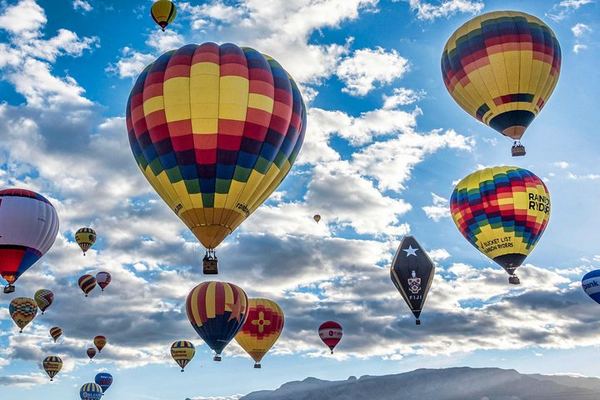
Albuquerque Sunrise Balloon Flight over the Rio Grande Valley
Sunrise over the Rio Grande Valley with the sun clearing the Sandia Mountains, and a pilot who explains how New Mexico is put together. Toast on landing.
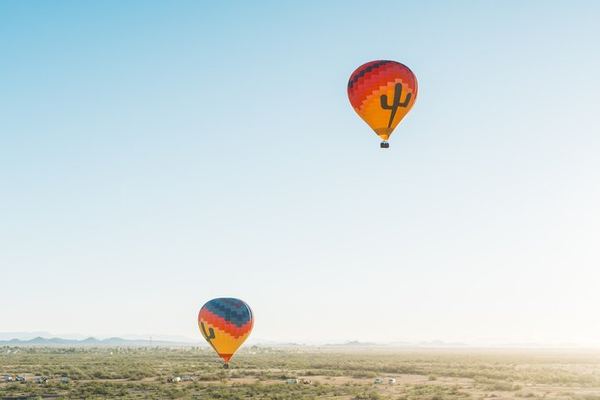
Phoenix Morning Balloon Ride with Champagne Breakfast in the Desert
Between 2,000 and 5,000 feet over the Sonoran Desert, high enough for the whole valley and low enough for single saguaros. Champagne breakfast on linen.

Temecula Wine Country Sunrise Balloon Flight with Winery Toast
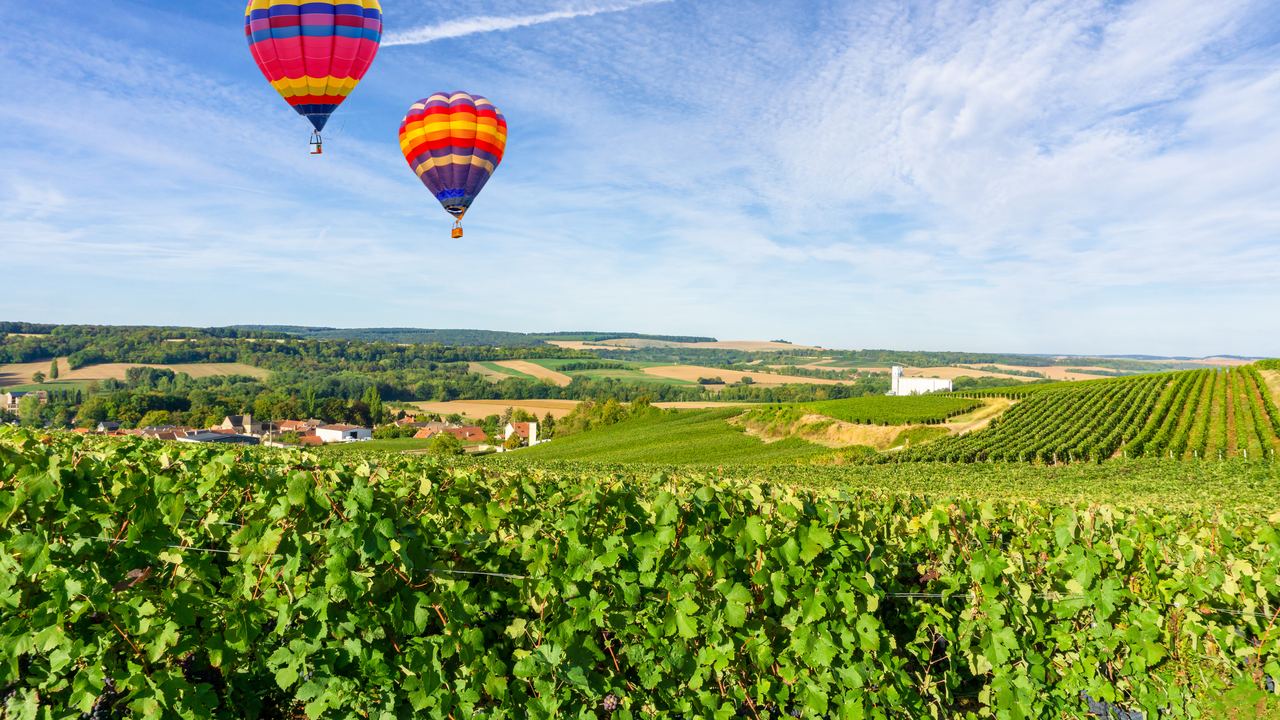
Sunrise over the Temecula Valley vineyards, citrus groves and lakes, then a winery celebration with champagne. No two flights cross the same ground.
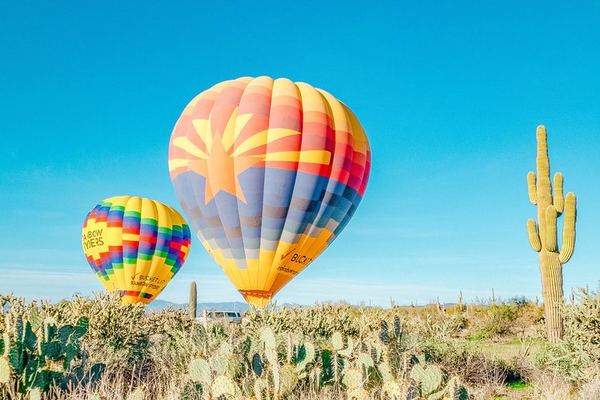
Sunset Balloon Ride over the Sonoran Desert at Phoenix
An hour as the sun goes down over the Sonoran Desert. Evening flights are rarer than dawn ones, and the light comes in sideways instead of overhead.
Ratings collected by Viator and Tripadvisor
Questions people ask about American desert balloon rides
Which is cheaper, Albuquerque, Phoenix or Temecula?
Temecula, by a margin small enough not to decide anything. Read on 7 October 2026: Temecula 162.53 euros, Albuquerque 171.60, Phoenix 180.68. That is 18.15 euros across three states. If price is the deciding factor between these three, there is effectively no deciding factor.
Do I need a Balloon Fiesta ticket to fly in a balloon at Albuquerque?
Not for a commercial flight sold by an independent operator. One Albuquerque listing here flies during Fiesta week from the city's west side and states plainly that it has no affiliation with the Albuquerque International Balloon Fiesta and that no Fiesta ticket is needed. It costs 431.28 euros, against 171.60 for the cheapest Albuquerque flight outside that week.
Can you book a private hot air balloon in Phoenix?
Not from the listings on this site. All eight Phoenix flights are shared, and Phoenix is the only one of these three cities where no private basket is sold at any price. Albuquerque has one private listing, at 317.33 euros for a stated two to eight passengers, and Temecula has three, from 903.42.
Why does a balloon ride in Temecula cost either 170 euros or 900?
Because two different businesses operate in the same valley. The four shared flights, from 162.53 to 180.68 euros, come from volume operators, one running a fleet of fourteen balloons. The three private ones, from 903.42 to 1,107.71, include an operator that flies private only, four passengers maximum. No listing sits between 181 and 903 euros, so the gap is not a quality ladder but the gap between the two models.
Can you fly a hot air balloon in the evening in the American desert?
In Phoenix, yes: three of its eight listings fly in the evening. Albuquerque has one, a sunset flight over the Rio Grande Valley at 204.29 euros. Temecula has none, and all seven of its listings launch in the morning. Evening flying is uncommon everywhere, because dawn is when the air is reliably calm.
Does Albuquerque's altitude affect the balloon ride?
It affects what the balloon can lift. Albuquerque sits at 5,312 feet against 1,086 in Phoenix and 1,020 in Temecula, and a hot air balloon in the lower atmosphere loses roughly one per cent of its lift per thousand feet, with warm air costing it more again. For a passenger the practical effect is the weight and capacity limits met at check-in, not anything noticeable in the air.
When is the best month to fly in Phoenix or Temecula?
Both run roughly October to May, and both stop for the same reason, which is heat rather than wind. Phoenix averages about 111 days a year at or above 100 degrees Fahrenheit and has recorded 122. Temecula has the milder version of the same problem plus a morning marine layer common in May and June. November through March is the safest window for both. Albuquerque flies all year.
Is the Temecula Valley Balloon and Wine Festival still running?
It has no venue. On 24 March 2026 Riverside County supervisors voted 5-0 to terminate the festival association's agreement to use the Lake Skinner Recreation Area over an unpaid 2025 invoice that had reached 76,100 dollars with interest and penalties, effective 30 April 2026. County officials said a new agreement and settled debts would be needed to stage another, and the organisers spoke of a possible late summer or early autumn window. Nothing about a future edition is confirmed. Balloon flights in the valley are sold independently and continue as normal.
Where these figures come from. Every price, count, review total and listing description was read from this site's own catalogue on 7 October 2026, in euros as the listings display them, and they move when a provider reprices. Fiesta dates, the edition number and the balloon count come from the Balloon Fiesta's own site, cross-checked against the Albuquerque visitor bureau and the organisers' press announcement. The Albuquerque Box, including inversion depth, wind directions, the mid-morning collapse and the twice-in-ten-days frequency, comes from the National Weather Service forecast office in Albuquerque. City elevations, the Phoenix temperature records and the Temecula vineyard and winery figures are those given in each place's encyclopaedia entry. The lift relationship with altitude and temperature is the general figure for hot air balloons rather than any operator's. Saguaro range, height and age are from the US National Park Service. The Riverside County vote, the sums owed and the termination date were read in local and regional reports of the board meeting, which agree on the figures; two accounts gave different dates for the vote, and the more circumstantial one, 24 March 2026, is followed here. Temecula launch times and operator count are from the Temecula Valley tourism board. The FAA medical rule and the Lockhart accident are from the National Transportation Safety Board. No claim about availability on a given date, and no 2027 festival date, has been taken from any of it.
Data verified on . Prices and counts read from this site on 7 October 2026. Fiesta dates from balloonfiesta.com, wind pattern from NWS Albuquerque, county vote from local reports.