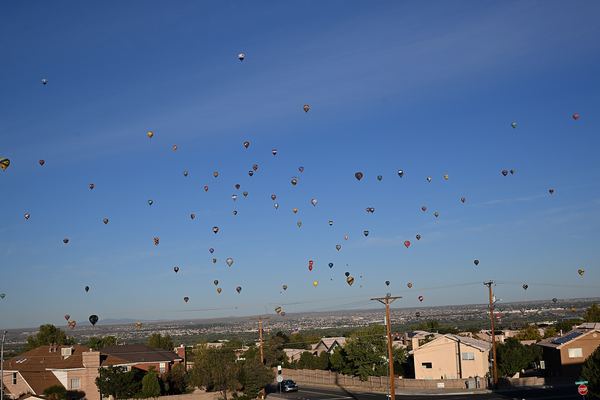
The Tuscan balloon season, and the three Florence flights that play by other rules
Thirteen balloon flights listed in Tuscany, four of them priced at exactly 269 euros. The season runs April to October and every one lifts at first light. Three cross Florence itself, start at 399, and get cancelled by a different rule than all the others.

Four hot air balloon flights over Tuscany cost exactly the same: 269 euros, on four separate listings, over the Chianti hills south of Florence. Not roughly the same. The identical number, four times, from more than one operator. A fifth countryside flight is 299 and the one sold from Siena is 310.
Then there are three that cross the city of Florence itself, and the cheapest of those is 399. The dearest is 499. The two price bands do not touch, and the gap has almost nothing to do with the balloon, the hour or the time spent in the air. It is about what the basket is allowed to be above.
Thirteen balloon flights are listed in Tuscany on this site. Ten lift from farmland, one works the Siena side, and three go over the rooftops. The first eleven share a season, a launch field and a price. The last three share none of it, and they are cancelled by a different rule.
The Tuscan balloon season is April to October, and it is not a door that closes
One of the listings says it without decoration: ballooning in Tuscany runs from spring through autumn, so book inside that window. Operators and Tuscan tourism sources put the same window at April to October, and they add a warning worth keeping. May can be cold and wet. October can be warm and clear. The two swap places from one year to the next, and nobody can tell you in March which way round yours will be.
That is the answer most people come for, and on its own it is a little misleading, because nothing actually closes. A balloon season in inland Italy is not a gate. It is a count of usable mornings, and the count peaks in the two shoulders: late April through June, then September and October. High summer flies as well. What summer takes is the length of the calm window after dawn, because the ground heats early and the air over a valley floor stops being still. Winter is the opposite complaint. Cold air pools in the valleys overnight, the fog that comes with it is not predictable enough to sell a flight against, and the demand goes away at the same time.
The season is visible in the listings without anyone spelling it out. Every Tuscan flight here goes up at first light and none has a second departure later in the day. The Siena listing is blunt about it: early morning only, no later slot, and the exact take-off time depends on the season and on the forecast nearer the day, so it gets confirmed shortly before. First light in June is not where first light is in October, and the operator is not going to pretend otherwise in a booking form.
When the Italian balloon skies in this article fly
Four rows, twelve months. None of these skies has a legally closed season the way Perth or Cappadocia do. What changes through the year is how many mornings are worth launching into, and for one of the four rows, how many of those mornings you are allowed to use.
| Month | 1 | 2 | 3 | 4 | 5 | 6 | 7 | 8 | 9 | 10 | 11 | 12 |
|---|---|---|---|---|---|---|---|---|---|---|---|---|
| Chianti and the Florence countryside Ten of the thirteen Tuscan flights launch here. The listings say spring through autumn; the shoulders give the longest calm window after dawn, and high summer the shortest. | 1 | 2 | 3 | 4 | 5 | 6 | 7 | 8 | 9 | 10 | 11 | 12 |
| Over Florence itself Same calendar as the countryside and far fewer usable mornings inside it. One listing sells only on restricted dates, another will fly only in weather suitable for crossing a city, which is a narrower thing than weather suitable for flying. | 1 | 2 | 3 | 4 | 5 | 6 | 7 | 8 | 9 | 10 | 11 | 12 |
| Siena and the southern hills A single flight, and its two listed meeting points are Siena and San Casciano, which is the Chianti field. Which one you drive to is settled the afternoon before, after the forecast. | 1 | 2 | 3 | 4 | 5 | 6 | 7 | 8 | 9 | 10 | 11 | 12 |
| Umbria, over the valley of Assisi Not Tuscany, an hour and a half east, and it holds the cheapest balloon flight in Italy at 253 euros. The listings state no season at all; the inland climate is the same one Tuscany has. | 1 | 2 | 3 | 4 | 5 | 6 | 7 | 8 | 9 | 10 | 11 | 12 |
Windows from the operators' own listings on this site and from Tuscan tourism sources, read on 23 September 2026. These are flying seasons, not availability on any particular date.
Four rows that look identical and are not, which is the useful part. The months do not separate these flights. The mornings do.

Why Florence is the exception among Tuscany's balloon flights
Ten of the thirteen take off from farmland. San Casciano in Val di Pesa, the Val di Pesa below the Antinori winery, fields at Fornacette and Calzaiolo. Ordinary paddocks, picked the afternoon before. Two of the listings say so in nearly the same sentence: the field is chosen once the weather reports are in, the address goes out after six in the evening, and setting off before it arrives is how people end up standing in the wrong field at five in the morning.
Three flights do something different. They lift from inside Florence, from Piazza Giuseppe Poggi and the Lungarno Benvenuto Cellini, both on the Arno at the foot of Piazzale Michelangelo and about a hundred metres from the car parks, and then they cross the city. The cathedral dome, Ponte Vecchio with its shops still shuttered, and Piazzale Michelangelo itself, the terrace half of Florence climbs for the postcard, going by underneath as one small balcony among the cypresses.
Three consequences follow, and all three sit in the small print rather than the sales copy.
- The dates are rationed. One listing states it outright: a flight crossing the historic centre of Florence is a restricted product, so the dates offered are limited. That is not an operator being coy about how many baskets it owns. It is the shape of the permission.
- The weather bar is a different bar. The conditions note on another city flight reads: this experience will take place only in favourable weather conditions for flying over the city. Not favourable for flying. Favourable for flying over a city.
- The fallback is a farm field. When that flight is called off for weather, the same listing offers three ways out: another date, a full refund, or moving to another nearby flight area. The third is the one that gives the game away. Chianti is the city flight's understudy, and it never runs the other way.
Chianti is the understudy. When Florence is closed the operator offers you a field in the countryside instead. Nobody has ever been offered the city as a substitute for the field.
What the rule actually says about flying a balloon over a city
European visual flight rules turn on one line in the standardised rules of the air, SERA.5005(f). Over the congested areas of cities, towns and settlements, or over an open-air assembly of people, an aircraft flies at least 300 metres, a thousand feet, above the highest obstacle within 600 metres of it. Two exceptions are written into the same sentence: when it is necessary for take-off or landing, and when the competent authority has given permission.
Hold that against a balloon and the difficulty is plain. A balloon has no route, only a wind. It cannot hold a thousand feet as a matter of policy if the air at a thousand feet is going the wrong way, and in central Florence the highest obstacle inside that 600 metre circle is Brunelleschi's dome. Both ends of the flight land on the written exception. The take-off is on the Arno inside the city. The landing, as one of the listings puts it, happens somewhere else around Florence, wherever the wind allows, after which the ground crew drive out, find the balloon and bring everyone back to the square.
So what the premium buys is a permission, a much thinner set of mornings on which that permission can be used, and a landing that has to be improvised inside a city. What it does not buy is a better view. Most people who have flown both will tell you the Chianti morning is the prettier one.

What the extra hundred euros actually buys
Cheapest shared flight over the Tuscan countryside: 269 euros. Cheapest shared flight over Florence: 399. That is 130 euros, or about half again, for the same hour in the same size of basket at the same time of morning.
Go private and the same split widens. A private basket over Chianti, launching from San Casciano, is 687.50. A private basket over the Florence rooftops is 1,600. Two and a third times the money for the same privacy, bought over a different piece of ground.
There is one more asymmetry worth knowing before booking, and it is about evidence rather than price. The countryside flights carry far more flown history: two Chianti listings alone hold 246 and 236 reviews, and the Siena flight another 146. The three city flights hold 65, 69 and 85 between them. Restricted dates mean fewer mornings, fewer mornings mean fewer passengers, and fewer passengers mean a thinner record to read before you pay.
The thirteen Tuscan balloon flights, side by side
Sorted by price, with where each one actually leaves from. The launch fields repeat more than the names do, which is the thing a list of product titles hides.
| Flight | Where it lifts from | Basket | Price EUR |
|---|---|---|---|
| Chianti vineyards at sunrise | Chianti, about 20 minutes south of Florence | Shared | 269 |
| Chianti Valley, one hour | Chianti Valley | Shared | 269 |
| Chianti and the Val di Pesa | The field below the Antinori winery | Shared | 269 |
| Sunrise flight with Tuscan breakfast | Chianti hills | Shared | 269 |
| Tuscany from San Casciano | Fornacette or Calzaiolo, picked the day before | Shared | 299 |
| Siena over the Tuscan hills | Siena, or San Casciano in Val di Pesa | Shared | 310 |
| Florence at daybreak | Lungarno Benvenuto Cellini, on the Arno | Shared | 399 |
| Florence: the Duomo and the Arno | Piazza Giuseppe Poggi, on the Arno | Shared | 449 |
| Renaissance Florence | Inside the city | Shared | 499 |
| Private flight over Chianti | San Casciano in Val di Pesa | Private | 687.50 |
| Private flight over the Florence rooftops | Inside the city | Private | 1,600 |
| Private Tuscany from Florence, transfers included | Countryside, with the drive both ways | Private | 1,900 |
| Luxury private flight over Tuscany | Countryside, up to five passengers | Private | 4,500 |
Read the middle of that table and one address keeps coming back. San Casciano in Val di Pesa is where the countryside flights meet, where the private Chianti flight meets, and, on one of its two listed meeting points, where the Siena flight meets as well. One small Chianti town is the working centre of ballooning in Tuscany, and not a single product title mentions it.
Which matters in a practical way. If the morning is marginal, a region with one main launch area behaves like one flight, not like eleven. And it cuts the other way for anyone treating the Siena listing as a separate destination: it may put you in the same Chianti field as the flight sold from Florence, for 41 euros more. The Siena page and the Florence page list them separately because that is how they are sold, not because the fields are always different.

One declaration, one rulebook: who is allowed to fly you in Italy
There is a question people ask about Tuscan operators that has no useful answer, and a question they do not ask that does.
The useless one is whether the company is licensed. Commercial ballooning across the European Union runs on Commission Regulation (EU) 2018/395 of 13 March 2018, which has applied to commercial passenger ballooning since April 2019. An operator carrying paying passengers makes a declaration to the competent authority, which in Italy is ENAC, and holds an operations manual setting out its own procedures. It is one regime, and it does not change between a field in Chianti and the Arno. If a company is selling you a seat in Italy it has declared, or it is not operating legally. Asking gets you a yes from everybody.
The useful question is about the morning rather than the paperwork: who else flies here, and what happens when this one stands down. In Chianti the answer is several operators and a choice of fields. Over Florence it is a restricted product on limited dates, which is a thinner safety net for a traveller with one free morning. A cancellation is the system working as designed, and it is still the thing most likely to cost you the flight.
How Italy ended up with a balloon country and a balloon city
Two ascents in one year, then a two century gap, then the paperwork that governs every Tuscan morning now.
The origins
-
February 1784
The first flight over Italian soil
Paolo Andreani made the first balloon flight over Italian ground on 25 February 1784, and repeated it in front of an invited crowd on 13 March at the Villa Sormani in Moncucco, near Milan. He and two assistants went up past 1,500 metres and travelled several kilometres. Northern Italy, not Tuscany: the Tuscan sky would wait a long time for a commercial balloon.
-
September 1784
A man from Lucca flies England's first balloon
On 15 September 1784, Vincenzo Lunardi lifted from the Honourable Artillery Company ground at Moorfields and landed at Ware, the first aerial ascent in England, with a dog, a cat and a pigeon aboard. He was born in Lucca, into minor Tuscan nobility, and sources disagree on whether the year was 1759 or 1754. Tuscany produced the aeronaut and then exported him.
The growth
-
1990
Commercial ballooning settles in Chianti
The operators now flying the Chianti fields date their tourist flights to around 1990, one of them claiming more than thirty thousand passengers over three decades. The launch pattern this article describes, one cluster of fields around San Casciano serving Florence and Siena alike, dates from that period rather than from anything older.
Today
-
April 2019
One European rulebook for balloons
Commission Regulation (EU) 2018/395, made on 13 March 2018, brought commercial passenger ballooning under a single European regime from April 2019. The operator declares to the national authority, ENAC in Italy, and keeps an operations manual. The same document covers a field in Chianti and a launch on the Arno.
What to ask before you pay for a Tuscan morning
Four questions that separate two Tuscan listings at similar money.
- Which field, and when will I know? Every countryside listing here reserves the right to move the launch site, and the message goes out the evening before. If you are driving from Florence, that is a route you cannot plan until about seven the night before. Two of the listings warn, in so many words, against setting off on an assumption.
- Is the drive included? The private flights that include the transfer from Florence say so and charge for it. The shared ones mostly do not, and San Casciano at five in the morning is not a taxi problem you want to solve on the day.
- City or countryside, and do I know which I am buying? Several titles say Florence and mean a field half an hour outside it. The three that genuinely cross the city cost 399 and up, and they say so in the price before they say so in the text.
- What does the fare cover after landing? Nearly all of these end with sparkling wine and a picnic breakfast, and the listings that run three hours are counting the drive out, the inflation, the breakfast and the drive back around one hour in the air. The same arithmetic turns up in Cappadocia, where the spread is far wider.

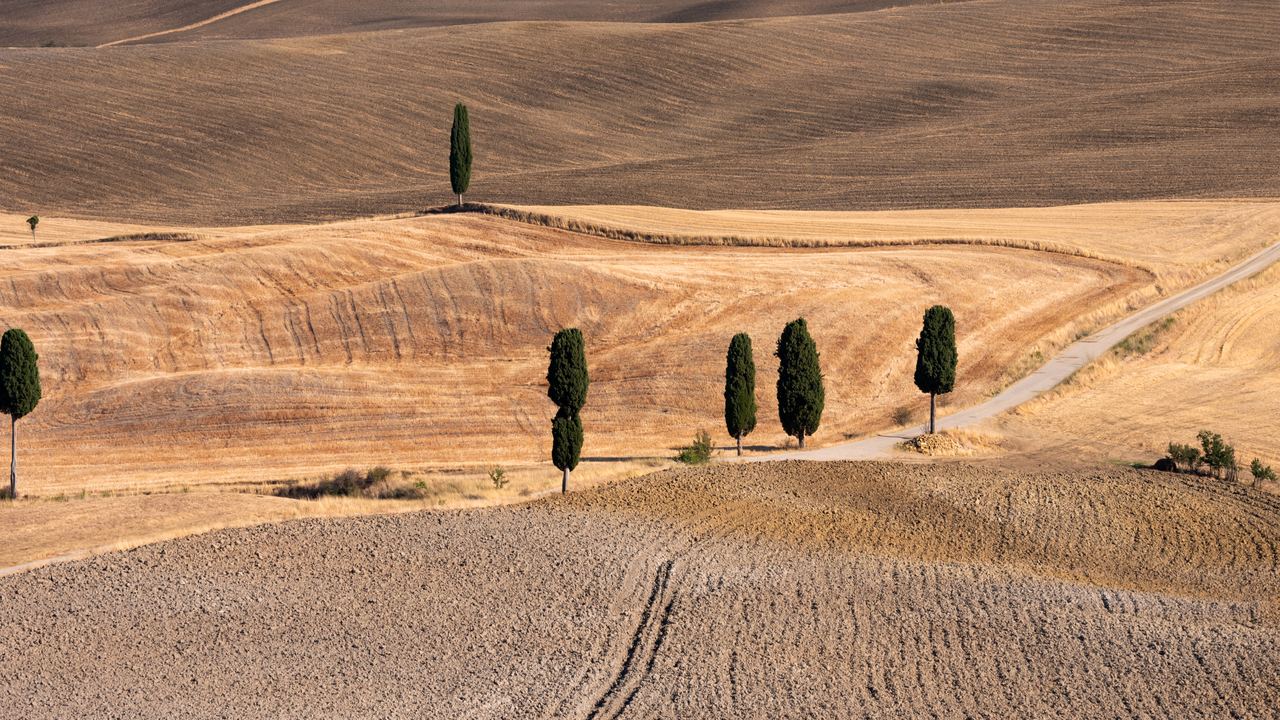
The three Italian balloon skies in this article
Each has its own page, with the flights currently listed and the ground they cross.
Florence and Chianti
Twelve flights: eight over the countryside from San Casciano and the Val di Pesa, four over the city itself. The two price bands do not overlap.
Siena
One flight, at 310 euros, working the hills on the Siena side. Its listed meeting points include the Chianti field the Florence flights use.
Umbria
An hour and a half east and not Tuscany at all, with the cheapest balloon flight in Italy at 253 euros, launching from a winery at Bevagna with Assisi on the hillside.
Balloon flights over Florence and Chianti
Twelve of them, every one at first light, from a field south of the city or from the Arno.

Chianti Valley Hot Air Balloon Ride, 1 Hour Flight
Climb to about 2,000 feet above the Chianti Valley on a one hour balloon flight from San Casciano, with a glass of Champagne after landing.

Hot Air Balloon Flight over Chianti and Val di Pesa
Balloon flight over the Chianti wine country, from below Cantina Antinori along the Val di Pesa, above vineyards, olive groves and open fields.

Hot Air Balloon Flight over Florence at Daybreak
See the Duomo, Ponte Vecchio and the Arno from a balloon basket at dawn. Florence balloon flight over the city and the Chianti hills beyond.

Hot Air Balloon over Florence: Duomo and Arno Views
Balloon take-off from Piazza Giuseppe Poggi on the Arno, with the Duomo and the monuments of Florence below and part of Chianti on the way.
Ratings collected by Viator and Tripadvisor
Questions people ask before booking a Tuscan balloon flight
When is the hot air balloon season in Tuscany?
Roughly April to October. The listings on this site put it as spring through autumn, and Tuscan operators and tourism sources give April to October, with the warning that May is sometimes cold and wet and October sometimes warm and clear. The best mornings cluster in the two shoulders, late April to June and September to October, because that is when the calm window after dawn lasts longest. High summer flies as well, on a shorter window, since the ground heats early.
How much does a hot air balloon ride in Tuscany cost?
From 269 to 4,500 euros across the thirteen flights listed here. A shared flight over the Chianti countryside is 269 to 310, and four separate listings sit at exactly 269. A shared flight that crosses Florence itself is 399 to 499. Private baskets run from 687.50 over the countryside to 4,500 for the luxury option. The cheapest balloon flight in Italy is not in Tuscany at all: it is 253 euros in Umbria.
Can a hot air balloon fly over the centre of Florence?
Yes, and three of the flights listed here do it. They take off from Piazza Giuseppe Poggi or the Lungarno Benvenuto Cellini, on the Arno below Piazzale Michelangelo, and cross the city before landing somewhere outside it wherever the wind permits. One listing describes it as a restricted product with limited dates. European rules require visual flights to stay 1,000 feet above the highest obstacle within 600 metres when over a congested area, with take-off, landing and authority permission written in as the exceptions.
Why does a Florence balloon flight cost more than a Chianti one?
Not for the view. The cheapest city flight is 399 against 269 for the countryside, and most people who fly both find the Chianti morning prettier. The difference pays for permission to cross the city, for the much smaller number of mornings on which that permission can be used, and for a landing that has to be improvised inside a metropolitan area, after which the ground crew drive out to collect everyone.
What happens if a Florence balloon flight is cancelled for weather?
One city listing sets out three options: take another date, take a full refund, or move to another nearby flight area. That last one means the Chianti countryside, which is the fallback for the city flight and never the other way round. City flights are also held to a narrower weather standard, described in the listing as conditions favourable for flying over the city rather than favourable for flying.
Is it better to fly from Florence or from Siena?
Check the meeting point before deciding. The single Siena flight costs 310 euros and lists two possible meeting points, Siena and San Casciano in Val di Pesa, and San Casciano is the same Chianti field the flights sold from Florence use. Which one you drive to is settled the afternoon before, after the forecast. Choose Siena for the hills on that side of the region, not on the assumption that you will launch from a different place.
Where the figures come from. Every price, count, rating and review total was read from this site on 23 September 2026, in euros as the listings show them, and they move when the provider reprices. Launch fields, meeting points, conditions notes and cancellation terms are quoted from what the operators state in their own listings, including the restricted-product wording, the clause about weather suitable for flying over the city and the three options offered when a city flight is called off. The April to October window comes from those same listings and from Tuscan operator and tourism sources found in search. SERA.5005(f), Commission Regulation (EU) 2018/395 and its April 2019 application to commercial passenger ballooning are quoted as they appear in published regulatory summaries and national authority guidance rather than from the full legal texts; the wording that matters is on the EASA and national authority sites. The 1784 ascents come from museum and encyclopaedic accounts, which disagree on Lunardi's year of birth, and the 1990 date for commercial flights in Chianti is the operators' own claim about themselves. The season by destination guide applies the same logic to the rest of the network.
Data verified on . Prices, counts and launch fields read from this site on 23 September 2026. Season from the operators' listings and Tuscan tourism sources. Airspace: SERA.5005(f) and Regulation (EU) 2018/395.