Luxor balloon rides in winter: how to pick among two dozen
Around two dozen balloon rides over Luxor are sold at prices from 36 to 268 EUR for what is broadly the same 40 minutes over the Theban necropolis. Why December to February are the best mornings of the year to fly, and how to read a Luxor listing before you book.
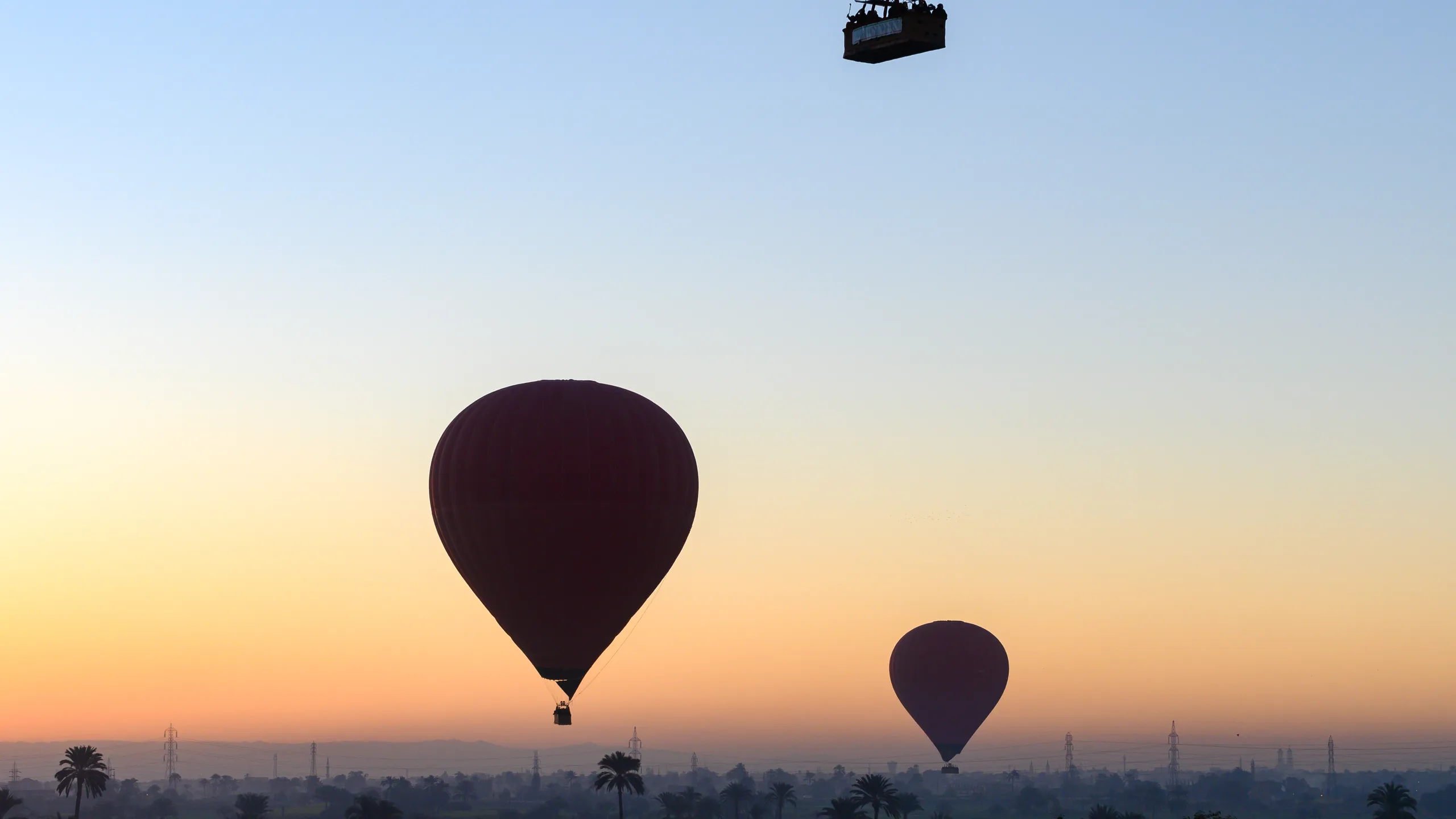
Egypt's commercial ballooning happens in essentially one place. Not Giza, not Aswan, not the Western Desert: Luxor. The whole national fleet lifts off from a handful of fields on the west bank of the Nile, in the dark, before the sun clears the eastern hills. This site lists around two dozen balloon rides over Luxor, the largest concentration for any destination in the catalogue. They cross the same ground at the same hour. They are sold at prices that differ by a factor of seven.
Why the winter mornings are the good ones
Balloons want cold, heavy, still air, and Luxor supplies it from December to February. January lows sit around 5 to 7 degrees Celsius against afternoon highs near 23. That gap is the point. Dense dawn air gives the envelope more lift for the same fuel, the wind gradient is gentler, and the thermals that make a summer landing lively have not started yet. Visibility is at its cleanest as well: on a clear January morning the limestone cliffs behind Deir el-Bahari are sharp rather than hazed.
The cost is company and timing. December to February is Egypt's high season, so baskets fill and prices firm. Sunrise in late December falls shortly before seven o'clock, which puts hotel pickup at 4.30 or 5.00, and passengers who oversleep are left behind. Summer runs the other way: launches move even earlier to beat the heat, hot air gives less lift, and the mornings are less predictable. None of it is a guarantee. Egypt's civil aviation authority reads the wind before anyone inflates, and when the call goes against flying the entire field stays down, in January as much as in June. Two spare mornings is the sensible margin. Seasonal patterns across other destinations are set out in the guide to the best time to fly.

What the price difference actually buys
The cheapest Luxor flight in the catalogue is 35.78 EUR. The most expensive is 268.32 EUR. Both are sunrise flights of roughly the same length over the same necropolis, launched from the same fields at the same hour. What changes is the packaging around them.
Four things move the number. Transfers come first and are missed most often. A listing without hotel pickup leaves you finding a taxi and a boat across the Nile at four in the morning, which is not a saving. Second is what happens after landing: a plain flight has you back at the hotel by nine, while a package bolts a guided west bank day onto the same morning and folds the guide, the entry tickets and sometimes lunch into one line. Third is the basket. Shared baskets in Luxor run large, twenty or more passengers in partitioned compartments; private baskets are sold separately. Fourth is time in the air, advertised anywhere from 35 minutes to 80.
Reading the listings rather than the prices produces awkward results. A private-basket flight with a private guide, private car-and-boat transfer and a premium breakfast sits at 82.56 EUR, below several shared-basket flights on the same page. A flight sold at 45 to 80 minutes aloft costs 58.14 EUR, less than plain 40-minute flights nearby. And the 268.32 EUR listing at the top of the range buys a guide in the basket narrating the necropolis while it is still underneath you: excellent value to some travellers, and to others a podcast they could have played at breakfast. How balloon pricing works elsewhere is covered in the cost guide.
| Type of listing | What is usually included | Rough price band |
|---|---|---|
| Flight only, shared basket | Sunrise flight of 35 to 45 minutes, hotel or cruise-boat pickup on most listings, tea or a light breakfast on some | 36 to 85 EUR |
| Private basket | Basket for your party alone, private car and boat transfer, private guide, breakfast | 80 to 83 EUR |
| Balloon plus guided west bank day | The flight, then the Valley of the Kings, Deir el-Bahari and the Colossi with an Egyptologist, entry tickets, often lunch | 76 to 179 EUR |
| Guided flight, commentary aboard | Sunrise flight with a guide in the basket explaining the monuments as they pass | around 268 EUR |
Between 36 and 268 EUR the balloon does not change. The pilot does not change. The valley does not change. Only the packaging does.
The morning itself
It starts cold. Travellers who packed only for 30 degrees end up standing in a dark field in a t-shirt, waiting for the burner. Overnight the desert loses its heat fast and the launch site at five in the morning can be under 10 degrees. A fleece and closed shoes fix it. Once airborne the burner throws real heat down into the basket, and by the time the sun is properly up the fleece comes off. The packing case is made properly in the guide on what to wear and bring.
Then the crossing. Luxor town sits on the east bank and the balloons on the west, so most operators put passengers on a motorboat across the Nile before dawn. The river at that hour is black and flat, the call to prayer is going, and the far bank is a line of headlights where the crews are already running inflation fans. It is the best twenty minutes of the morning and barely any listing mentions it.
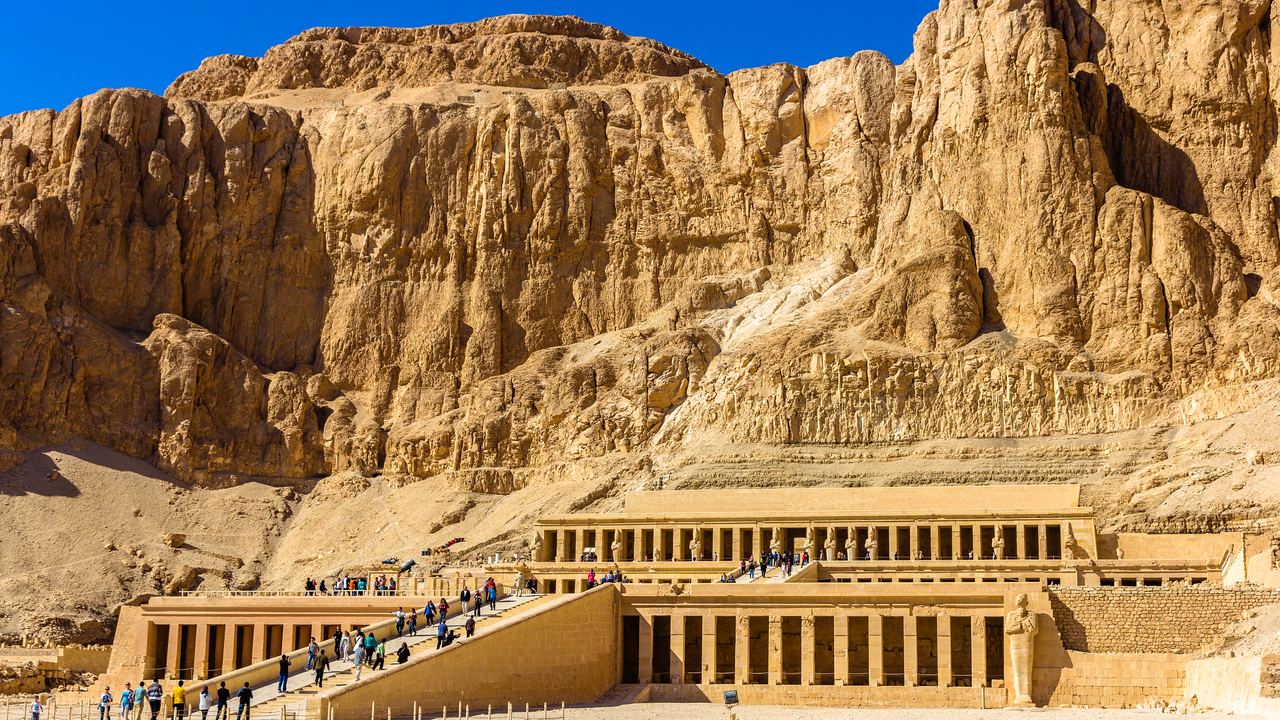
The flight is short and the light does the work. The desert comes up grey, then apricot, then the shadows arrive. Below the basket the Ramesseum, Medinet Habu and the Colossi of Memnon read as complete floor plans rather than the walls you meet from the ground. Hatshepsut's terraces at Deir el-Bahari fold back into the cliff the way the architect meant them to, which the ground never shows. And the whole length of the west bank is cut by the line where irrigation stops: sugar cane and alfalfa on one side, bare limestone on the other, nothing in between. That edge is the reason people photograph Luxor from a balloon.
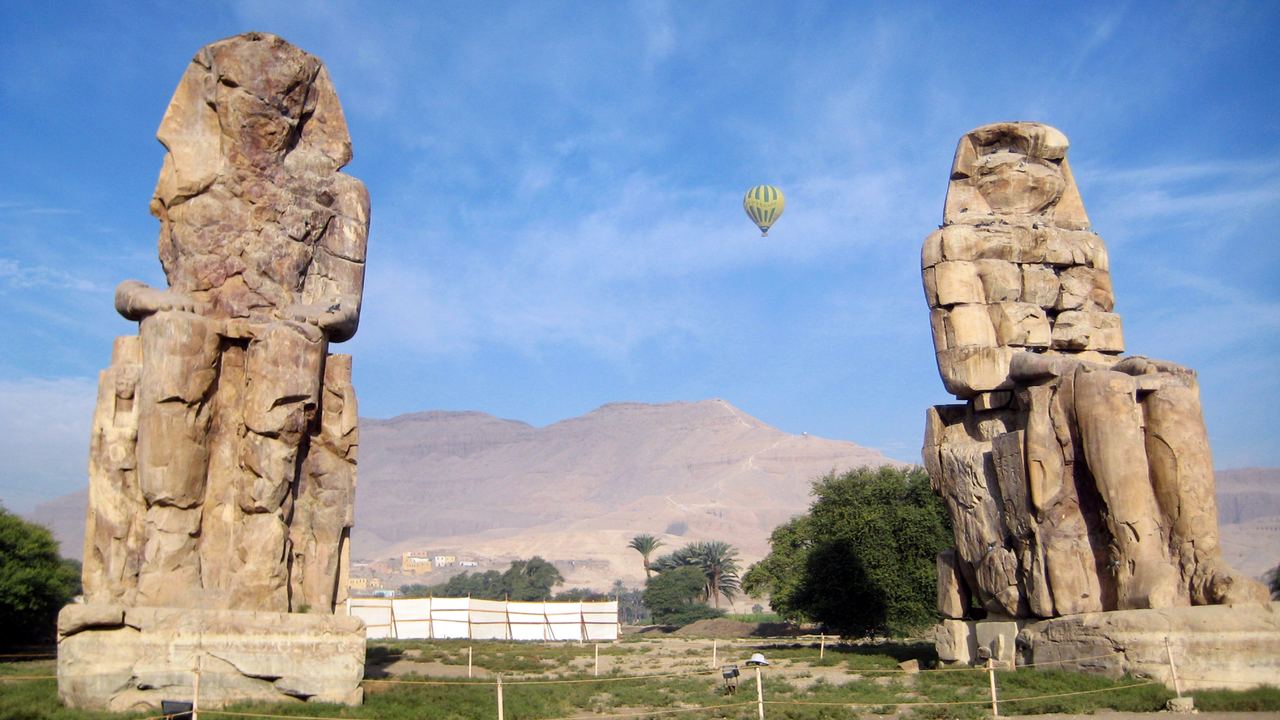
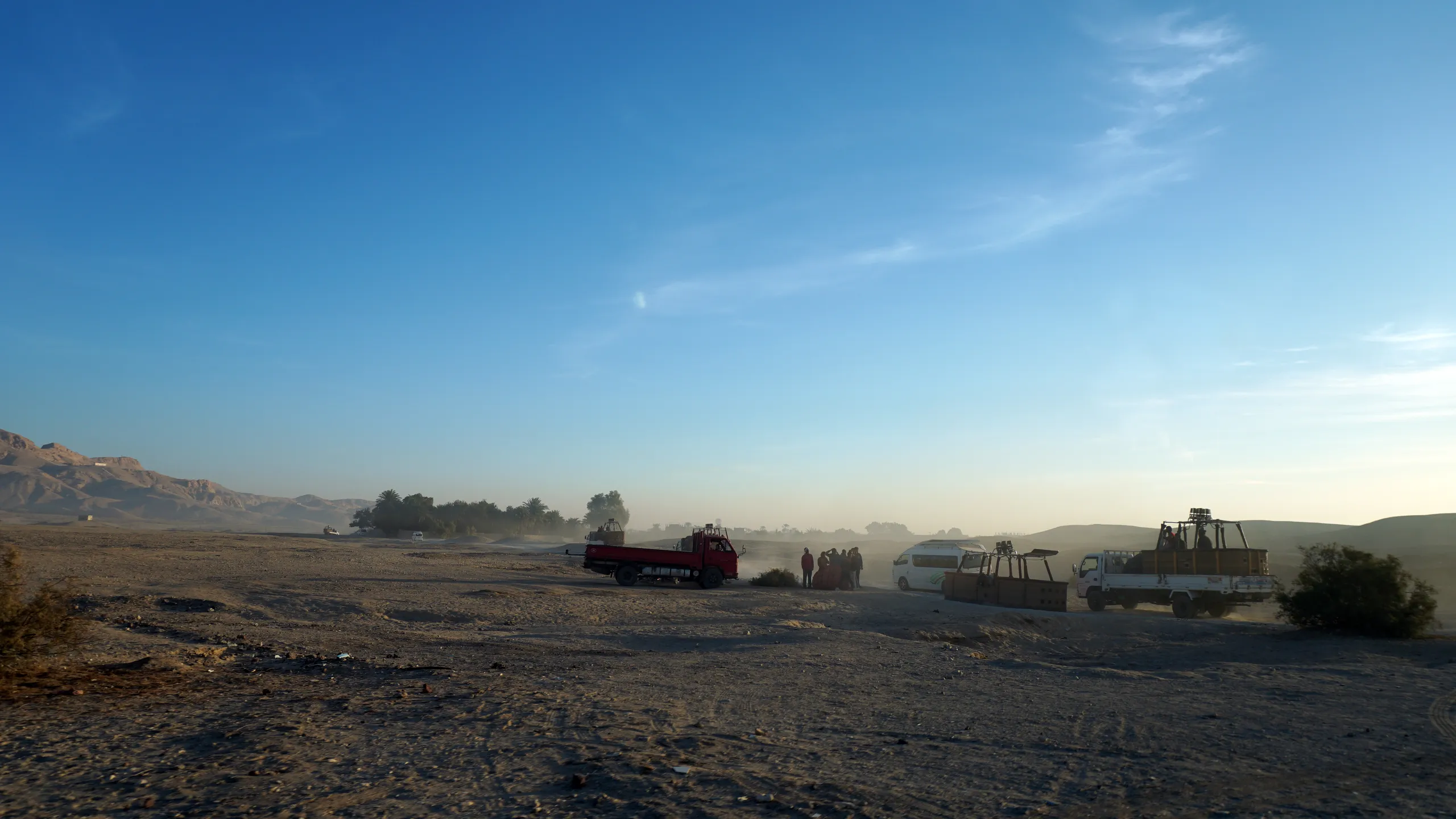
Balloon rides over Luxor
Around two dozen listings, all flying the same west bank at dawn.

Guided Hot Air Balloon Ride over Luxor at Sunrise
A guide flies with you and explains the west bank while it is still in view. The premium end of Luxor ballooning, with commentary throughout.

Hot Air Balloon Luxor: Take Off Before Sunrise
This flight lifts off before first light, so the sunrise arrives at eye level from the basket instead of from the launch field below.

Hot Air Balloon Luxor with Hotel Transfers Included
Air-conditioned round-trip transfers from a central Luxor hotel, English live commentary and a sunrise flight over the west bank, all in one booking.

Hot Air Balloon Over Luxor: 40 Minutes Above the Tombs
A 40-minute sunrise hot air balloon ride over Luxor's west bank, flying above the temples and tombs. The simple option, with nothing else attached.
Ratings collected by Viator and Tripadvisor
Practical questions
Will the flight actually go?
The cancellation call is a wind call, made before dawn by the regulator rather than by the operator you booked with, and it grounds every balloon on the field at once. Winter mornings are the most reliable of the year and still not certain. Check whether a cancelled listing rebooks you on the next flight or refunds you, because those are different products, and do not put the balloon on the last morning of the trip.
Do they really weigh you?
Yes. Passengers are weighed at the field or asked their weight when booking, and it is not a formality. The pilot needs the total load to work out fuel and lift, and the distribution to keep a twenty-person basket balanced across its compartments. Give an honest figure. Some listings state a surcharge or a second-seat requirement above a threshold, which is a booking condition rather than something to argue about in a dark field at five in the morning. Age, mobility and pregnancy rules are set out in the guide to who can fly.
Is a package worth more than a flight on its own?
It depends on whether the west bank was on the plan anyway, and for most visitors it is. Entry tickets for the Valley of the Kings and Deir el-Bahari, a licensed Egyptologist and a car for the day, bought separately, will not land far below the gap between a 76 EUR flight-only booking and a 125 EUR package with lunch. If a guided west bank day was already coming, the package removes a second dawn alarm and a second set of transfers. If the plan is to take the tombs slowly and alone, book the flight bare and keep the afternoon. All two dozen listings sit on the Luxor page.