
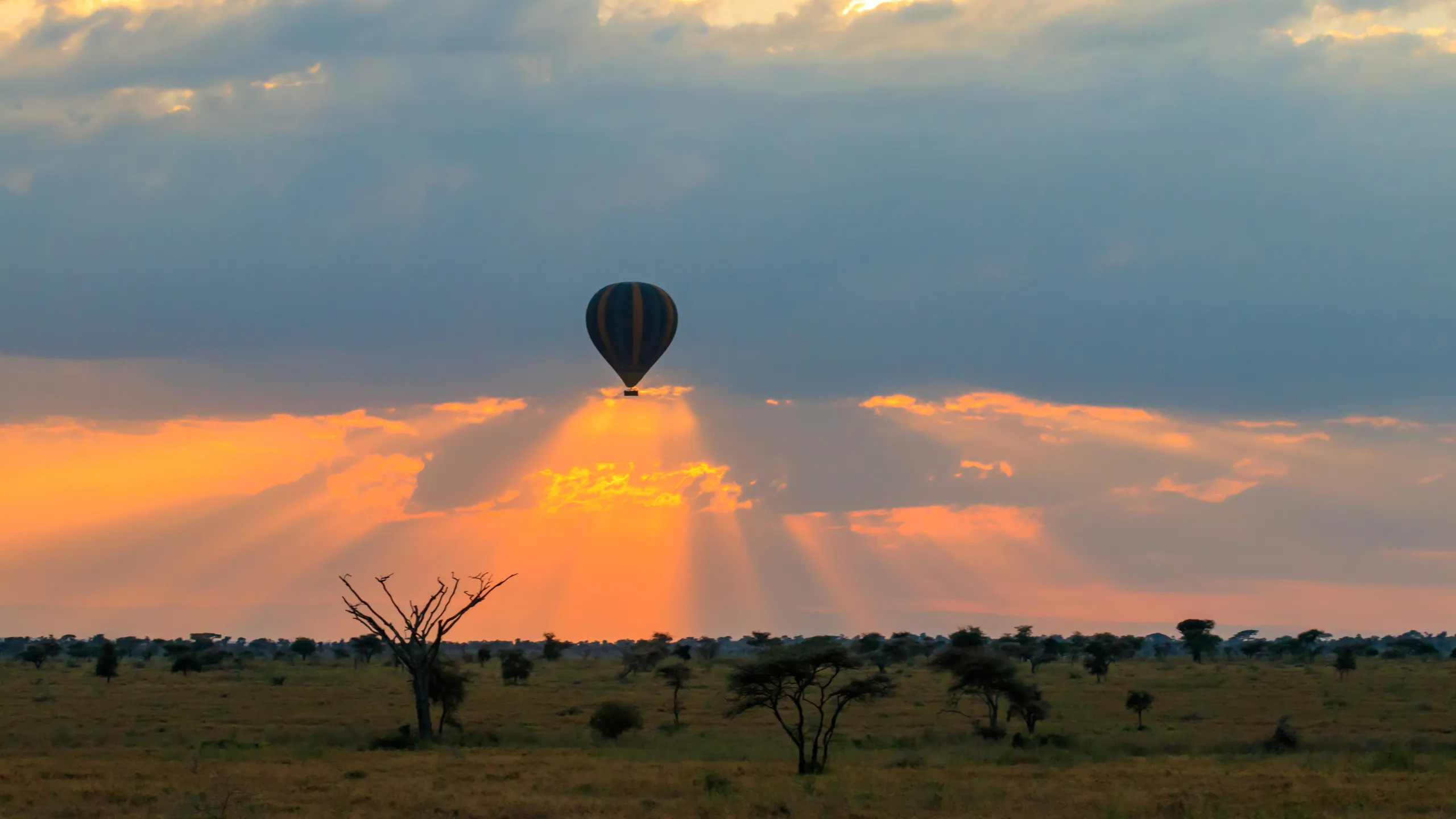
Hot Air Balloon Safaris over the Serengeti and Tarangire
Four dawn flights over open plain and baobab country, ending with a bush breakfast where the basket lands. From 485 EUR, about five hours from your camp.
A balloon safari is not a scenic flight with animals in it. The basket travels at the speed of the wind and makes no engine noise, which is the reason game below carries on as if nothing were overhead. Over the Serengeti the hour is open plain to the horizon; over Tarangire it is broken country, elephants and baobabs standing out of the ground.
Four flights are listed, all at dawn, all ending with a bush breakfast laid out where the balloon comes down. Allow five hours door to door from your camp.
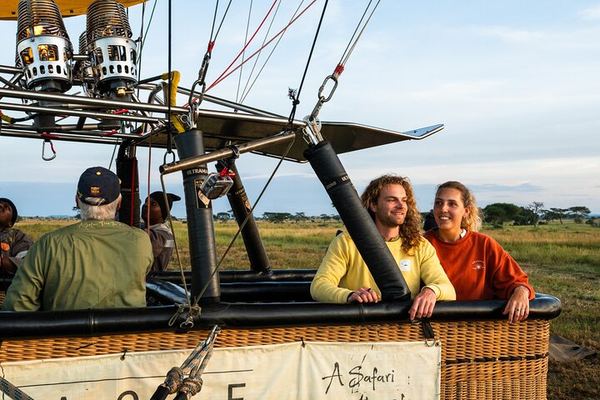
Serengeti Balloon Flight from Seronera with Champagne Breakfast
A sunrise flight from Seronera in the middle of the park, hotel transfers both ways, and a champagne breakfast after the wind decides where you land.
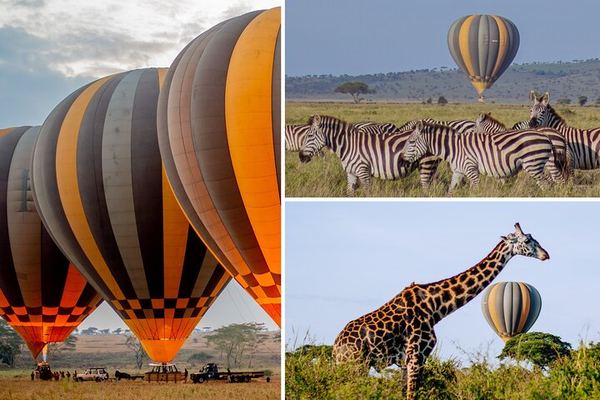
Serengeti Balloon Safari at Sunrise with Bush Breakfast
Tea at 5:45 while the balloons inflate, take-off at sunrise, an hour over the plains with multilingual pilots, then a bush breakfast cooked on site.
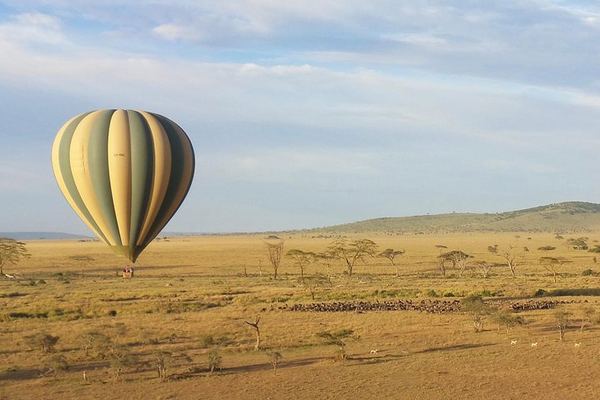
Serengeti Balloon Safari with Bush Breakfast under an Acacia
Flying the Serengeti since the 1970s: an hour that brushes the tops of the grass then climbs, and a full English breakfast laid out under an acacia.
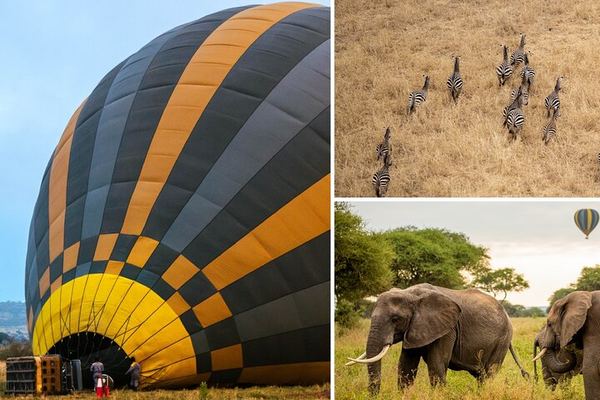
Tarangire Balloon Safari at Sunrise with Bush Breakfast
Tarangire is the quieter park: elephant country, with baobabs standing out of the ground below. Take-off at sunrise, bush breakfast cooked on site.
Ratings collected by Viator and Tripadvisor
When to fly over the Serengeti
Here the season is not about the balloon, it is about what is underneath it. June to October is the dry season: the grass is short, the water is concentrated, and the animals are concentrated with it — which is the difference between a beautiful flight and the flight people save for.
The long rains, roughly late March through May, are when most camps close and the flights stop with them. The short rains in November and December are a different matter: green, quiet, far fewer vehicles, and the flights run.
| 1 | 2 | 3 | 4 | 5 | 6 | 7 | 8 | 9 | 10 | 11 | 12 |
The same reading for all 31 destinations, grouped by climate, is on the season guide.
Why the launch site moves
Most balloon operations fly from a fixed field. Here they do not, and that is the single most important thing to understand before booking. The Serengeti flights lift from the Seronera area in the centre of the park for much of the year, but operators shift their launch points through the season to stay near the herds — which means where you take off in July is not where you take off in February, and the camp you are staying in largely determines which flight you can realistically reach.
Tarangire is the quieter alternative and a different landscape: elephant country, with baobabs standing out of open ground and a river that draws game through the dry months. Fewer balloons fly it, and the flights tend to be over broken terrain rather than the open plain — a more varied hour in the air, with less chance of the vast horizon-to-horizon emptiness that the Serengeti is famous for.
What five hours actually buys
The listings quote around five hours and the flight is one of them. The rest is a pre-dawn pickup from your lodge or camp, the drive to the launch site in the dark, the inflation — which with a balloon this size takes a crew of a dozen and is worth being early for — and afterwards a full breakfast laid out on the ground where the basket came down, table and linen included, followed by a game drive back.
These are the most expensive flights on this site, and the reasons are structural rather than commercial: park fees charged per person and per landing, fuel trucked or flown in, and crews and vehicles operating inside a national park under permit. One operator here has been flying the Serengeti since the 1970s. Book it with your safari rather than separately — in practice, the camp is the only realistic way to reach the launch.